Guinea Now Third-Largest Iron Ore Exporter
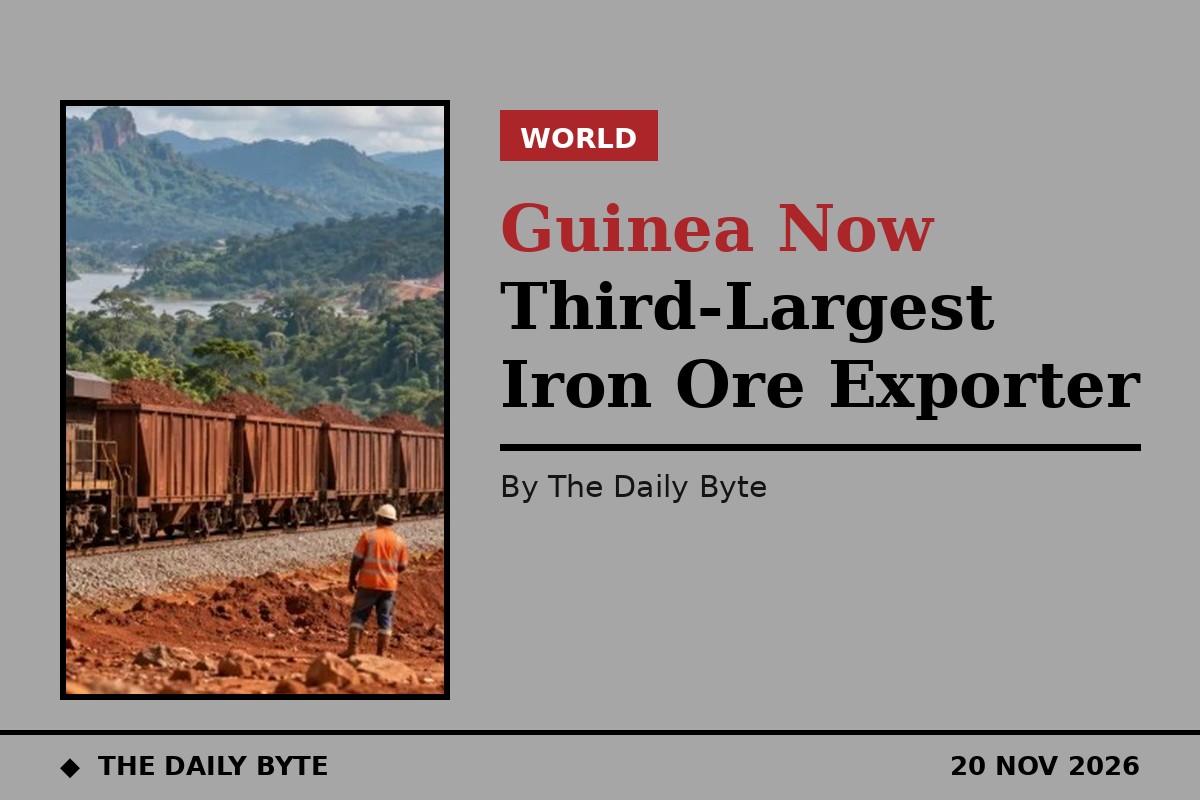
Guinea became the world's third-largest iron ore exporter in October 2026, overtaking South Africa as shipments from the giant Simandou project surged past five million tonnes in a single month for the first time.
New figures from shipping association BIMCO show Guinean exports topped five million tonnes in October, giving the West African country 3% of global iron ore volumes. More than 22 million tonnes have been shipped so far in 2026, already passing initial industry projections of around 20 million tonnes for the full year.
"In October 2026, Guinea became the world's third-largest iron ore exporter, with exports surpassing 5m tonnes for the first time and accounting for 3% of global iron ore volumes," said Filipe Gouveia, BIMCO's shipping analysis manager. "The country has gradually ramped up shipments following the start of mining operations at Simandou in December 2025."
Simandou ramps up toward 120m tonnes
Simandou, in south-eastern Guinea, contains one of the world's largest deposits of high-grade iron ore. Once fully ramped up, the project is expected to have an annual capacity of around 120 million tonnes, or about 10 million tonnes a month. With exports passing five million tonnes in October, Guinea has already reached around half of Simandou's planned monthly capacity.
Full capacity is projected to be reached towards the end of the decade, although the exact timescale remains uncertain. Timelines differ: port and rail operator CTG expects infrastructure capable of handling 120 million tonnes a year by the end of 2027, while mining company Rio Tinto has targeted full mine production in the second half of 2028.
Star Bulk's Milena Pappas has suggested Simandou could ship 65 million tonnes next year, well above earlier expectations of 45 million tonnes. China Merchants Energy Shipping has already secured a 25-year transportation contract worth at least $2.8 billion covering six very large ore carriers serving the Simandou trade.
Long voyages lift shipping demand
The impact on shipping is greater than the cargo volumes alone suggest. Guinean ore travels, on average, 88% farther than a typical seaborne iron ore shipment, with exports heading almost exclusively to China, the world's largest iron ore importer.
That helped Guinea account for 6% of global iron ore tonne-mile demand in October, double its share by cargo volume. Growing shipments from the country also helped lift worldwide iron ore tonne-miles by 2% during the first ten months of 2026, despite little change in overall volumes.
BIMCO's longer-term projections point to a bigger shift. If Simandou reaches its planned annual output of 120 million tonnes without displacing existing exports, global iron ore tonne-mile demand could rise by 13% compared with 2025. Even if every additional Guinean tonne replaces an existing shipment, the longer Guinea-China voyage would still generate a 6% increase in tonne-mile demand.
Prices under pressure
The surge in supply is also weighing on prices. China's steel production has fallen 3% year on year due to weaker demand, while iron ore shipments to the country have risen 1% year on year. Growing supply from major exporters, including Guinea, has weighed on iron ore prices, making imported ore increasingly competitive with domestic Chinese mining.
Lower prices have intensified competition among exporters, prompting some smaller Brazilian miners to reduce output amid weaker prices and high freight costs. For Guinea, the ramp-up marks a rapid transformation for a country that shipped almost no iron ore before Simandou began operating less than a year ago.


