600 Gulf Oil Spills Hit UAE and Oman Beaches
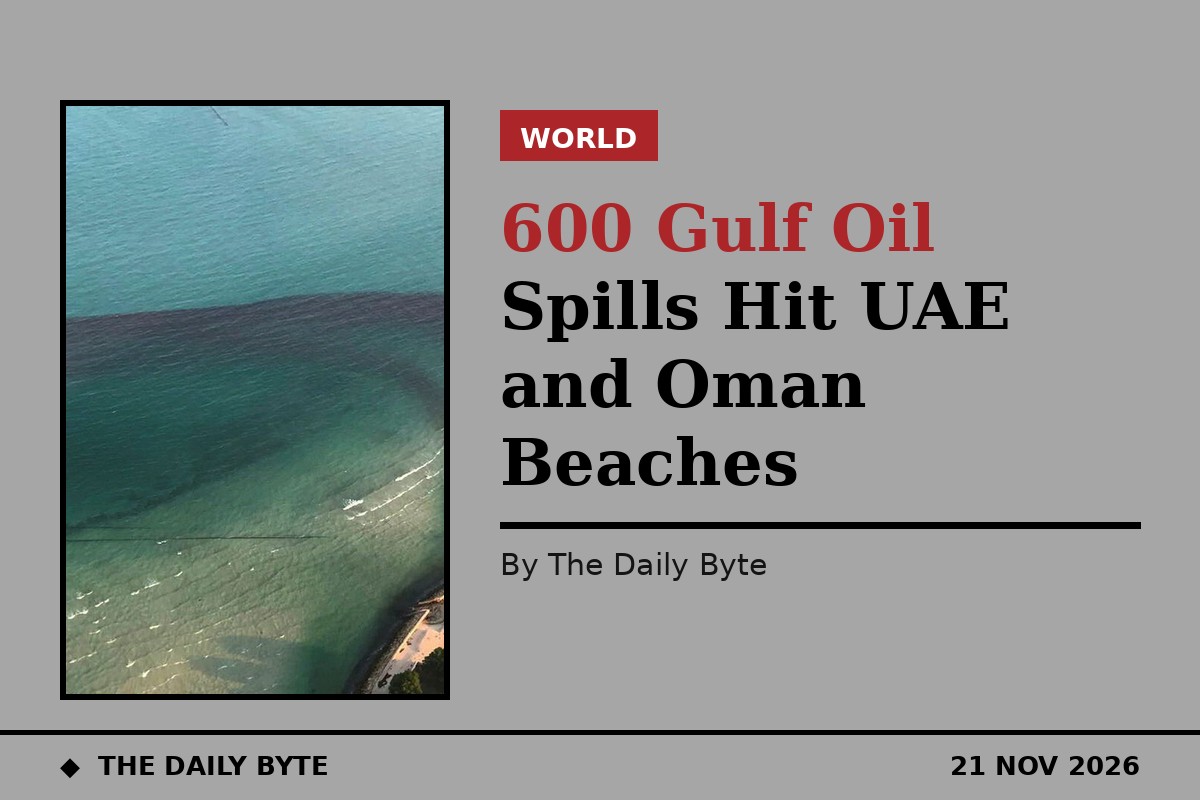
Oil from tankers attacked in the Strait of Hormuz is washing onto beaches in the United Arab Emirates and threatening some of Oman's best-known dive sites, adding an environmental crisis to a Gulf tourism downturn now into its ninth month.
More than 600 oil spills have been identified in and around the Gulf since the US-Iran war began on 28 February, according to data released by environmental group Greenpeace and maritime tracking firm Kpler. The data is current to 19 November, and Greenpeace counts more than 160 attacks on oil tankers in that period, with some resulting in spills. An interactive map of the data shows slicks along much of the UAE's Gulf coast, through the Strait of Hormuz and down Oman's coast, as far as Muscat.
Dubai hotel occupancy fell to 68.4 percent in October, down 16.5 points from 84.9 percent a year earlier, according to CoStar's STR figures, a measure of how far the disruption has spread beyond the shoreline.
The scale of the damage
Reporting based on the same Greenpeace data a week earlier put the count at 540 spills as of 12 November, with the combined daily mapped areas of the slicks covering approximately 20,000 square kilometres, nearly the size of Wales. Greenpeace had by then identified more than 133 attacks on oil tankers since the conflict began. October was the worst month so far, with 37 attacks on shipping reported, and at least 10 ships were struck during the first 10 days of November.
The International Maritime Organization had confirmed at least 134 incidents in the Strait of Hormuz as of 11 November, with at least 25 seafarers killed. Among the most polluting incidents was an October attack on the supertanker Gem No 2 near the United Arab Emirates, which produced a slick extending more than 35 kilometres. A separate incident in early June generated a spill covering more than 600 square kilometres off Oman's coast at its peak.
Several ecologically important locations have experienced pollution since the conflict began, including the Hara mangroves, Shidvar Island, Qeshm Island, Oman's Musandam National Park and Iran's Minab River delta.
Beaches shut, then reopening
Beaches along the UAE's northern emirates and its east coast on the Gulf of Oman were closed as oil came ashore, with Khor Fakkan's Al Luluyah beach the first confirmed closure on the eastern shoreline. Some beaches have since reopened in stages as cleanup work progressed, but access on the east coast and in the northern emirates now depends on local notices that can change with each new tanker strike.
Not every slick has been tied directly to an attack. Some appeared around the time of reported strikes, although their exact causes remain unclear, and responsibility for the attacks themselves remains disputed. Iran's Revolutionary Guard Corps has been blamed for many strikes, while US forces have also targeted tankers and Iranian naval vessels during operations connected to the maritime blockade. Two Iranian naval vessels struck in March continued leaking oil for months, and another major spill followed an attack on 3 August on the Liberian-flagged Minoan Pioneer.
Marine biologists warn that the shallow, warm waters of the Gulf leave little room for recovery. Heat already kills corals, algae and fish, and oil coating birds' feathers or mangrove roots adds further damage to reefs, mangroves and seagrass habitats that support marine mammals, sea turtles, seabirds and fish. With maritime restrictions preventing comprehensive field investigations, researchers say the full extent of the ecological damage remains uncertain, and the spills keep coming as long as the attacks on shipping continue.


