NHS Gynaecology Waiting List Hits 585,378 in August
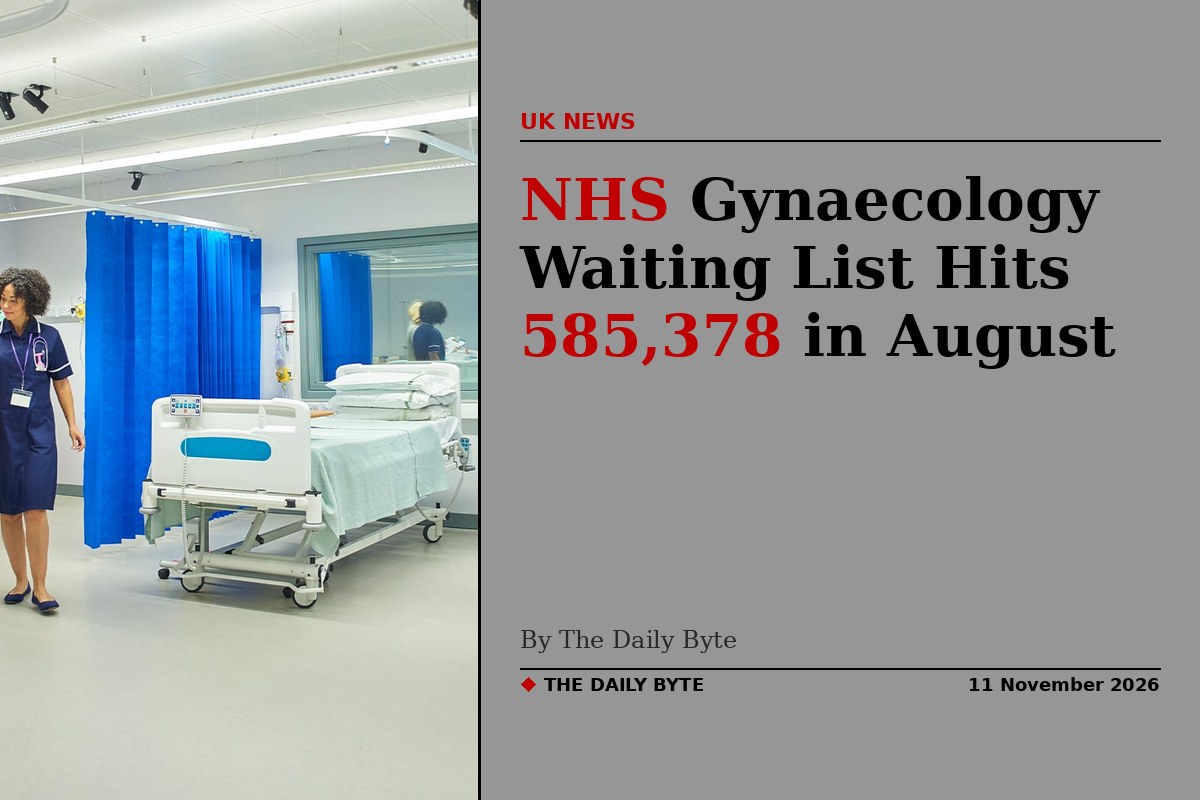
The gynaecology waiting list in England has risen for a fifth month in a row, reaching 585,378 in August 2026, according to the Royal College of Obstetricians and Gynaecologists (RCOG).
The College said the latest NHS England figures showed gynaecology moving in the opposite direction to the wider elective waiting list, which has been falling. More than 12,800 patients had been waiting over a year for gynaecology care, and fewer than 60 per cent were seen within the Government's 18-week standard, against an average of more than 65 per cent across all elective specialties.
Demand keeps rising
Demand for gynaecology services remains high. The College reported 115,000 new referrals in August, while an average of 125,594 patients were seen each month so far this year. Four NHS trusts did not submit data for August, so the published total is likely to understate the true size of the list.
RCOG President Dr Alison Wright said the contrast with the overall waiting list was stark. While the Government's wider elective recovery was making progress, she said, that was not the story for women and for gynaecology. The College warned that services remain highly vulnerable to further setbacks, with winter pressures still ahead.
Long waits carry real consequences
The College's 2024 report, Waiting for a Way Forward, found that a quarter of the women surveyed had attended accident and emergency because of their symptoms, and more than one in ten of those went on to need emergency treatment such as blood transfusions. The report also found that long waits affect work, relationships and mental health, with many women living in pain for months or years while they wait for diagnosis or treatment.
The burden is not shared evenly. RCOG analysis found that women in the most deprived areas accounted for 15 per cent of those waiting more than 52 weeks, compared with 7 per cent from the least deprived areas. The College has noted that recording of ethnicity in the waiting list data is incomplete, which means the picture on inequality is probably understated rather than overstated.
Diagnosis and treatment are separate queues
Part of the problem is that the headline figure hides two different bottlenecks. A woman waiting for a scan or a diagnostic test and a woman waiting for surgery both appear in the same 585,378 total, but they need different capacity. Analysis of the figures suggests that diagnosis and treatment must be tackled separately if the list is to come down, rather than treating it as a single queue.
The Government has acknowledged the need to reduce gynaecology waiting lists through commitments in the renewed Women's Health Strategy. The College said it would keep pressing for long-term investment in the gynaecology workforce, training and facilities, warning that short-term measures alone would not clear a backlog that has been building for years.