Haigh tells CBI public control is not anti-business
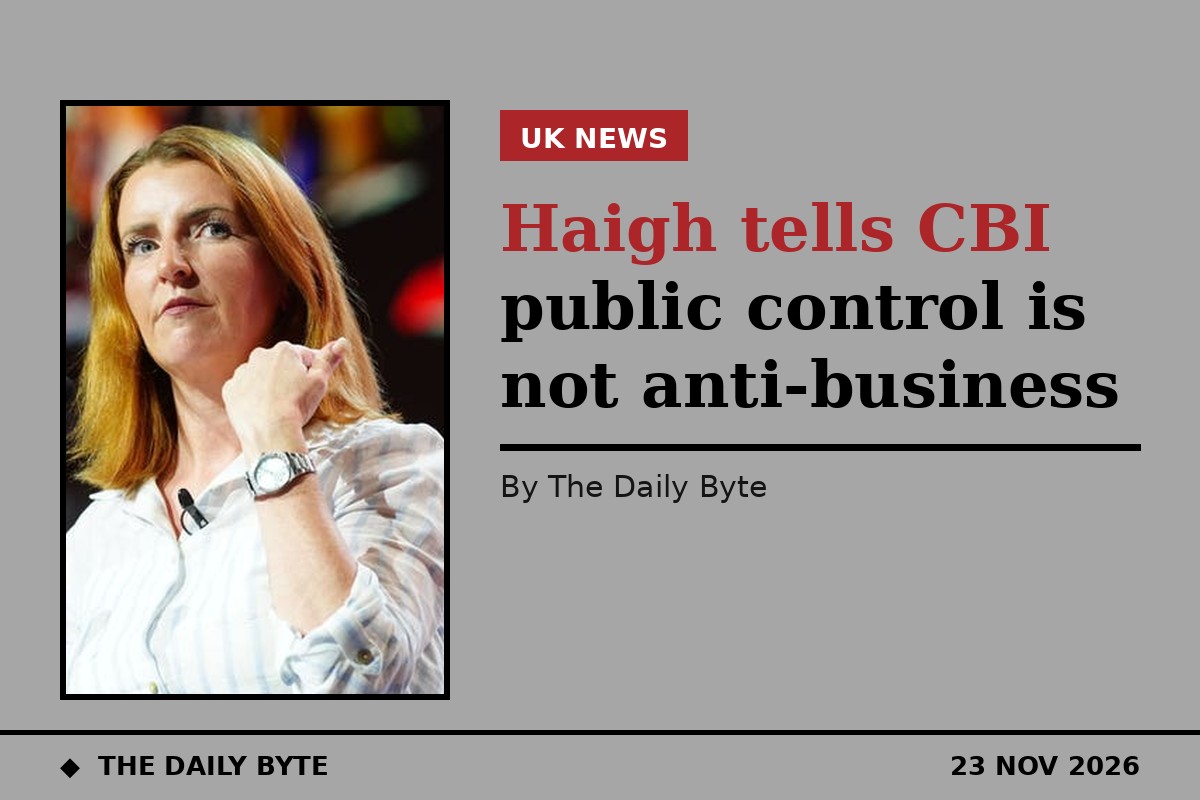
First Secretary of State Louise Haigh has told business leaders that greater public control of energy and water utilities is pragmatic rather than ideological, and promised government backing, including legal indemnities, for the country's most critical infrastructure projects.
Ms Haigh, the Prime Minister's de facto deputy, was speaking at the Confederation of British Industry's annual conference in London on Monday 23 November. She said the Government wanted a new partnership with private capital, built on clear rules, clear expectations and a fair return on investment.
Energy costs in focus
Ms Haigh put the cost of energy at the centre of her case. She said Britain had the highest industrial energy prices among advanced economies. In 2008, UK industrial electricity prices were about 23 per cent above the median for the EU14 and the UK; by 2025, she said, they were more than double that median.
One in four British manufacturers said they had moved production abroad, or were seriously considering it, because of energy prices, she told the conference, and output from energy-intensive industries fell by about a third between 2021 and 2024. Research by the CBI suggested that cutting industrial energy costs by 20 per cent would unlock £130 billion of economic output.
The Government has already expanded support for heavy industry, and under the British Industrial Competitiveness Scheme about 10,000 manufacturers can take up to £40 per megawatt hour off their bills from April, with applications closing in one week. Ms Haigh said the longer-term plan was to take costs off bills, build an energy system for users rather than producers, and break the link between the price of electricity and the price of gas.
She noted that bill payers spent £2 billion last year paying to switch off wind farms while paying to switch on gas plants elsewhere, and said the aim was to bring energy bills in line with European counterparts by the middle of the next decade.
Water, nuclear and planning
On water, Ms Haigh said England was almost unique in handing its entire water system to private owners, with Chile the only other country in the same position, and argued that foreign governments now owned a bigger share of Britain's utilities than the British government did. A Water Bill built on the Cunliffe review will restructure oversight of the industry, with a single independent regulator and a more supervisory approach.
For major projects, she promised a Nuclear Regulation Bill in the new year, including reforms to judicial review, and said Parliament would be empowered to designate and authorise the country's most critical infrastructure projects. Where legal challenge was unavoidable for the most critical projects, she said, the Government would offer indemnities so developers did not down tools. “Time is a tax,” she told the conference, describing legal challenges as a chill factor that left essential projects in limbo.
Ms Haigh was clear that the approach did not mean wholesale nationalisation. Ownership was not a requirement, she said, pointing to the railways, which were taken back into public ownership because the system was not working for passengers or taxpayers, while open access operators would still be allowed to challenge Great British Railways.
Business wants decisions
CBI chief executive Rain Newton-Smith used the same conference to press the Government for action rather than promises, warning that the Budget had left too many question marks over the economy. She said the ten-year plan and the spending review must give businesses answers, describing the country as being in a financial straitjacket of high tax and low growth, with one pound in every 13 of government spending going on servicing debt. She also warned that talk of greater public control sounded like code for renationalisation, which she called kryptonite to investment, and backed former minister Alan Milburn's recommendations on youth jobs.