Haiti forces retake national stadium from gangs
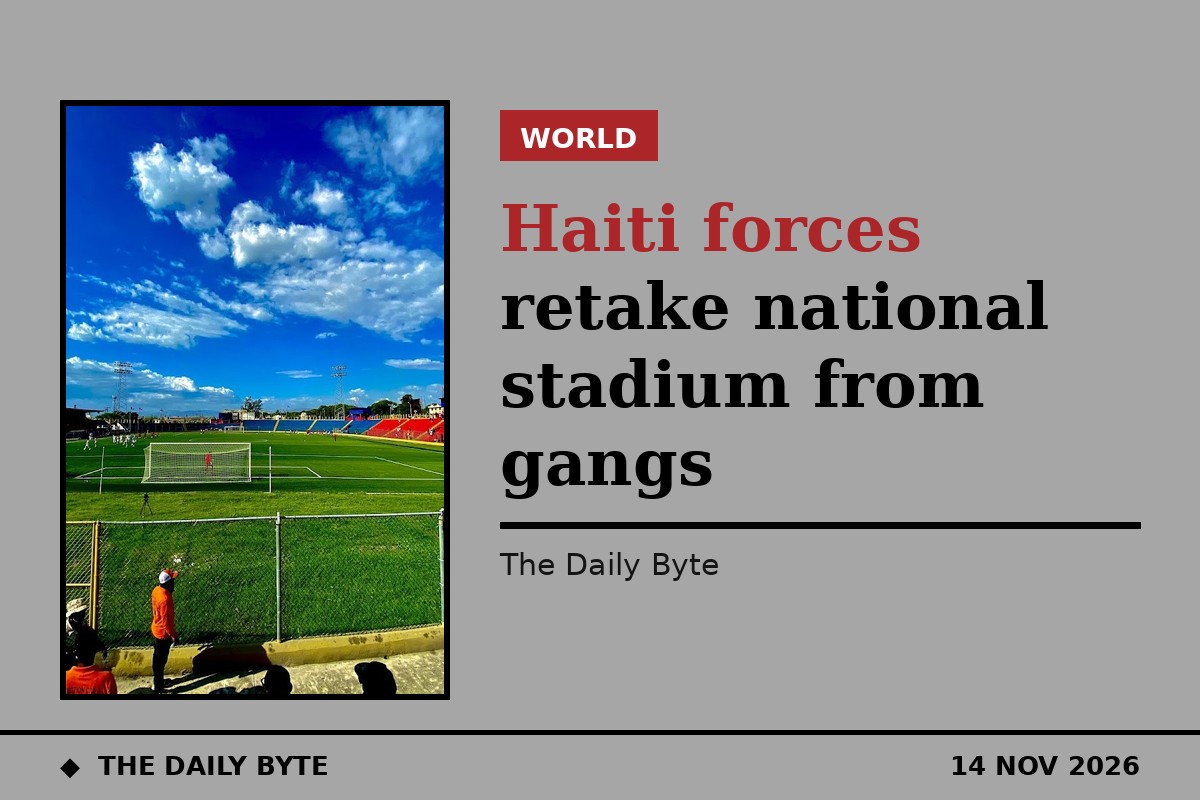
Haitian and Salvadoran forces have retaken Haiti's national football stadium in Port-au-Prince after more than two years of gang control, and will use it as a base for an offensive into gang-held neighbourhoods. The joint operation secured the 10,000-seat Stade Sylvio Cator on 12 November, SOFX reported.
Salvadoran President Nayib Bukele said the operation brought together the Haitian National Police, the Armed Forces of Haiti, the government's Task Force and Salvadoran special forces under a bilateral security agreement. That evening he posted a 76-second video on X showing armoured vehicles rolling through the capital as residents cheered, soldiers sweeping the stadium's empty stands and, on the field, troops fitting rifles onto four-legged robot dogs.
"We will establish a base of operations at the stadium to advance from there into gang-controlled territories," Bukele wrote in Haitian Creole. "We now have the advantage over the field." He warned gang members in the surrounding neighbourhoods to leave before the offensive begins, saying those who choose to remain and fight would face the consequences.
Human skulls claim not verified
Bukele also said troops found several human skulls inside the stadium, and his video shows one lying among leaves and dirt near a wall. That claim has not been independently verified in the reporting available so far, and authorities have released no independent confirmation about the reported human remains. The Haitian Tribune reported that Haitian police confirmed the takeover, and that Le Nouvelliste reported Salvadoran troops and vehicles stationed inside the stadium on Thursday.
Gangs had held the stadium since February 2024, forcing Haiti's national team to play its World Cup qualifiers in Curacao on the way to reaching the 2026 World Cup. The venue is named for Sylvio Cator, the Haitian athlete who won a silver medal in the long jump at the 1928 Amsterdam Olympics.
Salvadoran buildup after ambush
El Salvador's buildup in Haiti began after gunmen ambushed four Salvadoran aviation technicians serving with the United Nations-backed Gang Suppression Force on 18 October in Croix-des-Bouquets, east of Port-au-Prince. The four men remain missing, and Haiti's government has said they were abducted. Before the attack, about 200 Salvadorans were in Haiti, most of them in medical support roles.
Bukele answered the ambush by sending more than 2,000 troops, a force about the size of the entire UN-backed mission, and the Associated Press has since counted at least 2,500 Salvadoran personnel in the country. On 10 November, Bukele said his troops had destroyed the home of Wilson "Lanmo San Jou" Joseph, who leads the 400 Mawozo gang, along with the gang's headquarters.
Haitian Prime Minister Alix Didier Fils-Aime has praised the Salvadoran leader, saying in a speech on 3 November that Bukele "came to stand on the side of the Haitian people". Fils-Aime is due to visit El Salvador in the week of 16 November for talks on the future of the Salvadoran deployment, a Salvadoran government official told the Associated Press.
Questions over command and coordination
The United Nations has said most Salvadoran personnel are operating outside the UN-backed Gang Suppression Force framework, raising questions about coordination, command and accountability. The stadium's recapture gives Haitian and Salvadoran forces a strategic position in central Port-au-Prince, but securing one site does not by itself restore safety across the capital, and any push into gang-held areas will put civilians at risk.


