Haiti PM Defends El Salvador Pact Amid Rights Row
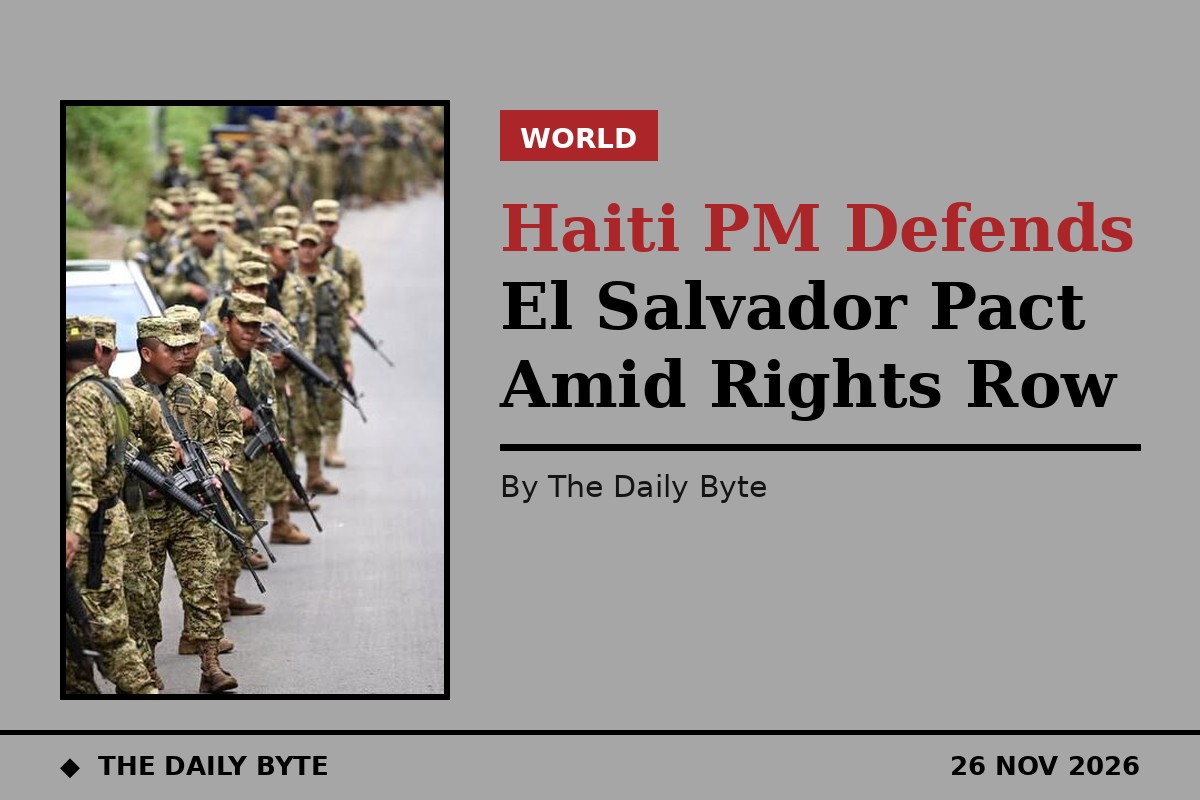
Haiti's Prime Minister Alix Didier Fils-Aime has publicly defended his government's security agreement with El Salvador, after Amnesty International urged both countries to publish the deal and explain how the deployed forces are overseen.
Fils-Aime said on social media on Tuesday that the agreement with El Salvador must be seen in the context of a national security emergency. While acknowledging the importance of transparency and human rights, he argued that those principles should not be used as a reason to deny Haitians their right to safety and freedom from criminal control.
Amnesty answers back
Amnesty International replied the same day, saying it was pleased the prime minister was responding publicly to its calls to protect the Haitian population, particularly children. The organisation repeated its demand that the bilateral cooperation agreement be made public, along with the rules on the use of force and the oversight and complaint mechanisms.
"Security and human rights are not opposites, but complementary and inseparable," Amnesty wrote, adding that any international security cooperation must include safeguards against abuses. It said it does not oppose the use of force by state agents, provided it is proportionate and necessary to protect people's lives and physical integrity, and noted that it has repeatedly documented and condemned serious violations by armed gangs against children.
Amnesty first asked on 10 November for the agreement governing the Salvadoran deployment to be published, and for clarity on the whereabouts of four Salvadoran service members reported missing since 18 October.
Why the troops are there
El Salvador has deployed more than 2,000 troops to Haiti since late October, after four Salvadoran aviation technicians went missing in a gang ambush on 18 October in Croix-des-Bouquets. The force operates independently of the UN-backed Gang Suppression Force already in the country.
President Nayib Bukele has said his troops have dismantled the headquarters of two criminal organisations. Haitian police have also reported an intensification of operations against armed groups in the Martissant district of south-western Port-au-Prince, saying about 54 people described as bandits were killed in an offensive on Monday, after 34 deaths in the same area the previous Thursday.
On 20 November, Haiti's justice minister Patrick Pelissier announced that three new prisons will be built in Haiti by a Salvadoran company working with a Haitian partner, after he toured El Salvador's CECOT maximum-security prison. No cost, locations or financing details have been disclosed.
Regional backing
The deployment has drawn support elsewhere in the region. The president of the Dominican Republic, Luis Abinader, said on Tuesday that his government is collaborating with El Salvador, providing logistics and intelligence as the Salvadoran troops battle gangs, and called on the UN-backed force to coordinate with them.
Fils-Aime is scheduled to visit El Salvador next week to discuss the future of the Salvadoran troops in Haiti. The text of the agreement between the two governments has still not been made public.
Sources: Times Now World and De Ultimo Minuto.


