Haiti Turns to El Salvador to Build Three New Prisons
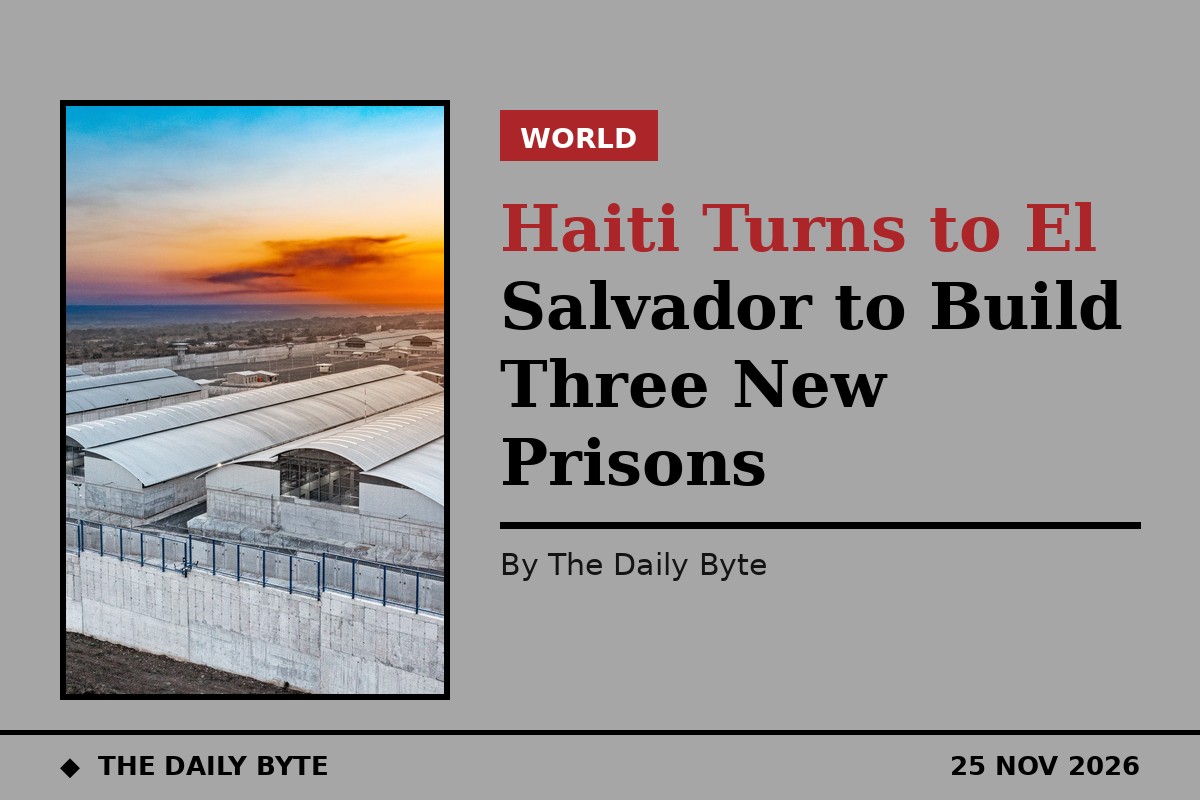
Haiti has agreed with El Salvador to build three new prisons, deepening a security partnership that has already seen Salvadoran troops deployed to fight gangs in the Caribbean nation. Justice Minister Patrick Pélissier announced the agreement on Friday after returning from an official visit to El Salvador, where he toured the country’s huge maximum-security CECOT prison.
A Salvadoran company will build the three facilities in partnership with a Haitian firm, with construction of the first expected to begin soon. Prime Minister Alix Didier Fils-Aimé has ordered the project to be speeded up, Pélissier said. He did not disclose how much the prisons will cost, whether El Salvador will help pay for them, or whether Salvadoran officials will play any role in running them. No design or capacity figures have been announced.
A model borrowed from El Salvador
Pélissier spoke warmly of CECOT, the Terrorism Confinement Centre opened by President Nayib Bukele in 2023, which can hold up to 40,000 inmates. “Once you enter, there is no hope of ever seeing the outside world again,” he said of the prison.
El Salvador has been under a state of exception since 2022, during which more than 90,000 people have been imprisoned. The United States has also deported Venezuelans and Salvadorans to CECOT, some of whom have alleged torture there after their release.
Haiti’s need for prison space is acute. Gangs raided the country’s two biggest prisons in 2024 and released thousands of inmates, and its remaining prisons have long been notorious for severe overcrowding. Human rights experts have warned that prisoners sleep standing up and that hundreds have died in custody in recent years. A 2023 visit by the Associated Press to one Haitian prison found inmates thirsty and starving.
Gangs control much of the capital
Armed gangs control an estimated 70 percent of the capital, Port-au-Prince, and swaths of the country’s central region. Haiti has not had an elected government since President Jovenel Moïse was assassinated in 2021, and elections are set to take place next year.
The prison deal is the latest step in a fast-growing relationship between the two countries. Around 2,500 Salvadoran soldiers are deployed in Haiti under a bilateral agreement endorsed by Washington, sent by Bukele after four Salvadoran air force technicians disappeared in October after coming under gang fire in Croix-des-Bouquets, north-east of Port-au-Prince.
The deployment is separate from the United Nations-authorised Gang Suppression Force, which was established to help dismantle armed gangs, protect infrastructure and support the Haitian National Police. That force, authorised by the UN Security Council in October 2025, is meant to have 5,500 security personnel but has not yet reached full strength.
First deaths for Salvadoran troops
The prison announcement came on a hard day for the partnership. El Salvador’s armed forces said on Friday that two of its soldiers had been killed and two others injured in an accidental explosion while handling explosives at a camp in Haiti, the first confirmed deaths of the deployment.
Some Haitians have celebrated Bukele’s decision to send troops to fight the gangs, but experts have warned that the operation is a political gamble for a leader running for a third term, and that it poses risks to civilians.
For now, the terms of the deployment remain largely undisclosed. El Salvador’s security minister has said the troops will go home the day the four missing technicians reappear, while Pélissier has said Haiti needs the Salvadorans at least until next year’s elections and that the two governments will work on a legal framework so they can stay longer.


