Rafah Hamas fighters reject surrender deal
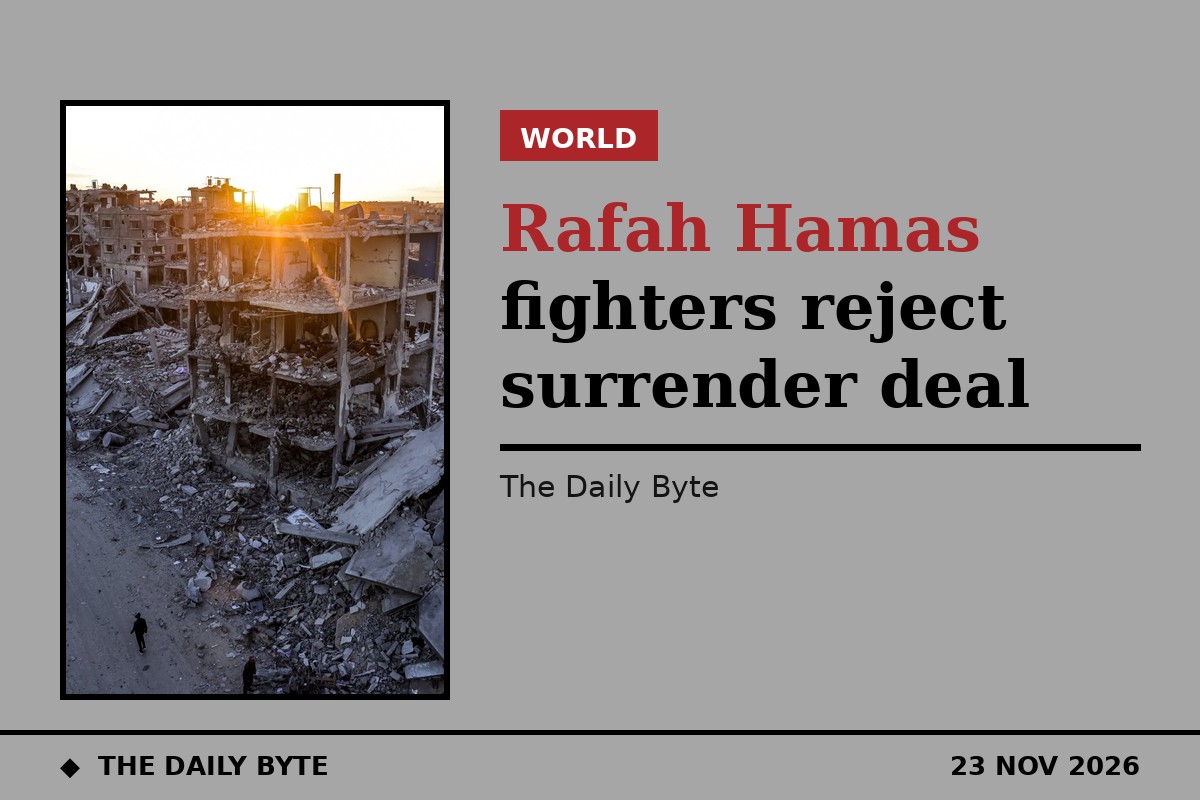
Hamas fighters trapped in the Israeli-held Rafah area of Gaza have refused to surrender under a proposal put forward by Egyptian mediators, saying they will not hand over their weapons in exchange for safe passage. The refusal, issued by the group's armed wing on Sunday 23 November 2026, leaves a deal that US envoy Steve Witkoff has called a test case for disarming Hamas across Gaza in doubt.
Under the proposal, around 200 fighters would surrender their arms to Egypt and provide details of tunnels in Rafah so they can be destroyed, in return for safe passage to other parts of the enclave. Neither Israel nor Hamas has publicly accepted the terms. The exact number of fighters is unclear, and sources close to the talks have said some have been out of contact since March and may not know the ceasefire is in effect.
Al-Qassam Brigades say surrender is not an option
The Al-Qassam Brigades, the military wing of Hamas, said in a statement on Sunday that its fighters in Rafah would not surrender to Israel and urged mediators to find another solution to a crisis that threatens the month-old ceasefire. The group said the idea of surrender and handing itself over "does not exist in the dictionary of the Al-Qassam Brigades" and held Israel responsible for engaging its forces while they were defending themselves.
US special envoy Steve Witkoff has said the Rafah deal would serve as a test for a broader disarmament process across Gaza. Witkoff and Jared Kushner, President Donald Trump's son-in-law and adviser, are in Israel on Monday 23 November 2026 for talks with Prime Minister Benjamin Netanyahu, with the Rafah fighters high on the agenda. Reporting on the visit says the envoys are expected to press Netanyahu to show flexibility, out of concern that an Israeli move against the fighters could collapse the ceasefire.
Why Rafah has become a flashpoint
Rafah, in southern Gaza, has been one of the most volatile areas since the US-brokered ceasefire took effect on 10 October 2026. It has seen attacks on Israeli forces attributed to Hamas, despite the group denying responsibility, and the violence there has led to some of the worst incidents since the truce, with three Israeli soldiers killed and dozens of Palestinian casualties in retaliation.
Separate reporting has suggested a variant of the plan under discussion would move the fighters to a third country for several years, with an amnesty from Israel and a pledge not to return to militant activity, although no country has yet agreed to host them. Under the Egyptian proposal as reported, the fighters would instead be moved to other areas inside Gaza.
What happens next
The next phase of President Trump's plan involves setting up a technocratic Palestinian committee under international supervision and deploying an international security force. Witkoff has said that force could be in place within three weeks, paving the way for Hamas to disarm and demilitarise Gaza. Whether that timetable holds now depends in large part on whether the Rafah standoff can be resolved without further fighting.
Frequently asked questions
What is the Rafah proposal? Egyptian mediators have proposed that around 200 Hamas fighters in Israeli-held Rafah surrender their weapons to Egypt and disclose tunnel locations, in exchange for safe passage to other parts of Gaza.
Why does it matter? US envoy Steve Witkoff has described it as a test for the wider disarmament of Hamas across Gaza, a central part of the next phase of the ceasefire plan.
Have Israel or Hamas accepted it? No. Neither side has publicly accepted the proposal, and Hamas's armed wing said on Sunday that surrender is not an option.
Source: Arab Press, with further reporting on the envoys' visit from Leaders MENA.


