Hamas Rebuilds Its Grip on Gaza, Assessment Says
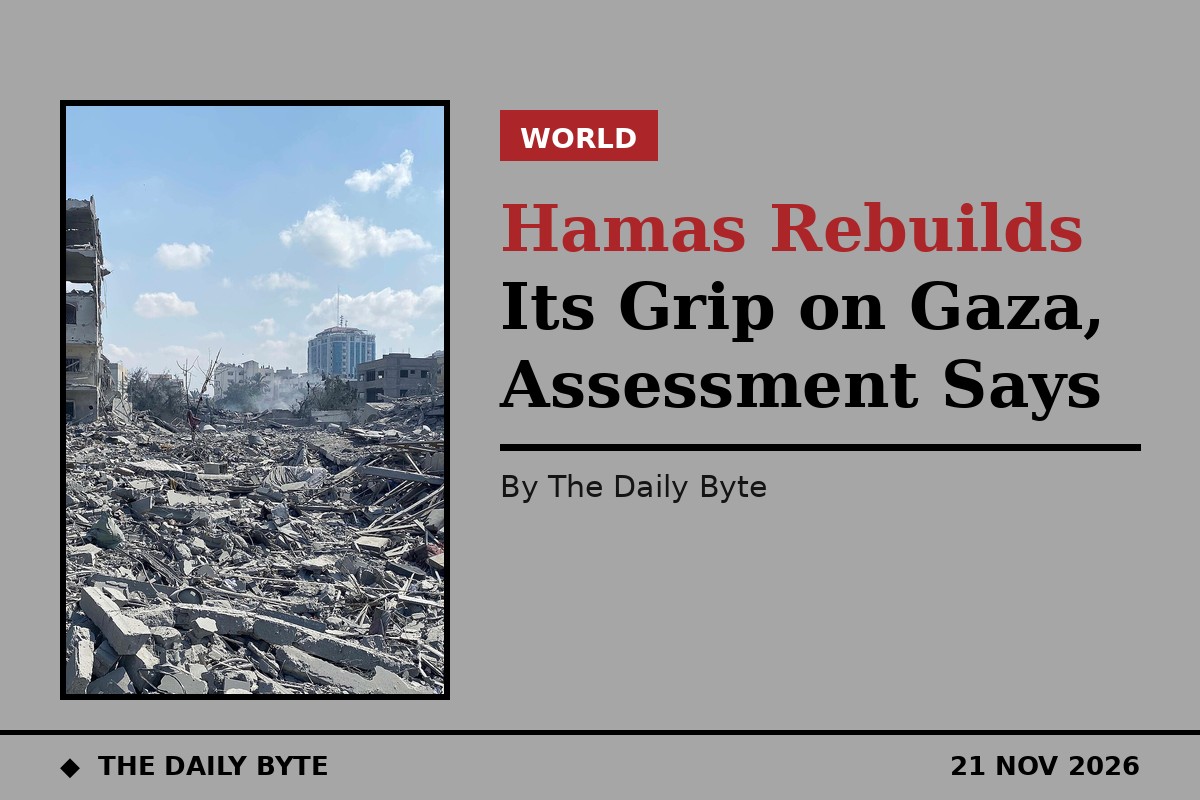
Hamas is rebuilding its governing and security infrastructure across the Gaza Strip, according to an Israeli security assessment published by the newspaper Yedioth Ahronoth and reported on Friday.
The assessment puts the scale of the revival in stark numbers. Hamas now employs about 80,000 people across its institutions, including roughly 50,000 government employees and some 30,000 armed operatives in its military wing. Three years into the war, the group is steadily restoring the grip it held before the fighting, the assessment says.
The rebuilding is taking place while debate over Gaza's future continues without a clear political decision. No agreed plan for who governs the territory once the fighting ends has been settled, and the assessment presents that vacuum as a central reason for Hamas's recovery.
Municipalities and ministries back at work
Of the 25 municipalities that operated in Gaza before the war, 22 are functioning again, according to the assessment. Fourteen kept working throughout the war in areas that remained under Hamas control, while eight more have resumed operations in areas the Israeli military once held that are now back in the group's hands.
All 17 government ministries that existed before the war have also resumed work and are providing services to residents. The Interior Ministry runs the security apparatus and enforces public order. The Economy Ministry handles price enforcement, regulates the use of cash and collects taxes. The Health Ministry is expanding hospitals and opening new medical centres, and the Transportation Ministry has reopened vehicle licensing centres.
Civil defence crews are carrying out firefighting and rescue work, and the Agriculture Ministry supervises crops and the movement of produce to markets. According to the assessment, Hamas's police and security services are once again operating openly, after working in a reduced and covert format for much of the war because of the threat from Israeli forces.
One body that worked in secret during the war, the so-called Arrow Unit, has shrunk significantly and is now almost inactive as the regular police return to the streets, the assessment says.
Cash, taxes and recruitment
Money is one of Hamas's main difficulties, according to the assessment, and the group has set up a special finance committee to collect taxes from merchants and businesspeople, in some cases retroactively. The committee summons people who brought goods and trucks into Gaza during the war and demands large sums from them, including payment for coordination arrangements and a fee for every truck.
One of the places Hamas uses to collect the money is Nasser Hospital in Khan Younis, according to the information in the assessment. Hamas has also begun requiring Gaza businesses to accept cash for at least 30 per cent of the value of any purchase, and is expected to start fining businesses that do not comply.
The assessment also claims the Hamas-run Health Ministry is selling medical documents to people close to the organisation, allowing patients to leave Gaza for treatment abroad at an estimated price of 20,000 to 30,000 dollars per person. It further claims Hamas is working to replace the companions of patients leaving the territory with its own associates.
Recruitment is rising too, the assessment says. Officials assess that rebuilding some of Gaza's mosques is helping the group re-establish its presence among the population, particularly among young people, and that through religious institutions and community activity it is seeking to expand its pool of operatives.
The assessment also points to what it describes as Hamas's military use of hospitals, including Shifa, Shuhada al-Aqsa and Nasser, saying the group cuts the operating hours of certain departments so its operatives can move more freely inside them.
A weakened group that still governs
The assessment does not present Hamas as unscathed. It holds that the group took a heavy blow over three years of war, lost infrastructure and was stripped almost entirely of the semi-military frameworks it had on the eve of 7 October 2023. Even so, the revival of its governing institutions, security apparatus and economic system, along with its collection and recruitment drives, points to its continued hold on the territory.
The Israeli military, meanwhile, is continuing operations against what it describes as Hamas's infrastructure. This week it launched a strike to destroy a tunnel west of the Yellow Line, the line marking Israeli-held areas in Gaza, saying the tunnel posed an immediate threat to its troops.
All of the figures in the assessment come from Israel's security establishment, and they have not been independently verified. The reports reviewed carried no response from Hamas. But if the assessment is even broadly right, the group that Israel set out to destroy still runs the daily life of Gaza, from town halls and ministries to taxes and policing, while the question of who governs the territory next remains unanswered.


