Heads warn free breakfast clubs may prove unviable
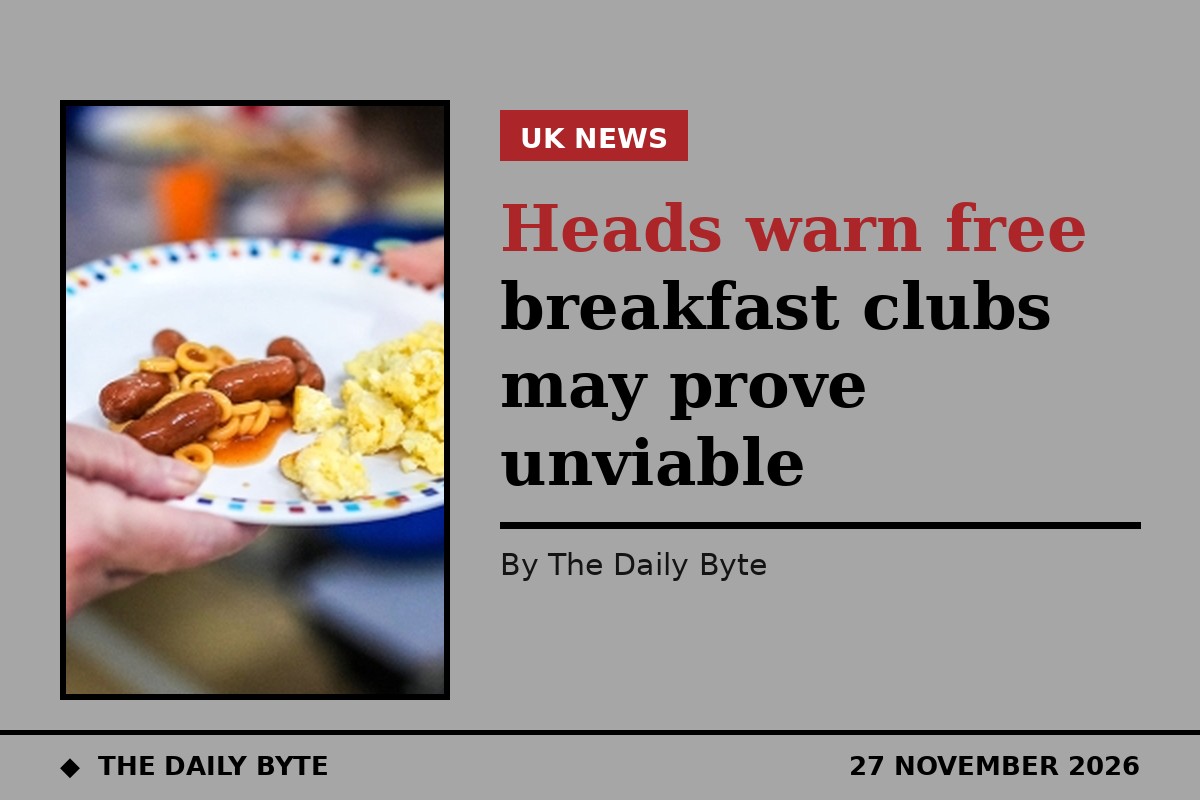
Headteachers are challenging the government's promise of a free breakfast club in every primary school by 2029, warning that the clubs may be financially unviable or unsuitable for many schools.
The Department for Education has said all primaries will offer free breakfasts by 2029. But according to the department's own figures, reported on Friday 27 November 2026, only 2,797 schools have opened a free club so far, leaving more than 14,000 without one.
Heads say the sums do not add up
Thomas Moore, headteacher at Bury Church of England Primary School in West Sussex, told Tes he does not wish to open a free breakfast club and has no plan to do so. He said the school had run the numbers and the club would be financially unviable, which would mean taking money from the core budget.
Funding is a recurring concern. Department for Education funding for breakfast clubs increased by 28 per cent last year after early adopter schools reported having to dilute juice and avoid serving fruit to make their funds go further.
Anne Slade, chief operating officer at The Pioneer Academy, a trust of 23 primary schools, said she agreed with the principle of ensuring that pupils do not start the day hungry, but added that primaries are being asked to implement the scheme when budgets remain under significant pressure and accountability expectations continue to grow.
Kerry Coe, headteacher at St John the Baptist Primary School in Stockton-on-Tees, said mainstream funding for breakfast clubs makes it much more difficult for schools with additional resource provision or large intakes of pupils with special educational needs and disabilities. She said she offers the club to all children, but not all children can take it up, even if their families need it, because of transport or because of the specialist support that might be required.
Transport and special schools
Transport is a particular barrier. The government's existing home-to-school transport policy does not cover travel to breakfast clubs, which matters for families who rely on school transport and cannot get children to school early.
The issue is sharpest for special schools. The government has confirmed that special schools are covered by the breakfast clubs pledge if they educate primary-aged pupils, and leaders of special school trusts have raised concerns about staffing ratios and the specialist support some pupils need before the school day begins.
What the government has promised
Free breakfast clubs in every state-funded school with primary-aged pupils in England is a Labour manifesto commitment. The Children's Wellbeing and Schools Act 2026 made the offer a requirement, and the government has said new groups of schools will be onboarded in stages throughout 2027 and 2028.
The national rollout began in April 2026, supported by £80 million of investment in the 2026 to 2027 financial year, with a further 2,000 schools joining the 750 schools that took part in the early adopter scheme launched in April 2025.
Government guidance says schools must offer a club that is open to all pupils in reception to Year 6, lasts at least 30 minutes immediately before the school day, is free, and provides a breakfast that meets school food standards for England. Schools cannot limit the number of places available.
The department says schools that offer free breakfast clubs report improvements in behaviour, attendance and academic attainment. Headteachers who spoke to Tes did not dispute the aim of the policy. Their challenge is whether the funding, staffing and transport arrangements will let every school deliver it without cutting into the money needed for teaching.


