Healey's first Budget: bank tax up, £100 energy help
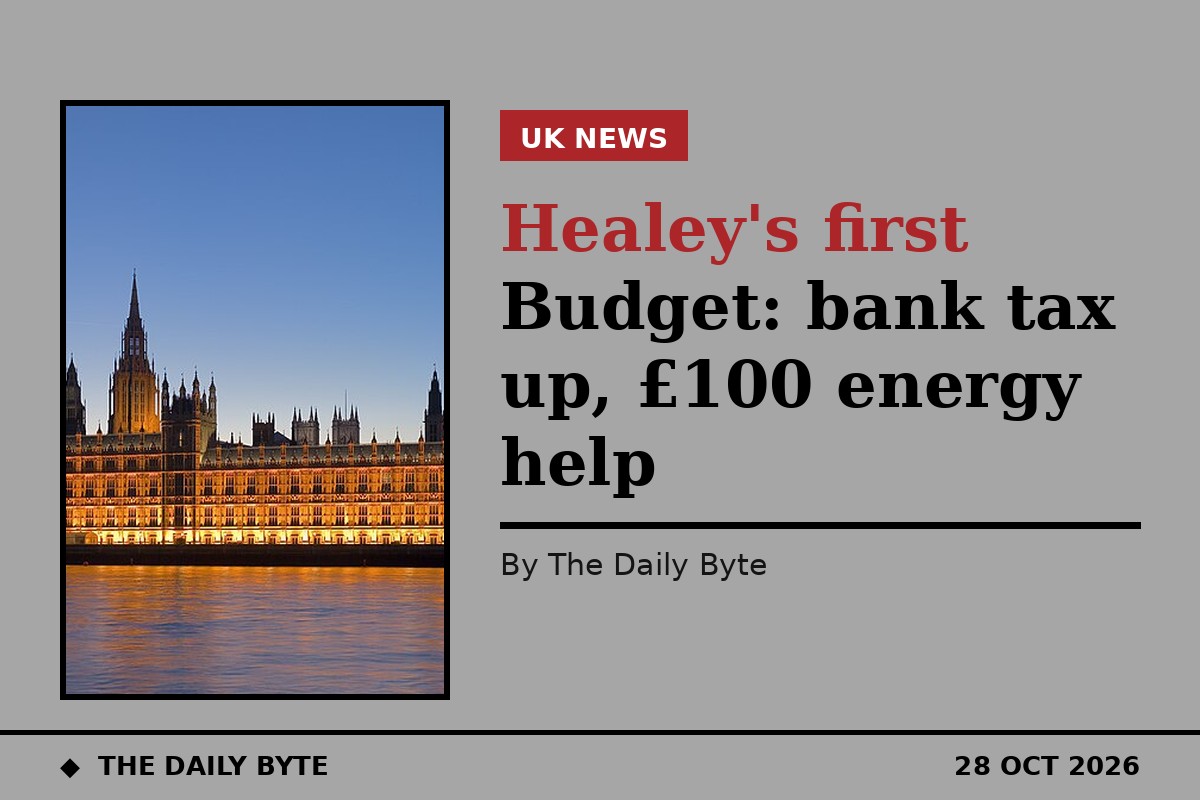
Chancellor John Healey has delivered his first Budget, describing it as a Budget for working people, with help for household bills paid for in part by higher taxes on banks. The package, delivered on Wednesday 28 October under Prime Minister Andy Burnham, combines energy support, a higher minimum wage and extended fuel-duty relief with tax rises on banks, gambling and online marketplaces.
Banks pay more, households get help
The bank surcharge rises from 3% to 6% for 15 months from January, partly reversing a cut from 8% three years ago. Shares in HSBC, Barclays, Lloyds and NatWest rallied after the announcement, with Barclays, NatWest and Lloyds up around 4%, as the rise came in smaller than many lenders had feared. The industry lobby UK Finance has said Britain already taxes banks more heavily than other major financial centres, estimating the sector paid £25.7 billion in direct tax in the year to end-March, while unions had pressed for an even larger rise.
Wages, fuel and the wider package
For households, the headline measures are a £100 Household Energy Payment for around 20 million homes in council tax bands A to D in England during 2027, an extension of the VAT cut on electricity bills to July 2027, and the scrapping of gas standing charges from 2027, covered in DailyByte's earlier Budget-day report. The 5p fuel duty cut is extended to July 2027, and the National Living Wage rises 3.9% to £13.21 an hour from April 2027, with the 18 to 20 rate rising to £11.27, benefiting 2.3 million of the lowest-paid workers. On growth, the Office for Budget Responsibility forecasts 1.2% this year and 1% next year, with fiscal headroom of £15 billion in 2029-30. Healey also set aside an extra £500 million for AI, including a Sovereign AI Unit and £140 million for strategic British AI firms, and a British datacentre covenant with tests on local jobs, community investment and water supplies.
Sources: Reuters and Simpson Wood.