Health Visitors End Nine-Month Strike After Pay Deal
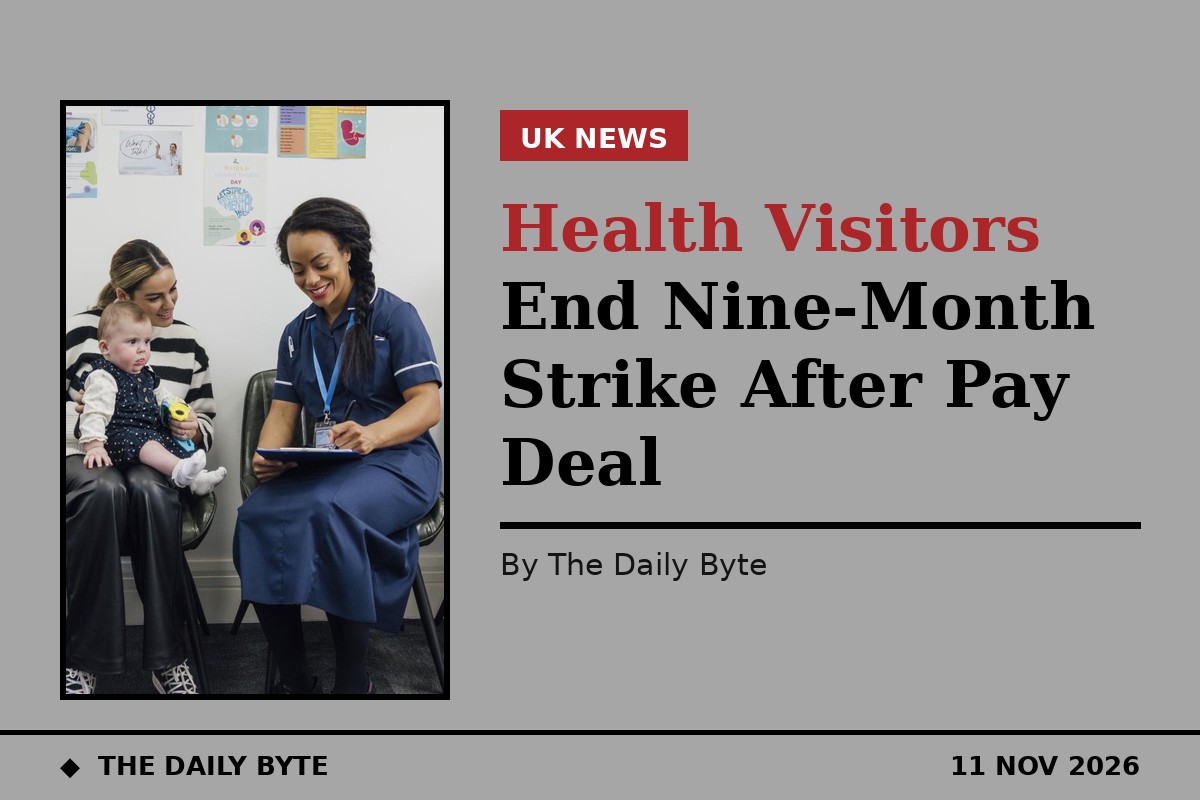
Around 100 striking health visitors in south Wales will return to work on Monday, 16 November, after a nine-month dispute over pay and grading ended in a deal. The agreement, reached between Cwm Taf Morgannwg University Health Board and the Unite union, creates a new senior role for the staff and brings one of the longest-running disputes in Welsh NHS history to a close.
The health visitors, who support families with babies and young children across Bridgend county, Merthyr Tydfil and Rhondda Cynon Taf, walked out in February 2026. New figures published on 11 November show the scale of the disruption: more than 3,000 children were recorded as not having received an examination under the Healthy Child Wales Programme in September alone.
What the deal includes
Under the settlement, the health board will develop a new Band 7 Specialist Health Visitor role, with additional responsibilities and accountabilities beyond the current Band 6 role. Eligible Band 6 health visitors will be able to move into the new role from 1 January 2027, subject to the agreed development, job evaluation and approval processes.
Eligible staff will also receive a one-off resolution payment, subject to conditions set out in the final agreement. The amount of that payment has not been disclosed. The new role will be developed in partnership between the health board, health visiting staff and trade unions, according to Nursing in Practice.
Unite described the outcome as a historic win for its members. The health board’s chief executive, Paul Mears, said the priority was now to restore services to families and to support returning staff as well as those who worked throughout the dispute.
Why they walked out
The dispute centred on job grading. The health visitors said their work had been evaluated as matching a Band 7 role, but they were being paid at Band 6, leaving them up to £9,000 a year worse off. The union estimates staff were losing between £8,000 and £9,000 a year as a result.
Health visitors visit families from pregnancy until a child is five, carrying out development checks and offering advice on feeding, sleep and child health. The Welsh government welcomed the return of staff and said restoring services for babies and young children was now the priority.
The impact on families
The strike sharply reduced the service. Home visits by the health board fell from 6,140 in March to May 2025 to 909 in the same period in 2026, a drop of about 85%, and thousands of appointments for babies and young children were missed.
Figures obtained by The Valleys Lead and published on 11 November show that more than 3,000 children were recorded as not having received an examination in September. The health board has said its focus now is on rebuilding the service and catching up on missed checks for families in the area.
Frequently asked questions
When do the health visitors return to work? Around 100 striking health visitors will return to work on Monday, 16 November 2026.
What did the deal achieve? A new Band 7 Specialist Health Visitor role will be created, and eligible Band 6 staff can move into it from 1 January 2027, along with a one-off resolution payment.
How badly were services affected? Home visits fell from 6,140 in March to May 2025 to 909 in the same period in 2026, and more than 3,000 children missed an examination in September 2026.