HEC launches AI training for Balochistan universities
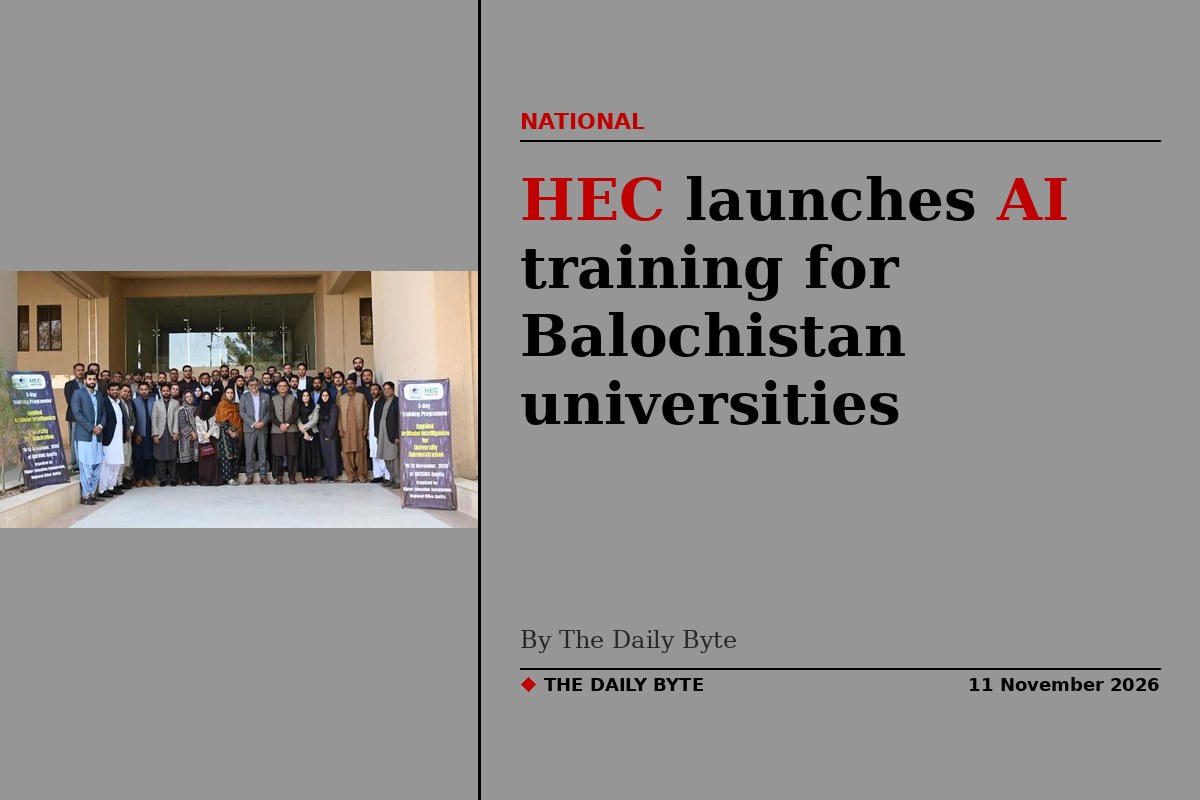
The Higher Education Commission (HEC) has launched a three-day training programme on applied artificial intelligence for university administrators from 12 universities in Balochistan, at the Balochistan University of Information Technology, Engineering and Management Sciences (BUITEMS) in Quetta.
The programme, titled "Applied Artificial Intelligence for University Administration", is run by HEC's National Academy of Higher Education (NAHE) in collaboration with the HEC Regional Centre in Quetta. Forty-two participants from 12 universities across the province are taking part, alongside representatives from colleges and from the Balochistan government's Higher Education and Technical Department.
What the training covers
The course is designed to familiarise university administrators with practical uses of artificial intelligence in running their institutions. Sessions cover institutional management, administrative decision-making, workflow optimisation, the automation of routine tasks and data-driven governance, through interactive sessions and practical learning activities.
Dr Khalid Hafeez, Vice Chancellor of BUITEMS and a member of the NAHE Core Committee, attended the opening ceremony as chief guest. He welcomed the initiative and said university administrators needed emerging technological skills to meet the changing demands of higher education governance and administration.
Part of a wider HEC rollout
The Quetta programme follows similar training already held in Islamabad and Lahore, and forms part of NAHE-HEC's wider effort to build AI skills among university faculty and management across Pakistan. The first cohort of the programme ran in Islamabad from 7 to 9 October, bringing together 30 administrative professionals from 14 universities, and HEC has said the training will be extended through its regional centres in Lahore, Karachi, Peshawar and Quetta.
Organisers say the Balochistan programme reflects a shared commitment to promoting AI awareness, improving administrative efficiency and building technology-enabled public institutions across the province.