High Court Allows Surgery for Toddler Born Intersex
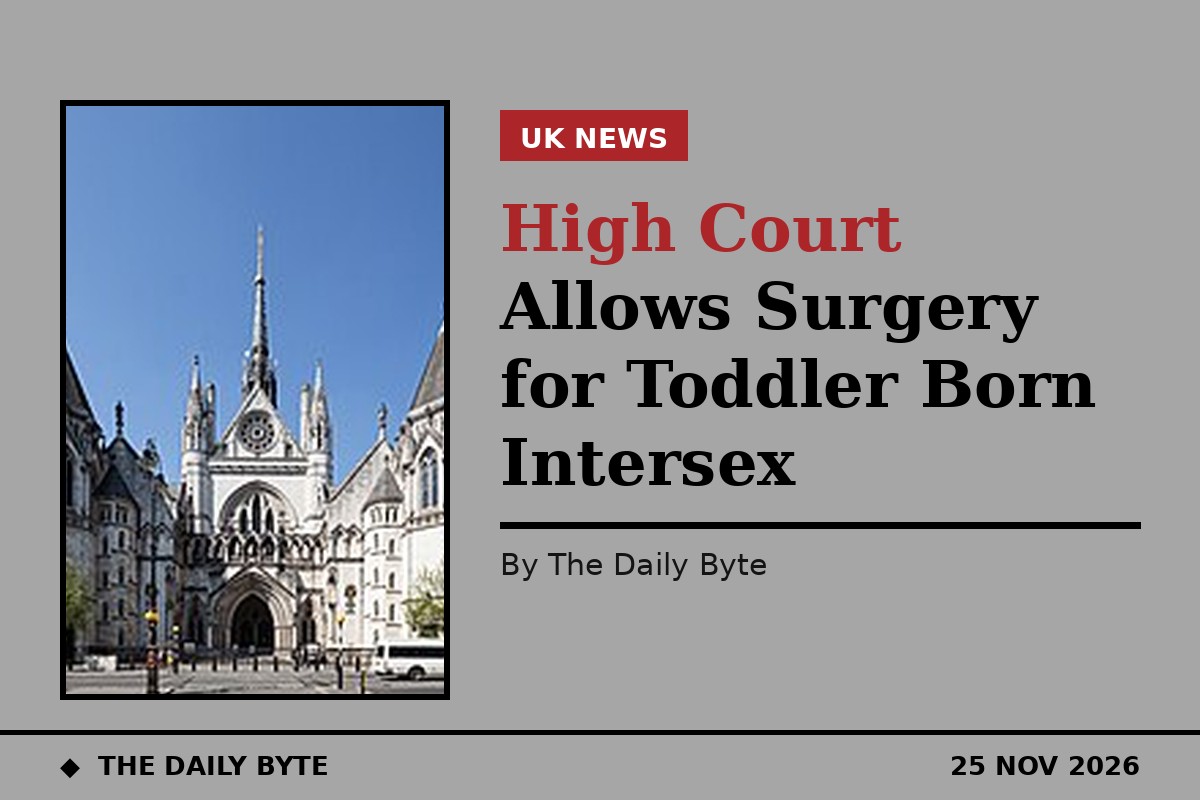
A High Court judge has ruled that a 19-month-old child born with mixed genital anatomy can undergo surgery to remove female reproductive structures, in a judgment published on Wednesday 25 November 2026. The child, known only as BV, was born with a disorder of sexual development and is being brought up as a boy.
An unnamed NHS trust asked the High Court in June to rule it lawful and in BV's best interests to carry out the surgery, including removing his vagina and fallopian tubes. Sir Stephen Cobb, President of the Family Division, gave the green light in a 22-page judgment.
Why the judge ruled now
Sir Stephen said there was clear support for the surgery to take place now, from the mother and on behalf of the child, and no opposition to it. He said delay could harm BV's welfare, leaving him growing up without sufficient clarity, support or certainty in this aspect of his development. He ruled the surgery should happen now, or as soon as clinically indicated, to give the child a stable and unambiguous framework within which he can develop during childhood.
The judgment records that the mother was told during pregnancy she was expecting a girl, and the difference between that expectation and her newborn baby shocked the family and caused them significant distress. BV has a penis as well as uterine and vaginal structure.
What the condition involves
A disorder of sexual development, also called a difference in sex development, covers rare conditions involving genes, hormones and reproductive organs, including the genitals. The ruling applies only to BV's case, and the court heard no argument against the surgery going ahead. Read the full report of the ruling and a second account of the judgment.