N0n Ransomware Group Lists UK Retailer hmv
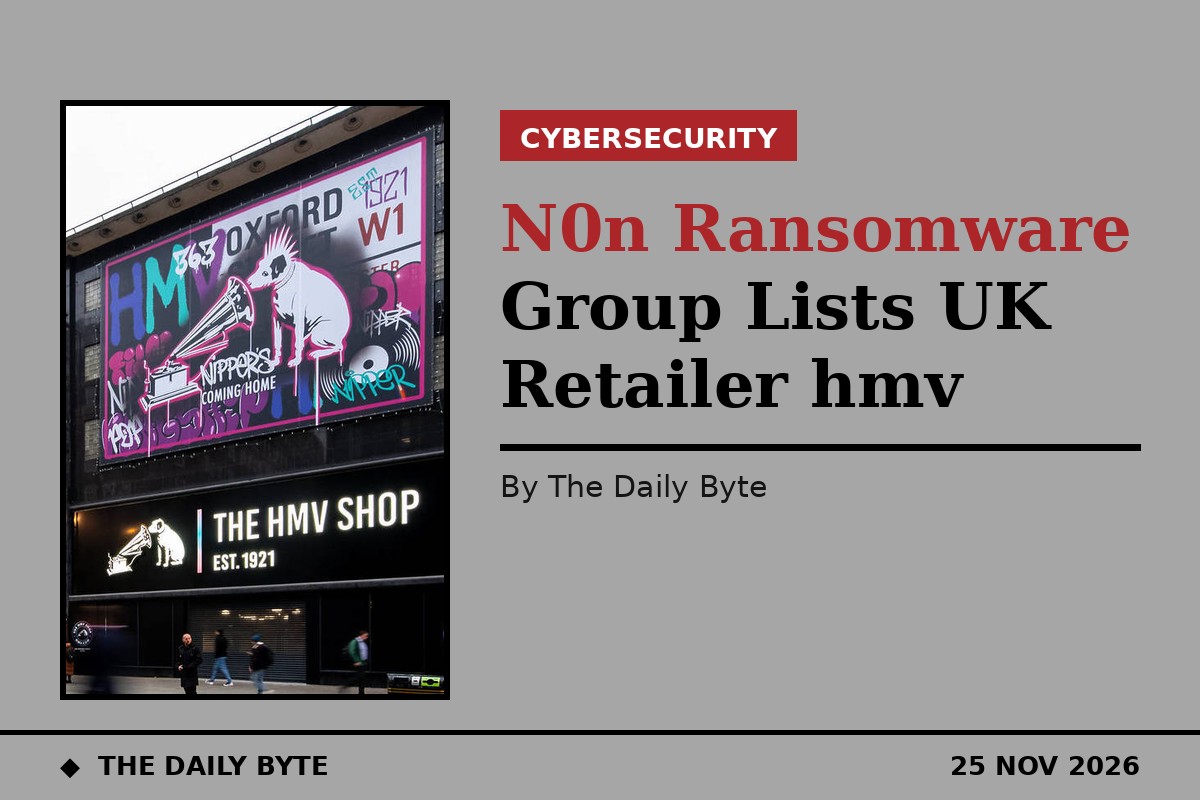
The ransomware group N0n has listed British music and entertainment retailer hmv on its leak site, in a claim discovered on Tuesday 25 November 2026. The tracker ransomware.live logged the listing at 22:29 UTC with an estimated attack date of the same day, and a second tracker, Cyber Threat Intelligence, records the listing with the same date. The listing is a claim by the group, not a confirmed breach: neither tracker has independently verified what, if anything, was taken, and no public confirmation from hmv has been reported.
The listing itself describes a narrow set of data. According to ransomware.live, it concerns shopper search sessions on hmv's storefront, including typed queries and session identifiers, together with per-query revenue and conversion figures and site navigation revenue graphs. It is marked NOT PAID - EXPOSED, the tag the leak site uses for data it says will be published unless a demand is met. No payment card data, passwords or customer account details are named in the listing, and nothing in the public record establishes that any of the described data was actually taken from hmv's systems.
A new group with inflated numbers
N0n is a new extortion crew that first appeared in September 2026. The Cyber Threat Intelligence database records 341 victims attributed to the group, and says it has listed 260 victims since September. Those numbers need care. Researchers who captured an exposed server holding one operator's working files in late September found the group had targeted just over 20 victims at that point, according to Bitdefender, and eCrime.ch recorded 196 N0n postings between 18 September and 16 November. The gap between the claimed victim count and the number of organisations the group is known to have actually targeted is a reminder that leak-site volume is a measure of claims, not of breaches.
What researchers have established about how the group works is more concrete. Analysis by SOCRadar found that documented break-ins used weak or stolen credentials, and that the operator leaned on an open-source AI coding agent to scale the operation. In some cases the group deleted data and backups instead of encrypting them. Like most modern ransomware crews it runs a double-extortion model: data is taken before files are encrypted, so the victim faces one demand to restore access and a second to keep the stolen data unpublished.
What shoppers should do
For hmv customers, the practical risk today is phishing rather than a confirmed exposure. Messages that use the retailer's name and claim to relate to a data breach should be treated with suspicion, and anyone who reuses a password across sites should change it. If hmv confirms an incident, or the group publishes data, the picture will change; until then the listing is an allegation to watch, not an established breach. The same caution applies to the group's wider claims: a name on a leak site is the start of a verification process, not proof that a compromise happened.


