Home education hits 175,900 as report urges new approach
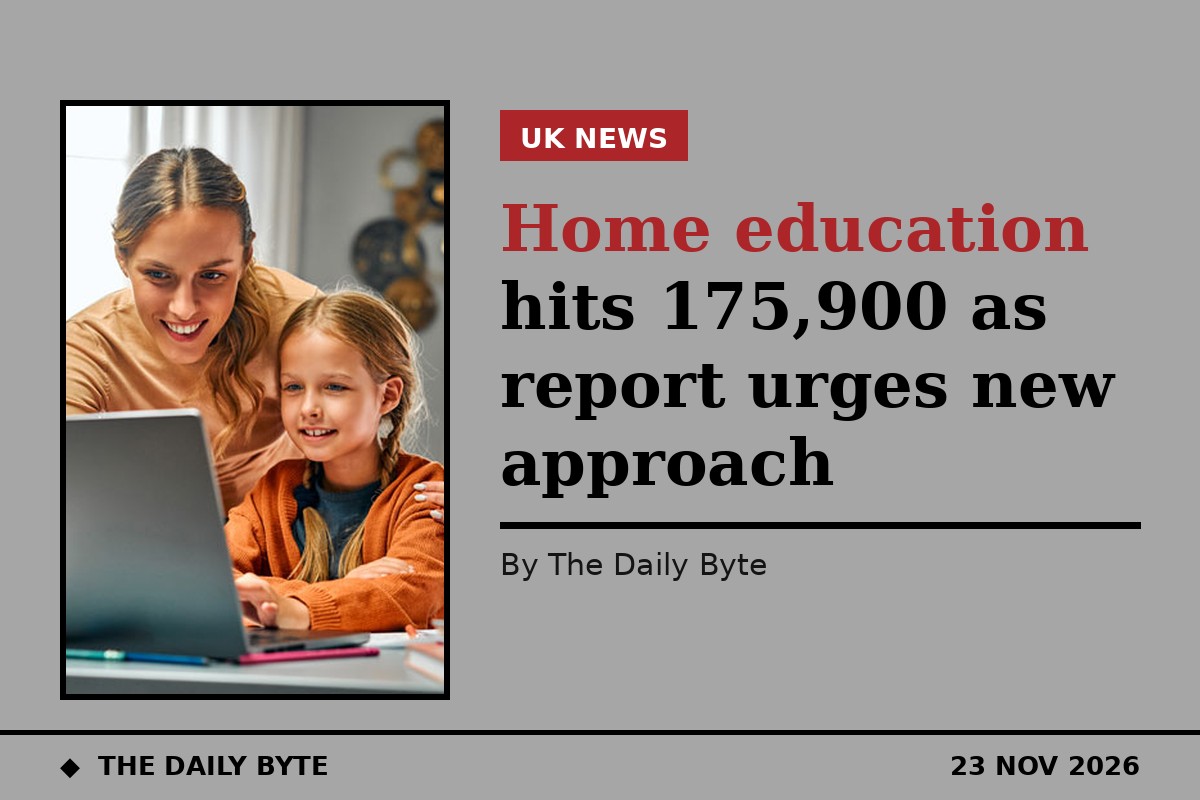
A new independent report published on Monday 23 November says home education in England has changed so much in the past decade that the way it is treated by government and local authorities needs to change with it. The report, Our Shared Interest: The Future of Home Education in England, argues for a more constructive relationship between councils and the families who teach their children at home, with practical support taking the place of suspicion and box-ticking.
The report comes from the Home Education Futures Group, an independent group convened by Lord Nigel Crisp, a Crossbench peer and former chief executive of the NHS. Its members include home educating parents, teachers, former local authority education professionals and people with experience of special educational needs and disabilities. The group met between March and October 2026, working voluntarily and without external funding.
The scale of home education is the report's starting point. Department for Education figures show that about 175,900 children in England were home educated at some point during the 2024/25 academic year, and around 126,000 were recorded as home educated on the autumn 2025 census date, roughly 1.5 per cent of the school-age population. The numbers have grown roughly fourfold over ten years, and the true figure is likely higher, because families whose children have never been registered at a school are not required to tell their council.
Just as important, the report says, is who is now home educating and why. A decade ago, home education was more often associated with families who chose it for philosophical, religious, cultural or lifestyle reasons. Those families remain an important part of the community, but the report describes a growing number of parents who have turned to home education because their children's needs were not met inside the school system. Some children have experienced bullying, anxiety or school-related distress. Others have unmet special educational needs, or have waited a long time for a suitable school place. For these families, home education can offer flexibility and individual attention, but it can also bring considerable financial and emotional pressure.
The report sets out five priorities, developed into ten recommendations. The first concerns examinations. For many home educating families, arranging GCSEs and other qualifications is difficult and expensive, with parents struggling to find an exam centre willing to take private candidates and facing travel costs and exam fees. The report argues that every home educated child should be able to sit exams locally without unreasonable cost, and proposes using some of the public money saved when children are not educated in state schools to help pay for exams. It points to a trial in Devon, where the University of Exeter and exam board AQA offered free GCSE English and maths to eligible Year 11 pupils, with around 300 young people already on the waiting list.
The second priority is a fairer way of judging whether a child is receiving a suitable education. Home education does not have to follow the National Curriculum or school timetables, yet the report argues that judging varied approaches against school-based expectations can fail to recognise the education children are actually receiving. Instead, it proposes councils look at four areas, cognitive, social and practical development, and emotional wellbeing and safety, with formal enforcement as a last resort. The group even recommends dropping the word elective from the official term Elective Home Education, on the grounds that many parents do not feel they had a genuine choice.
Third, the report calls for a national code of conduct for local authority home education officers, with better training and staffing. Relationships between families and councils vary widely across England: the report names Hampshire, Camden and Essex as examples of good practice, while other authorities have been criticised for intrusive enquiries or inconsistent expectations. Fourth, it calls for more flexi-schooling, in which a child stays on the school roll but attends part of the week, and for community education hubs. Fifth, it calls for better support for children with special educational needs and mental health difficulties, stronger action against off-rolling, and faster school place allocations.
The report lands at a significant moment. Parliament has passed the Children's Wellbeing and Schools Act 2026, and the government is consulting on new Children Not in School regulations and statutory guidance, with the consultation closing on 3 February 2027. The group has submitted detailed recommendations to the Department for Education, and says it will review the impact of its work in a year's time. Its central message is that home education should not automatically be treated as a problem to be policed. Genuine safeguarding concerns must be taken seriously, the report says, but the starting point should be understanding why families are home educating and giving them the support to do it well.