Hormuz Attacks Kill 25 Seafarers as 218 Ships Wait
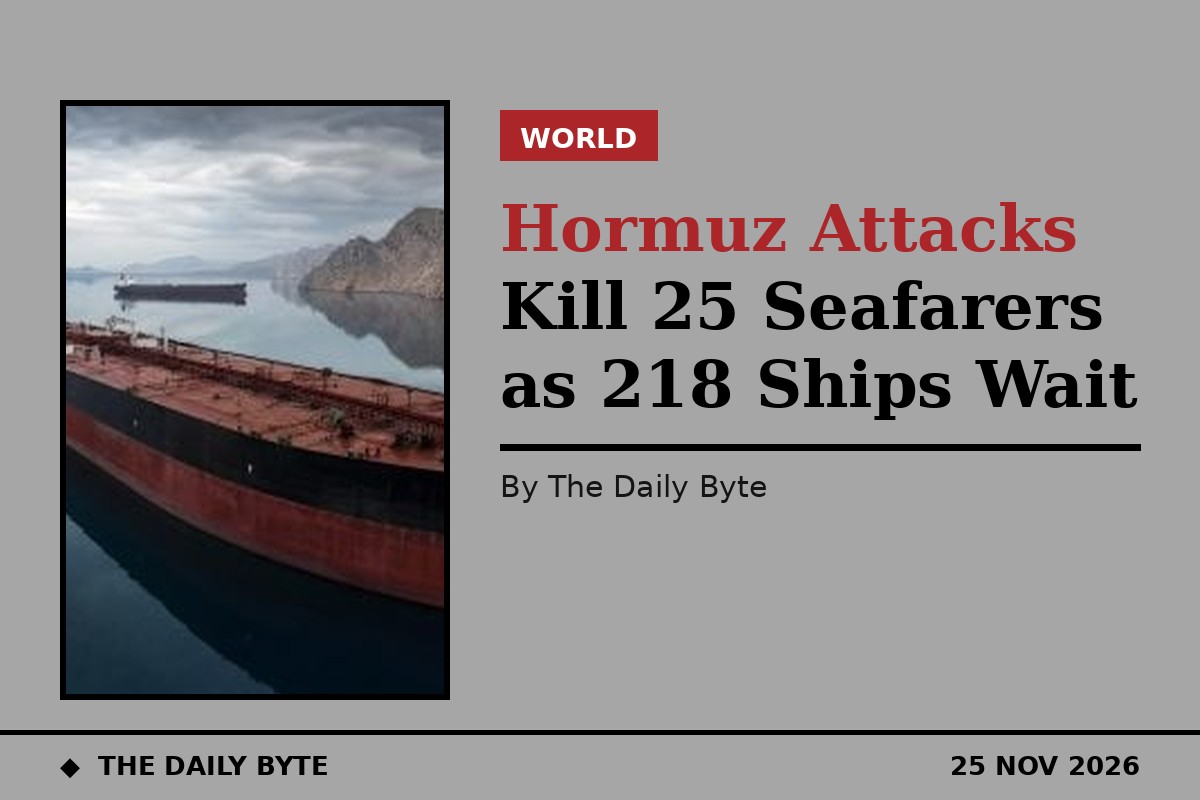
Attacks on shipping in the Strait of Hormuz have reached 10 reported tanker strikes in a single week, and the human toll is mounting, with the International Maritime Organization recording 141 confirmed maritime incidents and 25 seafarer deaths in the waterway and surrounding Middle East waters.
Four more commercial vessels came under attack in and around the strait on 22 November, according to the United Kingdom Maritime Trade Operations centre. Three tankers were hit by unidentified projectiles while sailing eastbound through the strait. All continued their journeys and their crews were reported safe, although the extent of the damage has not been established.
In a separate incident, a bulk carrier anchored off Khor Fakkan, on the United Arab Emirates' east coast, was struck by an unidentified projectile. The impact caused a fire on board, although no casualties were reported. Authorities have not released the names of any of the four vessels.
Threat level remains severe
The Joint Maritime Information Center had recorded seven tanker attacks in the strait since 16 November in an advisory dated 22 November. The three newly reported incidents raise that number to 10. Earlier attacks included strikes against the tankers Torkel and Arina on 21 November.
The centre continues to classify the security situation in the strait as severe, warning that further deliberate attacks remain highly likely. Iran's claims that some tankers struck naval mines have not been independently verified, and maritime security analysts at Orbital Risk Intelligence said they had found no evidence to support the mine claims.
The International Maritime Organization reported 141 confirmed maritime incidents in the Strait of Hormuz and surrounding Middle Eastern waters as of 23 November, resulting in 25 confirmed seafarer deaths. Its latest published records include three vessels damaged in recent incidents near Oman: the Captain Leon, Bahra and On Phoenix. It is unclear whether the four vessels attacked on 22 November have yet been included in the organisation's cumulative figures.
Traffic still far below normal
Shipping through the strait continues to operate at significantly reduced levels despite a recent increase in US-facilitated vessel movements. The Joint Maritime Information Center reported that 114 vessels completed US-facilitated transits between 19 and 21 November, averaging 38 a day, up from an average of 27 daily transits over the preceding four days.
Even so, traffic remains far below the historical average of about 138 vessel transits a day recorded in 2025. Separate vessel-tracking data showed no movements by qualifying cargo-carrying vessels outside the US-facilitated figures during the same three-day period.
The disruption has left about 218 commercial ships stationary at major anchorages east of the strait as of 22 November, with the backlog expected to continue.
Iran is also widening its restrictions on shipping support services. Its Persian Gulf Strait Authority announced that 26 tugboats had been added to its list of non-compliant vessels, accused of assisting ships that allegedly breached Iranian restrictions in the southern strait. The list already contained 240 vessels as of 19 November, according to maritime security analyst Martin Kelly of Orbital Risk Intelligence, so the latest additions could bring the total to 266. Restrictions on tugboat services could complicate efforts to assist damaged or disabled ships.


