Hormuz tankers hit twice as attacks pass 50 in two months
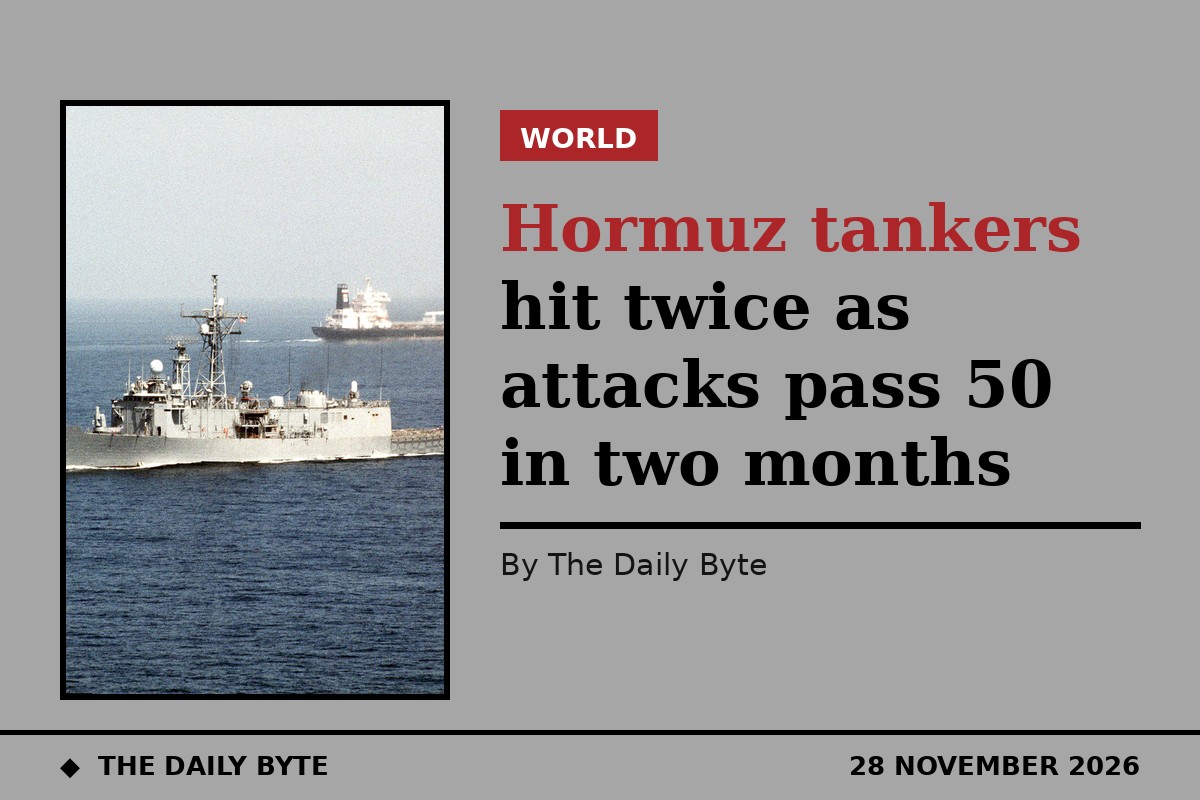
Attackers in the Strait of Hormuz are hitting the same commercial ships more than once, according to a Financial Times report citing maritime security consultants, in a pattern consultants call "double-tapping" that is raising the cost and risk of moving oil through the world's most important energy chokepoint.
At least six vessels were struck twice during October and November, according to the security consultancy EOS Risk. The United Arab Emirates-owned vessel Navig8 Messi is believed to have been hit three times, a maritime security adviser told the Financial Times.
The Tara Gas was struck on 16 November and again the following day, and subsequently caught fire. The Chinese-owned crude oil tanker Gem No 2 was attacked on 9 and 10 October, resulting in a major oil spill near the UAE coastline.
Attacks at their highest since the war began
The repeat strikes sit inside a broader escalation. More than 50 attacks on commercial shipping were recorded throughout October and November, according to Lloyd's List data published on 26 November. October recorded 37 vessel attacks, the highest monthly total of the conflict, Lloyd's List reported, and at least 14 more were confirmed in November. Attacks have continued at a nearly daily pace in November, according to data compiled by Bloomberg.
The Joint Maritime Information Center's advisory of 26 November independently warned that deliberate attacks remained highly likely in the strait, in both the eastbound and westbound lanes, and flagged risks to disabled, anchored and slow-moving vessels, and to the salvage craft that serve them.
Traffic keeps moving
Yet traffic through the waterway has not stopped. Lloyd's List data cited by the Financial Times showed inbound transits into the Gulf reached 237 in October, the highest monthly figure since the conflict began, driven partly by crude tankers carrying cargoes to ships waiting outside the Gulf near Fujairah. Separate Lloyd's List Intelligence figures recorded 550 non-Iranian-linked transits in October, up from 504 in September.
Chinese crude oil imports rose 11 percent to 311 million barrels in October, according to commodities data provider Kpler, with more than one-third of China's crude supplies coming from the Middle Eastern Gulf during the month.
A growing blacklist
Iran has also expanded its list of vessels it considers non-compliant with its proposed maritime registration arrangements, associated with a proposed Persian Gulf Strait Authority. More than 260 vessels are now on the list, according to maritime intelligence company Windward, and the majority were added after being attacked. At least a quarter of the listed ships were Chinese, according to Bridget Diakun, research director at Lloyd's List.
Deliberate deterrence, or a shrinking target pool?
Whether the repeat strikes are deliberate is disputed. Some shipping executives cited by the Financial Times believe the repeats reflect probability: relatively few ships are still using the contested route, so each one faces a higher chance of being hit more than once. Others believe the repeated targeting is deliberate, an attempt to disable vessels, remove them from service and complicate maritime salvage operations.
What is not in dispute is the effect. Strikes on a ship's stern or machinery can damage propulsion and leave a vessel unable to move, while further attacks complicate emergency response, towing and salvage. Control Risks told the Lloyd's List Outlook event in London that a restoration of normal shipping conditions was now the least likely scenario.
Adnoc, owner of the Navig8 Messi, declined to comment on the movements, routing or operational status of individual vessels. The owners of Tara Gas and Gem No 2 did not respond to requests for comment. Washington, meanwhile, continues to enforce its naval blockade of Iranian ports as the conflict over commercial navigation through the strait remains unresolved.


