£100 Household Energy Payment: Who Gets It?
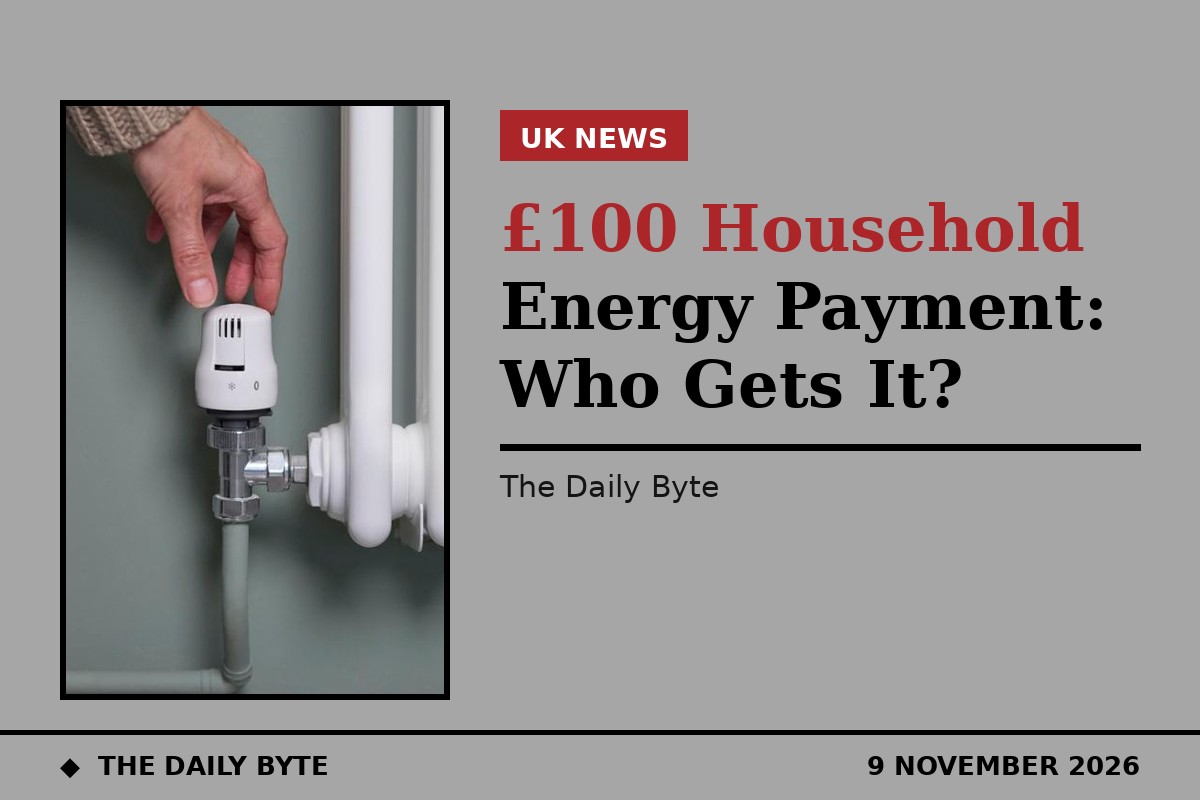
The Household Energy Payment is a one-off payment of £100 for households in England in council tax bands A to D, announced in Budget 2026. Chancellor John Healey delivered the Budget on 28 October 2026, and the payment is due to be made directly into bank accounts from January 2027. The government says the scheme will support up to 20 million households and forms part of a £2.6 billion package of energy help.
The payment is the largest single household measure in the Budget. It sits alongside an extension of the VAT cut on electricity, a further extension of the 5p fuel duty cut, and longer-term reforms aimed at bringing energy bills down. This guide explains who gets the £100, when it should arrive, how it is paid for, and how it differs from the Winter Fuel Payment.
Who gets the £100 Household Energy Payment?
The payment goes to households in England whose home is in council tax band A, B, C or D. Council tax bands are set by the value of the property, so the payment is aimed at homes in the lower-value bands rather than at any particular age group or benefit. The Budget document describes the payment as going to households in those bands, and it does not set out separate rules for tenants and homeowners: eligibility follows the council tax band of the household.
That means a household in a band E, F, G or H home in England does not qualify, even if its energy bills are high. The Budget document does not describe any way to claim the payment if a household is outside bands A to D, and it does not describe an application process at all. The payment is described as going directly into bank accounts, which suggests most eligible households will not need to apply, but no further detail on how bank details will be matched to households has been published in the Budget document. Anyone unsure should check GOV.UK rather than responding to messages asking for bank details.
The payment is for England. The devolved governments in Scotland, Wales and Northern Ireland will receive their share of the £2.6 billion funding through the Barnett formula, which is the mechanism used to allocate funding to the devolved administrations when spending changes in England. How that money is used outside England is a decision for each devolved government, so households in Scotland, Wales and Northern Ireland should look to their own governments for details of any equivalent support.
When will the £100 be paid?
The payment will be made from January 2027. The Budget document does not give an exact date in January, and it does not say whether all payments will land in the same week or be spread across the month. Households should therefore treat January 2027 as the start of the payment window rather than a single payment date.
The timing matters because the payment arrives after the coldest part of the winter has begun. It is separate from the Winter Fuel Payment, most of which is paid in November or December 2026, and it is separate from the electricity VAT cut, which is expected to take around £50 off the annual Ofgem price cap in April 2027. The £100 is a one-off payment, not a monthly amount and not a discount applied to bills.
How is the £100 payment funded?
The government is paying for the immediate energy support in part by temporarily increasing the Bank Corporation Tax Surcharge from 3% to 6% for 15 months, from 1 January 2027 to 31 March 2028. The Budget document presents this as a temporary additional contribution from banks to help fund household support, and it rules out an extension of the higher surcharge beyond that period.
The wider Budget context is a sharp rise in the cost of servicing government debt. The Office for Budget Responsibility forecasts the government will pay an average of £14 billion a year in extra debt interest compared with its March forecast, a rise the Budget attributes to higher borrowing costs since the start of the conflict in the Middle East. Despite that pressure, the Budget says it rejects broad-based tax rises and protects most individuals and businesses from tax increases, with no increases to the headline rates of income tax, National Insurance or VAT.
What else did Budget 2026 do on energy bills?
The Household Energy Payment is only one part of the Budget's energy package. The other measures announced alongside it include:
Electricity VAT cut extended. The VAT cut on electricity is extended to July 2027. The Budget says this is expected to take around £50 off the annual Ofgem price cap in April 2027.
Fuel duty cut extended. The 5p cut in fuel duty is extended, with the freeze continuing to 1 July 2027. The Budget says this keeps fuel duty as low as at any point in over 16 years. The Heavy Goods Vehicle road tax holiday is also maintained to the same date.
Help for energy-intensive firms. From 2027, the British Industrial Competitiveness Scheme will give 10,000 energy-intensive manufacturing firms a 20 to 25% discount on electricity, starting in April 2027 and including a back payment for 2026-27.
Standing charges. The Budget says the government will abolish gas standing charges, with targeted mitigations to make sure this is delivered fairly, and will reform electricity standing charges, with further details to be announced next year.
Energy debt. A new Energy Debt Circuit Breaker is intended to tackle energy debt, saving all billpayers around £30 by 2030.
No new costs on bills. No new policy costs will be put on bills until a comprehensive Cost Control Framework is in place at the spending review in 2027. The planned new tax on gas bills, the Gas Shipper Obligation, has been scrapped, so the government rather than consumers will fund the costs of hydrogen projects.
How is it different from the Winter Fuel Payment?
The two payments are easy to confuse because both relate to winter heating costs, but they are different schemes with different rules. The Winter Fuel Payment is a yearly payment of between £100 and £300 for winter 2026 to 2027, paid to people born on or before 27 June 1960 who usually live in England, Wales or Northern Ireland. The amount depends on date of birth and household circumstances during the qualifying week of 21 to 27 September 2026, and most eligible people are paid in November or December 2026. If a person's total income is over £35,000, HM Revenue and Customs will take the Winter Fuel Payment back through the tax system.
The Household Energy Payment, by contrast, is a one-off £100 payment based on council tax band, not on age. It is paid from January 2027, it is not linked to the £35,000 income recovery rule, and it is available to households of any age whose home is in bands A to D. A pensioner household in a band A to D home could therefore receive both payments, while a younger household in the same bands would receive only the Household Energy Payment.
What the payment does not do
The £100 is a single payment, so it will not on its own cover a winter's energy bills. It does not reduce the unit price of gas or electricity, and it does not change a household's tariff. Households in council tax bands E to H receive nothing from this scheme, and the Budget document does not offer an alternative payment for them. The payment also does not replace other support: the Winter Fuel Payment, the £150 Warm Home Discount and Cold Weather Payments continue under their own rules, and the Budget document does not change them.
Because the payment is tied to council tax bands, households that are unsure of their band can check it on GOV.UK. Anyone who receives a message asking for bank details, passwords or a fee in order to receive the £100 should treat it as a possible scam: GOV.UK warns that messages pretending to be from a government service and asking for personal details may be scams, and the Budget document describes the payment as going directly into bank accounts without any fee.
Frequently asked questions
Do I need to apply for the £100 Household Energy Payment? The Budget document does not describe an application process. It says the payment will be made directly into bank accounts from January 2027. Check GOV.UK for updates before sharing any personal details with anyone about the payment.
I live in Scotland, Wales or Northern Ireland. Do I get the £100? No, not directly. The payment is for households in England. The devolved governments receive their share of the funding through the Barnett formula and decide their own support.
Is the £100 the same as the Winter Fuel Payment? No. The Winter Fuel Payment is a yearly payment of £100 to £300 based on age and household circumstances, paid mostly in November or December 2026. The Household Energy Payment is a separate one-off £100 payment based on council tax band, paid from January 2027.
Who pays for the £100? The Budget funds the immediate energy support in part through a temporary rise in the Bank Corporation Tax Surcharge, from 3% to 6% for 15 months from 1 January 2027 to 31 March 2028.
Sources: HM Treasury, Budget 2026; Kent Local News, Budget 2026 summary. Figures and dates are as published in the Budget document on 28 October 2026. Rules can change, so check GOV.UK for the latest position.


