Houthi Attacks Cloud Saudi Nuclear Power Pact
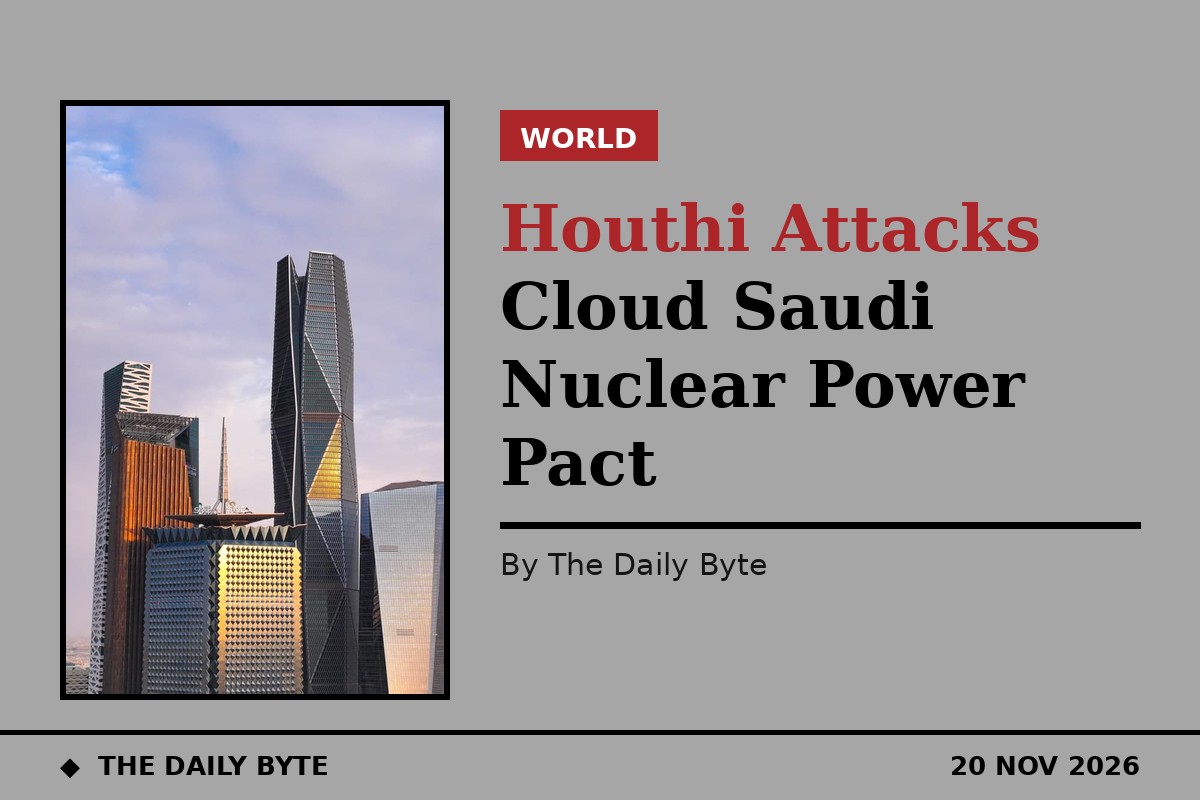
Houthi attacks on Saudi infrastructure are adding to concerns about President Donald Trump's proposed nuclear power pact with Saudi Arabia, just weeks before US senators are due to vote on whether to block the agreement. The vote, on a resolution of disapproval of the deal, could come as soon as the week of 30 November, according to Senate aides.
Yemen's Iran-aligned Houthis have intensified drone and missile strikes on Saudi airports, oil facilities and office buildings in recent weeks. On Friday they escalated their threats further, saying they would attack Saudi Arabia's Red Sea ports and warning everyone nearby to stay away. The campaign has raised questions about Riyadh's ability to protect nuclear plants that would be built under the pact.
Trump surprised members of Congress in July by announcing the deal, and submitted it to Congress in August. Under the agreement, known as a 123 Agreement after the section of the Atomic Energy Act that governs it, Saudi Arabia would be able to enrich uranium and build nuclear reactors using US technology.
A deal without the usual safeguards
What worries critics most is what the agreement leaves out. It does not include the Additional Protocol, which gives the International Atomic Energy Agency (IAEA) intrusive inspection powers, including snap inspections, that Washington previously demanded from Iran. Nor does it bar Saudi Arabia from enriching uranium or reprocessing nuclear waste, the two potential pathways to a nuclear weapon. The United Arab Emirates accepted both restrictions, known as the gold standard, in its 2009 deal with Washington.
IAEA chief Rafael Grossi said this week that the inspection provisions in the Saudi agreement were "very satisfactory" even without the Additional Protocol. The White House has said the deal is for civilian purposes only and will benefit American industry, workers and supply chains while meeting Saudi energy needs.
The agreement has also raised questions because it does not require Saudi Arabia to normalise relations with Israel, which had been expected to be a precondition for receiving US nuclear technology. Trump has said the deal would only take effect if Riyadh did so, but congressional aides from both parties have said the documents sent to Congress for review did not include that condition.
Senate vote looms
Sens. Jeff Merkley and Ed Markey introduced a joint resolution of disapproval, S.J. Res. 221, on 15 October. Senate aides told Reuters they did not know whether it would win the simple majority needed to pass, in a chamber where Trump's Republicans hold a 53-47 majority. Some Republicans have joined Democrats in asking for more information about the proposal.
Nonproliferation advocates have warned that the Houthi campaign adds a new danger on top of the safeguards gap. Henry Sokolski of the Nonproliferation Policy Education Center and Sharon Squassoni of George Washington University wrote in the National Interest that Washington should demand safety plans, adding: "The last thing Washington should do is to build a bomb starter kit in Saudi Arabia, only for the Yemenis—or some other hostile group—to take it over."
Rep. Brad Sherman, a senior Democrat on the House Foreign Affairs Committee, has argued that starting a civil nuclear programme without robust safeguards is the "first step" towards a nuclear weapon, and that this is "exactly what the Trump administration is allowing MBS to do", referring to Crown Prince Mohammed bin Salman. The crown prince has said he does not want nuclear weapons, but that Saudi Arabia would pursue them if Iran did.
Trump is expected to veto the resolution even if it passes Congress. Backers of the measure say even a close vote could force more transparency from the administration and help efforts to restrict any Saudi nuclear pact in future. The Senate vote, when it comes, will be the first formal test of whether Congress is willing to stand in the way of the deal.


