Houthis Hit Jazan Refinery as Saudi War Escalates
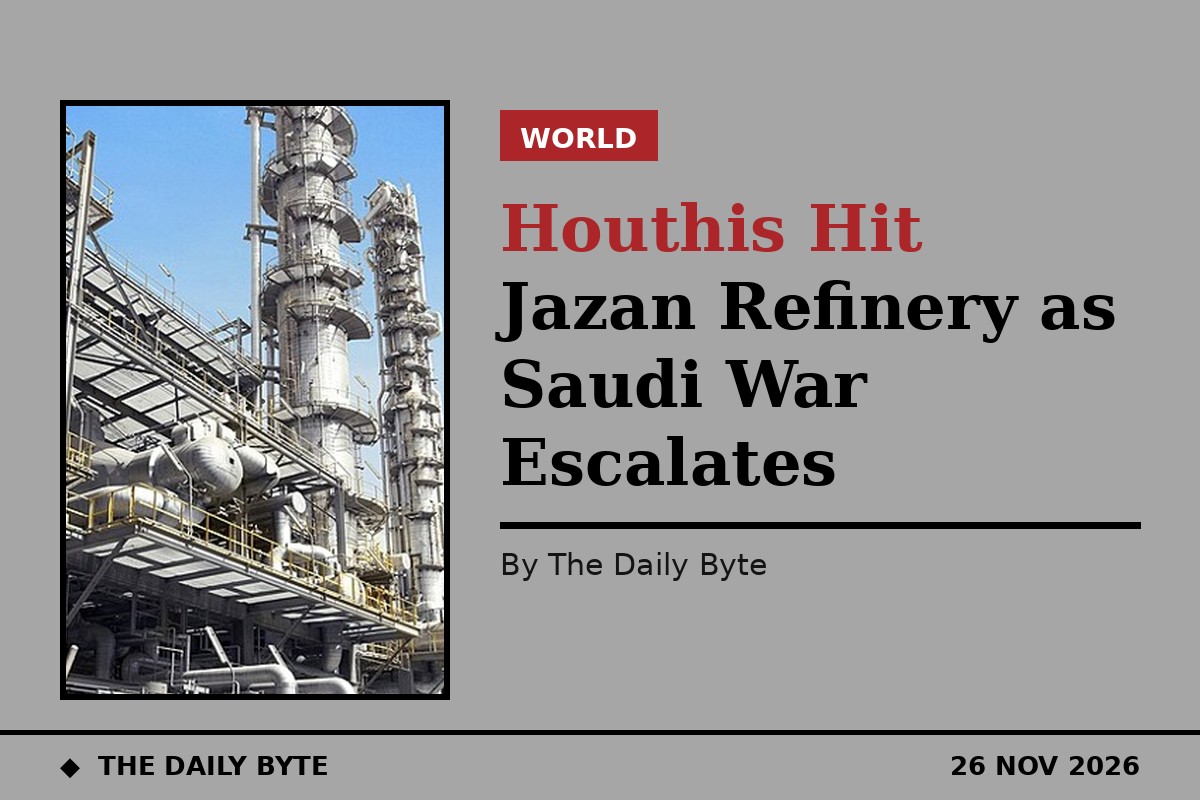
The Saudi-led military coalition said on Thursday that Yemen's Houthis had attacked Saudi Aramco's Jazan refinery, a day after the group claimed a strike on the kingdom's largest refinery at Ras Tanura.
The refinery, in the southwestern city of Jazan near the Yemeni border, is designed to process up to 400,000 barrels of crude oil a day. The coalition gave no details of casualties or damage at the plant, and neither Aramco nor the Saudi government immediately said whether operations at the refinery had been affected.
The coalition said it had later destroyed a ballistic missile launch platform in the Yemeni port city of Hodeidah, which it said the Houthis had used in Thursday's attack on the refinery. It had earlier warned that targeting civilians and civilian infrastructure would be met with a firm military response.
Second refinery targeted in two days
On Wednesday, the Houthis claimed attacks on Ras Tanura, Saudi Arabia's largest refinery and a major crude export hub, and on the Red Sea ports of Jeddah and Jazan. The coalition said it had intercepted four drones over Ras Tanura and that air defences had destroyed a drone near Jeddah Islamic Port.
The coalition confirmed only minor damage from a projectile that fell at Jazan port on Wednesday, with no civilian injuries. Thursday's statement is different in one important respect: it identifies the refinery itself, rather than the port, as the target. The extent of any physical or operational impact at the refinery remains unclear, and the Houthis have not commented on the coalition's account of Thursday's attack.
The two refinery incidents in two days mark a sharp escalation in the Houthis' campaign against Saudi energy infrastructure. Ras Tanura, on the Gulf coast, has a refining capacity of about 550,000 barrels a day and sits beside one of the world's largest crude export terminals. Satellite imagery taken on Wednesday showed a large plume of black smoke over the Ras Tanura peninsula after the Houthis claimed the strike there.
A war that reignited in July
The Houthis, who control the most populous areas of Yemen including the capital Sanaa, have launched missiles and drones at Saudi airports, oil facilities and office buildings since Yemen's civil war reignited in July, in a spillover from the US-Iran war.
The attacks have previously temporarily disrupted some of Aramco's operations and caused the cancellation of most international flights to Riyadh. They have also forced Saudi Arabia to postpone or cancel major international events, including soccer's AFC Asian Cup and the flagship FII investment conference.
Fighting has intensified since the Houthis seized strategic territory along Yemen's Red Sea coast in September and advanced towards the Bab el-Mandeb Strait, a vital shipping route for Gulf oil producers seeking access to the Red Sea.
Strikes on Sanaa continue
Houthi-affiliated media reported on Thursday that Saudi-led warplanes had carried out a series of airstrikes on Sanaa, the Yemeni capital. The coalition said on Wednesday that it had attacked operational capabilities at the Houthi-held port of Hodeidah and destroyed targets in the Saada and Amran governorates.
With both sides now hitting each other's capitals and energy infrastructure, and no ceasefire talks under way, the fighting looks set to continue. The UN aid chief, Tom Fletcher, arrived in Yemen this week to press for humanitarian access, warning that millions are going hungry as supply routes stay blocked.


