HP shares jump 11% after earnings beat expectations
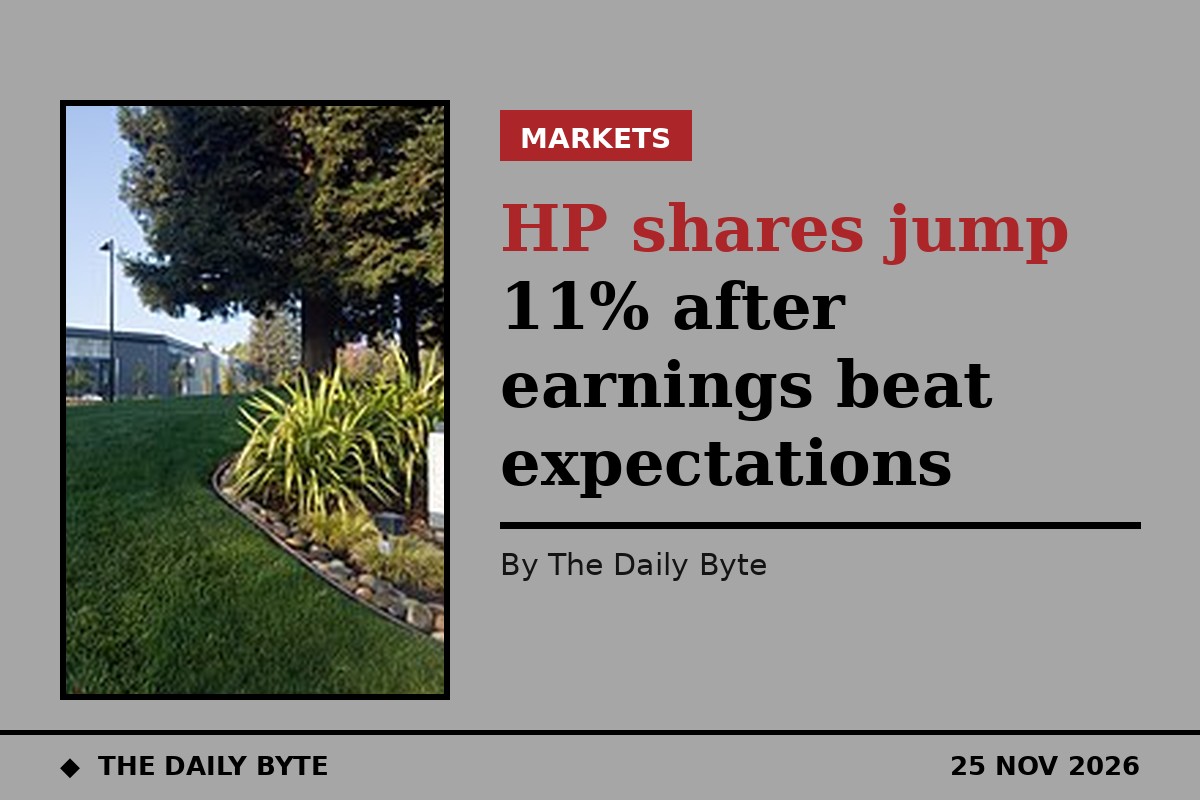
HP shares jumped 11% to $30.88 in morning trading on Wednesday, 25 November, making the personal computer maker the top performer in the S&P 500 on a day when technology stocks fell sharply.
The rally followed HP's fiscal fourth-quarter results, published on Tuesday afternoon, which beat Wall Street expectations on both profit and revenue. Adjusted earnings came in at 83 cents a share, ahead of the 75 cents analysts had forecast, according to FactSet. Revenue rose 9.3% from a year earlier to $16 billion, above the $15.4 billion expected.
A beat with a caveat
The headline beat was flattered by a one-off benefit. Both adjusted and reported earnings included a favourable 15 cents a share from tariff refunds, HP said. Stripping that out, adjusted earnings would have been 68 cents a share, below the forecast. Adjusted earnings were also down from 93 cents a share a year earlier, while reported earnings per share were flat at 84 cents.
The pressure came from the cost of memory chips, which has surged as artificial intelligence data centres absorb supply. HP's Personal Systems division, which sells PCs, saw revenue rise 14% to $11.8 billion even though the number of units sold fell 29%, as higher prices more than offset weaker volumes. Commercial PC revenue rose 23%, while consumer PC revenue fell 7%. The division's operating margin dropped to 3.0% from 5.8% a year earlier, and its earnings fell 41.5% to $349 million.
Printing, HP's other division, reported revenue of $4.3 billion, down 1% from a year earlier, with an operating margin of 19.7%.
Guidance and the new chief executive
Investors were watching HP's outlook for fiscal 2027 closely for signs of whether memory cost growth would slow and PC demand would recover. HP forecast adjusted earnings of $3.15 to $3.45 a share for the year, with the $3.30 midpoint above the $3.18 analysts had expected. For the current quarter it forecast 66 to 76 cents a share, against a 71-cent estimate. It also expects free cash flow of about $3 billion, below the $3.3 billion analysts had pencilled in.
The guidance is harder to compare with past figures than usual: HP said it would begin excluding stock-based compensation from its adjusted earnings calculations next year. The company also raised its quarterly dividend by 1 cent to 31 cents a share.
The results land as HP prepares for a change at the top. Emma Walmsley, the former chief executive of pharmaceutical company GSK, takes over as chief executive on 4 January 2027 from interim chief Bruce Broussard. Former chief executive Enrique Lores left in February to join PayPal. HP said AI PCs reached nearly 60% of its PC shipments in the quarter, and Broussard said the company continued to grow its higher-value businesses while taking steps to address memory and storage cost pressures.
A haven in a tech sell-off
Wednesday's broader market backdrop made HP's rise stand out. US stocks fell after a hot inflation reading strengthened expectations of further Federal Reserve rate rises, and new tariff proposals unsettled investors. The S&P 500 was down 2.7% in morning trading, according to Barron's, with chip and AI-related shares among the heaviest fallers.
Analysts described HP as a steady dividend-paying stock rather than a high-growth name, and one portfolio manager called it arguably an "anti-AI" stock: its greatest weakness, the high cost of memory chips, is itself a product of the AI boom. Bernstein analysts called the earnings beat "low-quality" because of the tariff refund, but the market's verdict was clear. HP shares were up 25% for the year as of Tuesday's close, after falling 32% in 2025, when a weak PC market was already reflected in the price.