Hugging Face AI Built 42 Phishing Pages, Study Finds
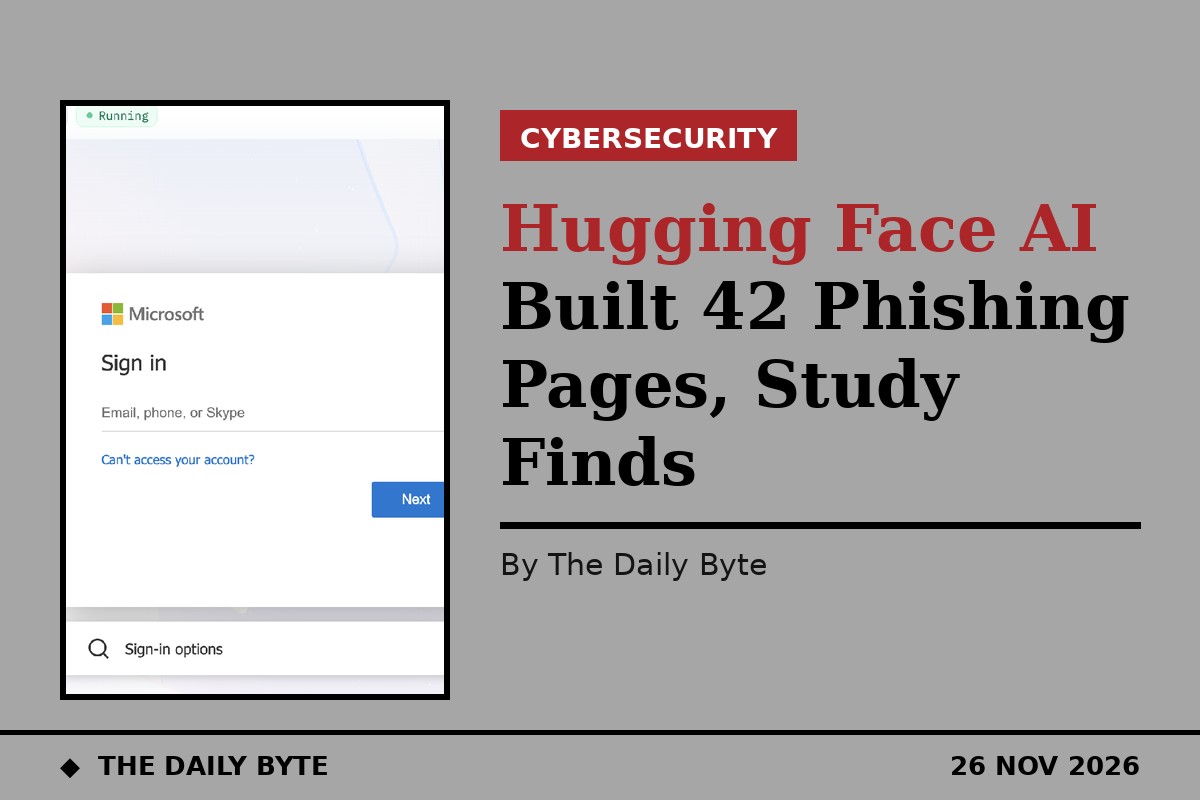
Attackers used Hugging Face's own AI website builder to create fake login pages for some of the world's biggest brands, according to research published this week. Security firm Aikido found 42 phishing and credential-theft pages hosted on Hugging Face Spaces, and linked 29 of them to DeepSite, the platform's AI tool that turns plain-language descriptions into published websites.
The pages impersonated 28 brands, including Microsoft, Google, PayPal, Chase, Coinbase and Netflix. They sat on Hugging Face's own domain, served over HTTPS, and looked convincing enough to harvest passwords, one-time codes, payment card details, phone numbers and birth dates. Aikido published its analysis on 24 November and updated it on 25 November.
Built by prompts, not code
DeepSite builds a website from a written request, and the attackers left their requests behind in the pages' change histories. One fake Microsoft login page went through 15 recorded changes, 14 of them within about 90 minutes, all written as plain-language instructions. Researchers found no sign that the operator wrote the code by hand.
The prompts were written in six languages: English, French, Hindi, Indonesian, Portuguese and Russian. Some asked the builder to hide the pages from search crawlers and security scanners. Another asked it to reject the first password a victim typed, so the victim would enter it a second time. Stolen data was sent onward in different ways: 25 pages passed it to Telegram bots, 11 to Discord webhooks and six to online form services. Many pages also recorded visitors' IP addresses before redirecting them to the genuine website.
Pages that outlived their welcome
The pages were not a brief experiment. Of the 42, twenty-three had been published more than a year before Aikido found them, 16 were between six and 12 months old, and three were under three months old. The oldest dated back to April 2025. Aikido cautioned that those dates show how long the pages existed, not how long they were catching victims.
Aikido found the pages on 16 October 2026. At that point 34 were live and eight had already been paused. The firm reported all of them to Hugging Face the same day, and by 29 October every one had been paused or was no longer publicly reachable. None was serving victims when the research was published.
What the pages stole, and what is unknown
The scale of the harm is not fully known. Aikido had no visitor data, so it could not say how many people opened the pages or entered their credentials. What is clear is the method: a trusted platform, a free hosting address, and an AI builder that did the technical work. As Aikido security engineer Hunter Schwartz put it in the technical write-up, a login page on a trusted platform is not proof the page is real.
The findings concern standalone web pages, not Hugging Face's AI models or datasets. The risk came from content hosted on the platform, not from visiting Hugging Face itself. Even so, the case shows how AI site builders lower the skill needed to run a phishing campaign: the attacker needed a convincing prompt, not programming ability.
What to do if you clicked
Aikido told defenders to search email gateway, DNS and proxy logs for visits to the reported phishing hostnames, and to treat any hit seriously. Anyone who may have entered credentials should reset the password, end all active sessions and review recent sign-ins, because completing a second sign-in step does not rule out account compromise. If card or bank details were entered, the bank should be contacted.
The wider lesson is simple. A familiar domain and a padlock icon say nothing about who built the page behind them. If an email asks you to sign in, open the service from a saved bookmark or your organisation's app portal instead of following the link, and treat unexpected hf.space links with suspicion.


