Hungary keeps US nuclear deal under new government
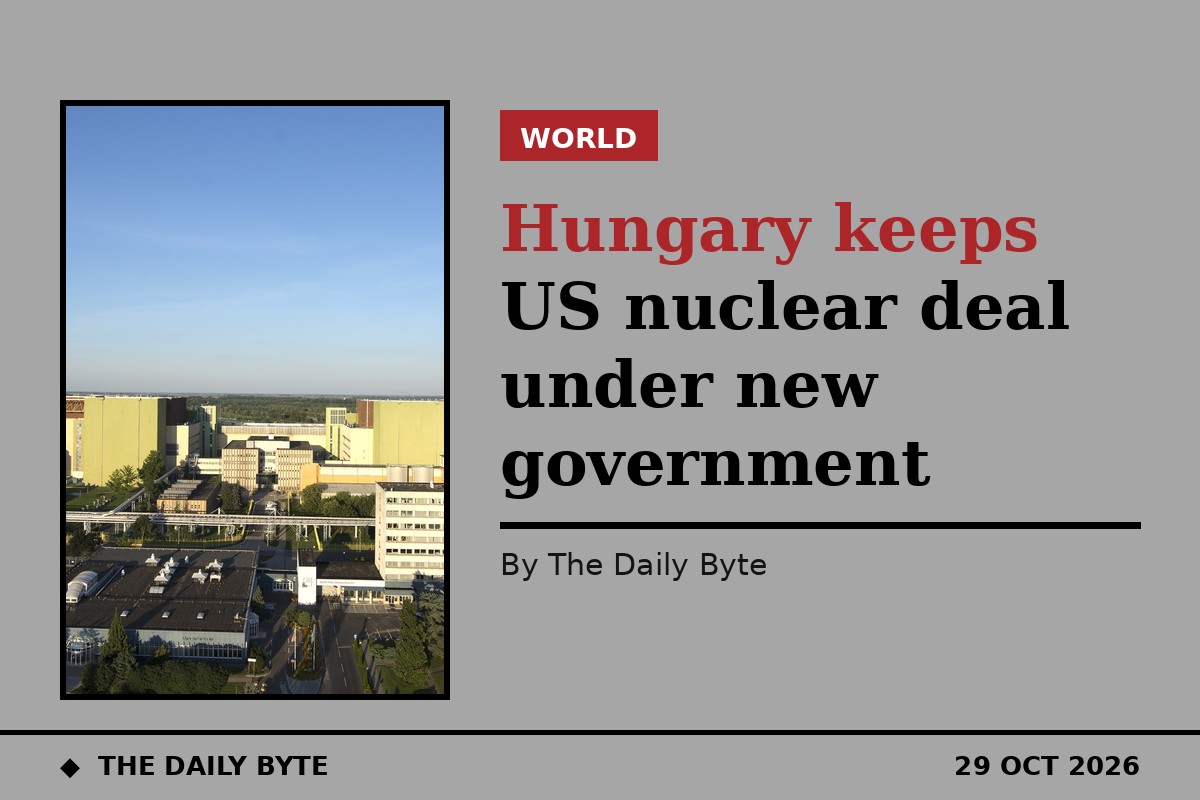
Hungary's government has asked parliament to make legally binding a civilian nuclear cooperation agreement with the United States that was signed under the previous government of Viktor Orban in February. The move, reported on Thursday, 29 October, shows that Prime Minister Peter Magyar, who defeated Orban in an election earlier this year, intends to keep the deal despite Washington having openly backed his predecessor before the April vote.
What the agreement covers
The agreement covers civilian nuclear energy, including small modular reactors, and encourages Hungary to select US nuclear technology and companies as its main suppliers for new projects. It stops short of committing Budapest to any single US contract. Parliament is widely expected to approve the bill, since Magyar's government holds a two-thirds majority.
Timing and diplomacy
The bill was submitted as Foreign Minister Anita Orban — who is not related to the former prime minister — arrived in Washington to meet US Secretary of State Marco Rubio and sign memorandums of understanding on energy and law enforcement cooperation. Rubio had visited Hungary in February and offered a strong endorsement of Viktor Orban, who went on to lose power after 16 years in office. Energy cooperation is now seen in Budapest as the most practical way to build a working relationship with the new US administration.
A shift away from Russian supply
Hungary is reviewing its energy policy, including whether to extend the life of the four reactors at its only nuclear plant and what to do about the long-delayed, Russian-led expansion at Paks. Last year it took a step towards importing small modular reactor technology through a partnership involving Poland's Synthos Green Energy, and in November 2025 it agreed to buy American nuclear fuel and US spent-fuel storage technology for the Russian-built plant.
Sources: Reuters and Advisor Perspectives.