Hungary Lifts Veto on Ukraine, Moldova EU Talks
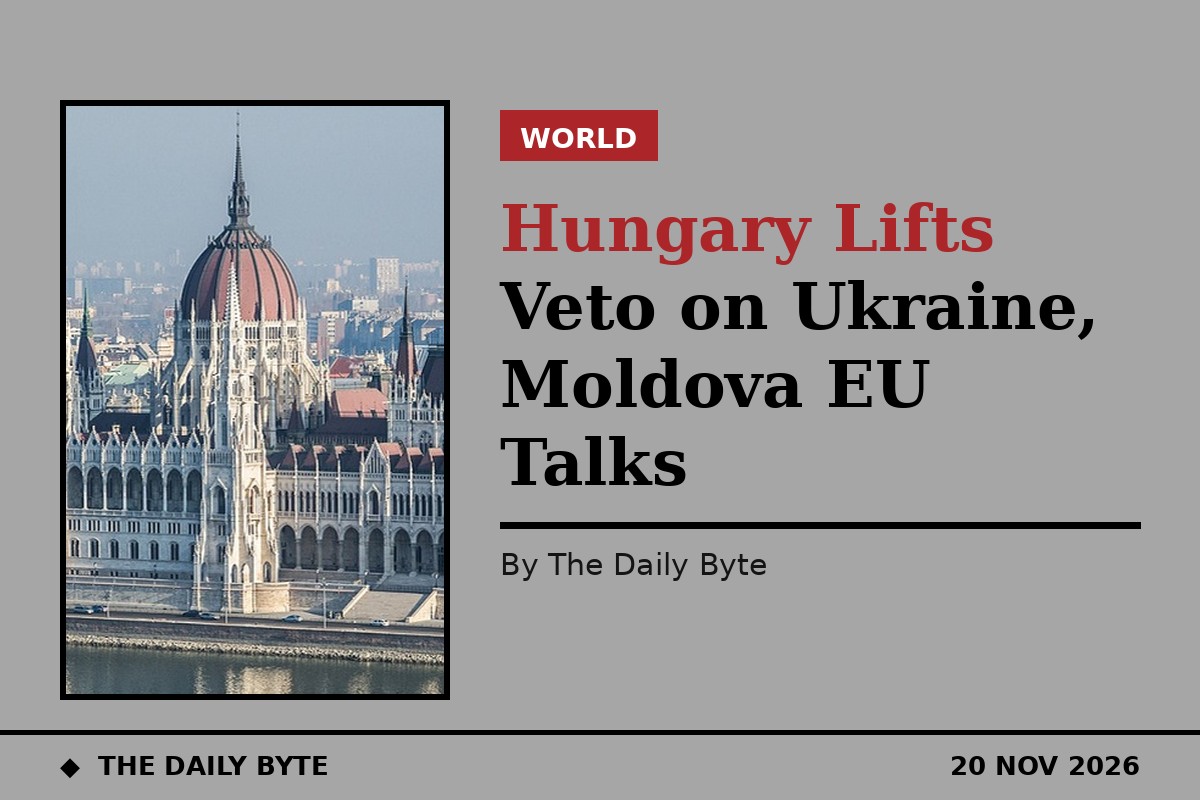
Hungary has dropped its objection to the final stage of Ukraine's and Moldova's European Union accession talks, after EU ambassadors approved the screening results for the two countries' last two negotiating clusters at a meeting in Brussels on Friday.
The decisions, adopted without discussion at the meeting of EU ambassadors known as Coreper, cover Cluster 4 on the green agenda and sustainable connectivity, and Cluster 5 on resources, agriculture and cohesion. They are the last two of the six clusters that make up the accession negotiations.
Diplomatic sources confirmed the shift to reporters on Friday, ending weeks of resistance from Budapest. Hungary had previously blocked the necessary approvals on 20 and 27 October, and again on 10 November, without publicly giving a detailed explanation.
A thaw after the minority rights deal
The reversal follows an agreement reached between Budapest and Kyiv in October on minority education rights, which had already helped unlock two earlier negotiating clusters. Ukraine opened its first cluster in June, a second in July and two more in October. Moldova's bid is informally paired with Ukraine's and had been held up by the same veto.
Hungary blocked the accession process for two years under former prime minister Viktor Orban. His successor, Prime Minister Peter Magyar, lifted that veto in June but halted individual steps several times over the summer, tying progress to the rights of ethnic Hungarians in western Ukraine. Kyiv and Budapest reached an agreement on minority rights in October, which the Ukrainian parliament then passed.
One EU diplomat said domestic political considerations had contributed to the delay, with Magyar's government keen to avoid appearing overly accommodating towards Kyiv after years of anti-Ukrainian messaging under Orban.
Clusters still not formally open
Friday's approval does not mean the remaining clusters are now open. Ukraine and Moldova must first submit their negotiating positions, while EU governments must unanimously agree on common positions before intergovernmental conferences can formally open the clusters.
Diplomats expect the remaining clusters to open by December, potentially at the next General Affairs Council meeting on 15 December, provided the necessary procedural steps are completed.
Once all six clusters are open, attention will increasingly turn to rule-of-law and anti-corruption benchmarks. Moldova is considered further advanced on those requirements, while Ukraine still faces substantial reforms.
Accession itself remains a long way off
Opening the clusters would not bring membership close. Each stage of the process requires unanimity, and member states could still block progress many times along the way. Magyar has said Hungary opposes any accelerated entry for Ukraine and would back membership only if Kyiv closed every chapter over 10 to 15 years and Hungarians approved the result in a binding referendum.
Agriculture is expected to be the hardest chapter. The European Commission proposed in October to keep certain Ukrainian farm products out of the EU market and EU funding even after accession, following pressure from countries including Poland and France. Enlargement Commissioner Marta Kos said at the time the proposal was about protecting European farmers.


