ICJ Myanmar Ruling May Boost South Africa Gaza Case
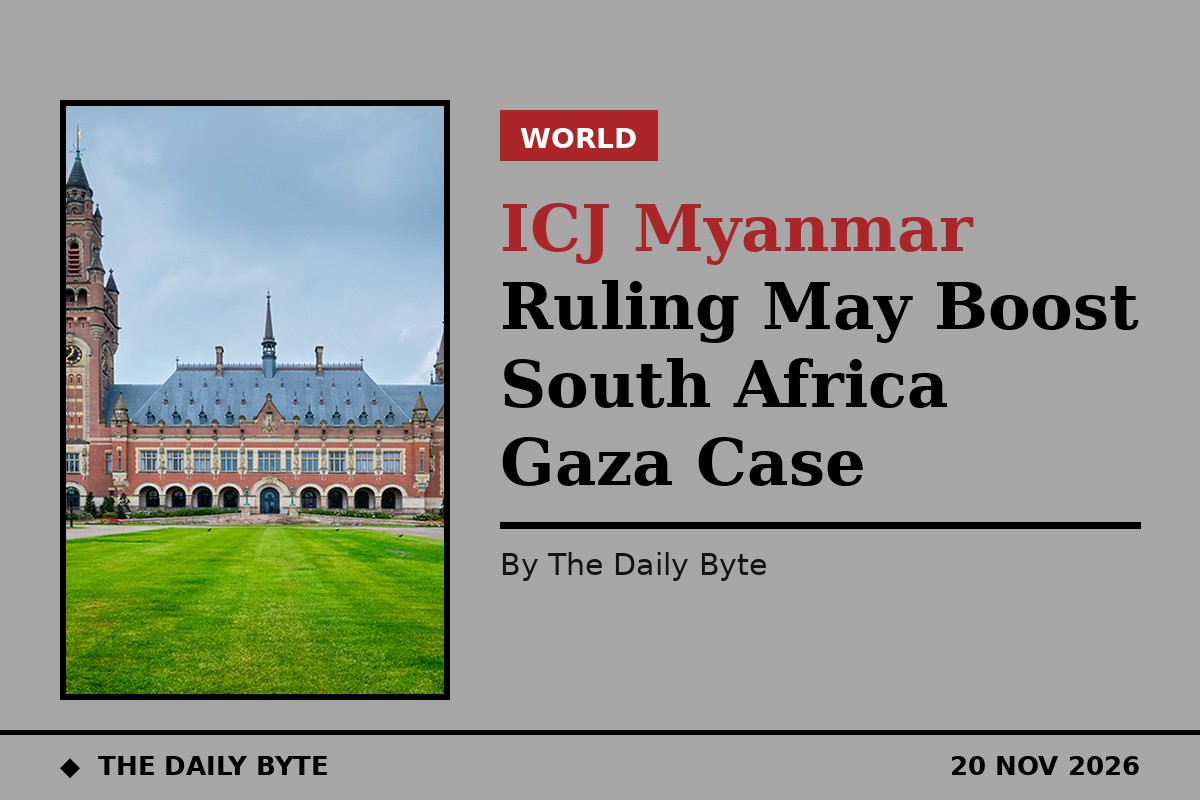
The International Court of Justice's landmark ruling that Myanmar committed genocide against the Rohingya could strengthen South Africa's genocide case against Israel over the war in Gaza, legal experts said on Friday, in the first assessment of a judgment that breaks new ground in international law.
On Thursday, the court in The Hague found by nine votes to six that Myanmar had violated the Genocide Convention during its 2017 military operations against the Muslim Rohingya minority in Rakhine state. The judges found that around 10,000 killings, including of children, the razing of homes, widespread sexual violence and the forced exodus of more than 700,000 people amounted to state-sponsored genocide.
It is the first time the World Court has found a state responsible for committing genocide. The court also found that Myanmar had failed in its duty to prevent genocide, and ordered it to facilitate the return of Rohingya refugees and pay unspecified reparations. The case was brought seven years ago by Gambia on behalf of Muslim-majority countries.
Why the ruling matters for the Gaza case
South Africa, which brought a genocide case against Israel over its conduct in Gaza, welcomed the judgment. Foreign Minister Ronald Lamola said it set an important precedent by establishing for the first time that a state had committed genocide, and described it as of great significance to the case against Israel, which is not expected to be argued until 2029.
Both Myanmar and Israel have defended their armed forces' actions as legitimate responses to insurgencies. But legal experts said the court's reasoning undercuts that defence. The judges held that genocidal intent can coexist with a military objective, a finding that goes to the heart of Israel's argument that its campaign in Gaza is aimed at Hamas rather than at Palestinians as a group.
Israeli legal scholar Yuval Shany, of the Hebrew University of Jerusalem, said the ruling could broaden the arguments available to South Africa. The court kept its strict test that genocidal intent must be the only reasonable inference from the evidence, he said, but expanded the contextual factors it can consider beyond a pattern of conduct, to include the scale and systematic nature of the acts and a history of persecution. The approach gives South Africa more avenues to argue for genocide in Gaza, Shany said.
Marieke de Hoon, professor of international criminal law at the University of Amsterdam, said another part of the ruling could resonate in the Israel case: the court's emphasis on the systematic nature and scale of the crimes, and on attacks against children and women and sexual violence, which the judges found could not be explained by military objectives alone. South Africa alleges that Israel's operations created conditions intended to prevent births and disproportionately affected women and children, and said in its filing that an estimated 70 percent of those killed were non-combatants. Israel rejects those allegations and says its operations have been conducted in accordance with international law.
Concern in Israel, caution from analysts
Israeli media reported that senior officials in Jerusalem described the ruling as a dangerous precedent. Tammy Caner, a lawyer affiliated with Israel's Institute for National Security Studies, said the judgment could carry significant implications for the proceedings against Israel. Shany put it more bluntly: the decision concerning Myanmar should worry Israel.
Not everyone agrees the ruling changes the odds. The Hague Initiative for International Cooperation, a think tank funded by pro-Israeli groups, said the judgment would fundamentally alter how courts assess genocide allegations by imposing a lower threshold for proving intent, with serious consequences for Western militaries confronting terror. Its director, Andrew Tucker, called the ruling a template whose propositions will be used in future cases.
Richard Horsey, senior Asia adviser at the International Crisis Group, urged caution. Proving genocide in court remains extremely difficult, he said, but the case shows the legal bar is surmountable. South Africa filed its case against Israel on 29 December 2023, and the court is still hearing written pleadings. For now, the Myanmar judgment stands as the court's first finding of state genocide, and both sides in the Gaza case will be studying it closely.
Sources: Reuters | Anadolu Agency via Europe Says


