IEA: No Way Back for Oil After Hormuz Crisis
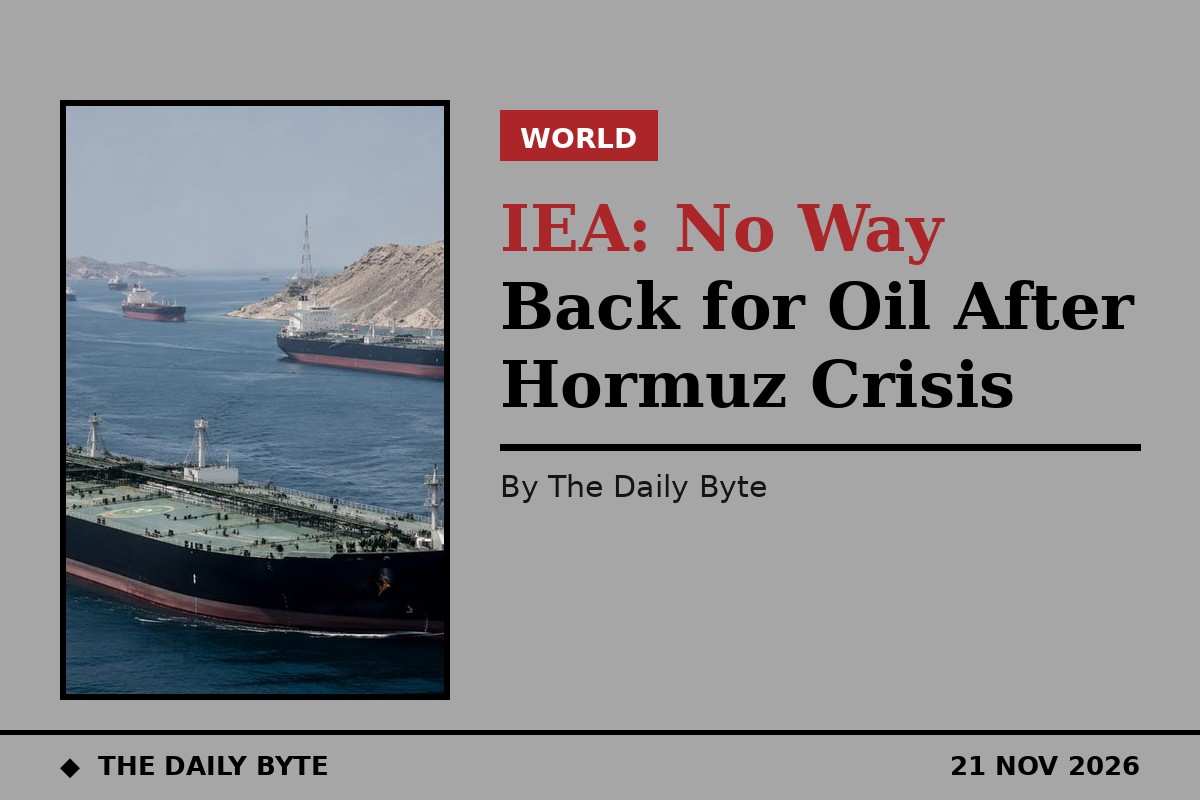
The International Energy Agency has said the world's energy markets will not return to the way they were before the Middle East war, even if the global system learns to manage without the Strait of Hormuz.
In its flagship World Energy Outlook 2026, published on Thursday, the Paris-based agency described the disruption to Gulf energy supplies as the largest energy supply shock on record — and one that is not yet over.
"The Strait of Hormuz crisis has created the largest threat to energy security in history, one that dwarfs the scale of the oil shocks of the 1970s," IEA Executive Director Fatih Birol wrote in his foreword to the report.
"I don't see any credible pathway back" to the pre-war situation, Birol wrote in an accompanying article, arguing that confidence in the strait as a safe and reliable corridor has been crushed.
Losses on a record scale
By November, cumulative losses from the Gulf had reached 2.8 billion barrels of oil and 60 billion cubic metres of natural gas, according to the report. At the peak of the disruption, global oil supply fell by 16.1 million barrels per day from pre-conflict levels, while gas supply dropped by 320 million cubic metres a day.
The crisis began after the United States and Israel bombed Iran in February, prompting Tehran to blockade the strait and target tankers passing through it. Before the crisis the waterway carried about a fifth of the world's oil shipments.
Ample inventories, extra production from suppliers outside the Gulf, alternative export routes and a sharp fall in Chinese crude imports cushioned the first impact, the IEA said. Member countries also coordinated the release of 400 million barrels of emergency oil stocks, announced on 11 March.
But as inventories fell and the disruption dragged on, the burden shifted to consumers. The IEA estimates that global spending on imported oil and gas will reach 1.6 trillion dollars this year, a quarter more than in 2025. Diesel markets have been particularly strained, with prices exceeding 200 dollars a barrel.
The agency's November Oil Market Report expects global oil demand to fall by around 2.7 million barrels a day in 2026, its first annual decrease since 2020, while natural gas demand is expected to fall by about 1.5 per cent.
Bypassing the strait
The lasting change, in Birol's view, is diversification. Countries will seek a wider mix of fuels, suppliers and trade routes, including pipelines that carry Middle East oil around Hormuz — which he says the United Arab Emirates and Saudi Arabia are already building quickly.
The IEA estimates that bypass pipelines, alternative supplies and demand measures could cut the need for oil flows through the strait from 20 million barrels a day before the crisis to 8.5 million by 2030, and below 2 million by 2035. Even then, it says, the Middle East would remain the world's largest oil exporter.
Goldman Sachs sees that adjustment already weighing on prices. The bank expects about 3.8 million barrels a day of new bypass pipeline capacity over the next year, and estimates the oil market tipped into surplus in October, reaching 2 million barrels a day in 2027. It forecasts Brent crude averaging 88 dollars a barrel next year and easing towards 78 dollars by December 2027.
The IEA's outlook assumes constraints on Gulf exports will ease into 2027 and that unimpeded transit through Hormuz will be possible by the end of that year — but it cautioned that its scenarios are not forecasts, and that considerable uncertainty remains over how long the crisis will last.
"While the energy sector and the global economy have shown considerable resilience, the longer the crisis lasts, the deeper the effects will be," Birol said in a press release accompanying the report.
The report was published as governments meet for the COP31 climate talks in Turkey, where the IEA added two scenarios based on what might happen if the Middle East crisis persists.


