IG Metall Launches First 24-Hour Strikes in Eight Years
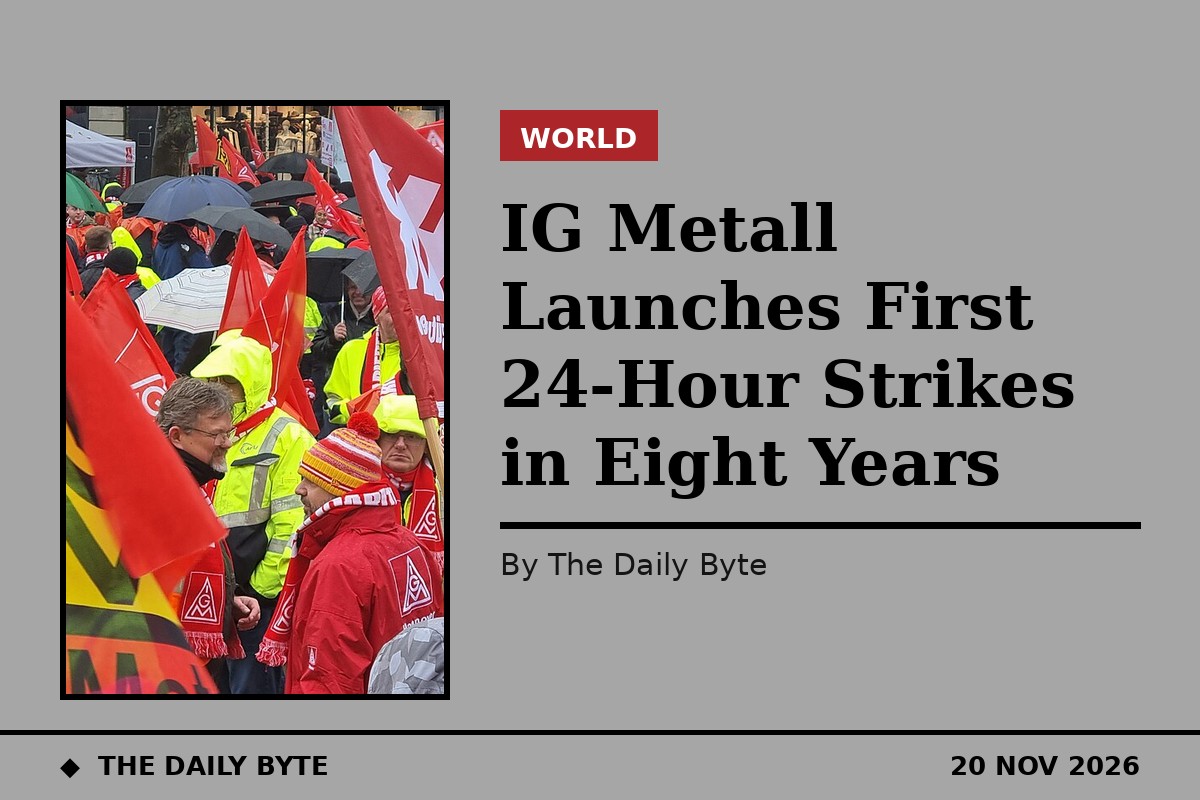
Germany's IG Metall union has launched 24-hour warning strikes across the country's car and steel industries, the first all-day stoppages by the union in eight years, in an escalation of a pay dispute affecting 3.7 million workers.
The strikes began on Friday 20 November at hundreds of auto and steel makers, including BMW, Audi and Porsche plants in Bavaria, shipyards in the north and suppliers in Baden-Württemberg. The action follows an earlier wave of short warning strikes that drew nearly half a million workers, and marks a sharp step up in pressure on employers.
IG Metall, Germany's largest union, is demanding a 5% pay rise, firm measures to safeguard jobs and production sites, and profit-sharing arrangements in sectors that are performing strongly. The dispute covers workers at companies including Audi, Mercedes-Benz and Tata Steel, as well as the wider metal and electrical engineering industries.
Employers have offered a one-off payment of 1% of annual gross pay in July 2027 and a 1.3% wage increase from July 2028, with financially troubled companies allowed to withhold the one-off payment. The union has dismissed the offer as effectively a pay cut in real terms and criticised employers for a lack of commitment to jobs and sites.
IG Metall leader Christiane Benner said the union was stepping up its action because of the scale of frustration among workers. She said the union's specific and binding proposals were on the table, and that the frustration and concerns among employees were so great that the union was now moving to full-day warning strikes.
The union had announced last week that it was planning a 24-hour stoppage without giving a date, and confirmed the timing on Thursday 19 November after local member ballots returned large majorities in favour of escalation. Workers taking part in the all-day strikes receive strike pay from the union, while employers pay no salary for the day.
Full-day warning strikes are the union's last staged escalation short of an open-ended strike, and a new, fourth round of negotiations has not yet been agreed. If talks fail, IG Metall would need a further ballot before calling an indefinite strike, which would put much greater pressure on Germany's already strained carmakers.
The stoppages add to production uncertainty for German manufacturers already facing high costs and weak demand. Volkswagen was preparing for wage negotiations of its own, while Lufthansa announced 1,000 job cuts at its Frankfurt and Munich hubs on the same day. The outcome of the metal and electrical dispute is closely watched across German industry, because the settlement is expected to set the pattern for pay rounds covering millions more workers in 2027.
Sources: Reuters; Live From Europe.


