IISS: Gulf defences exposed by Iran war attacks
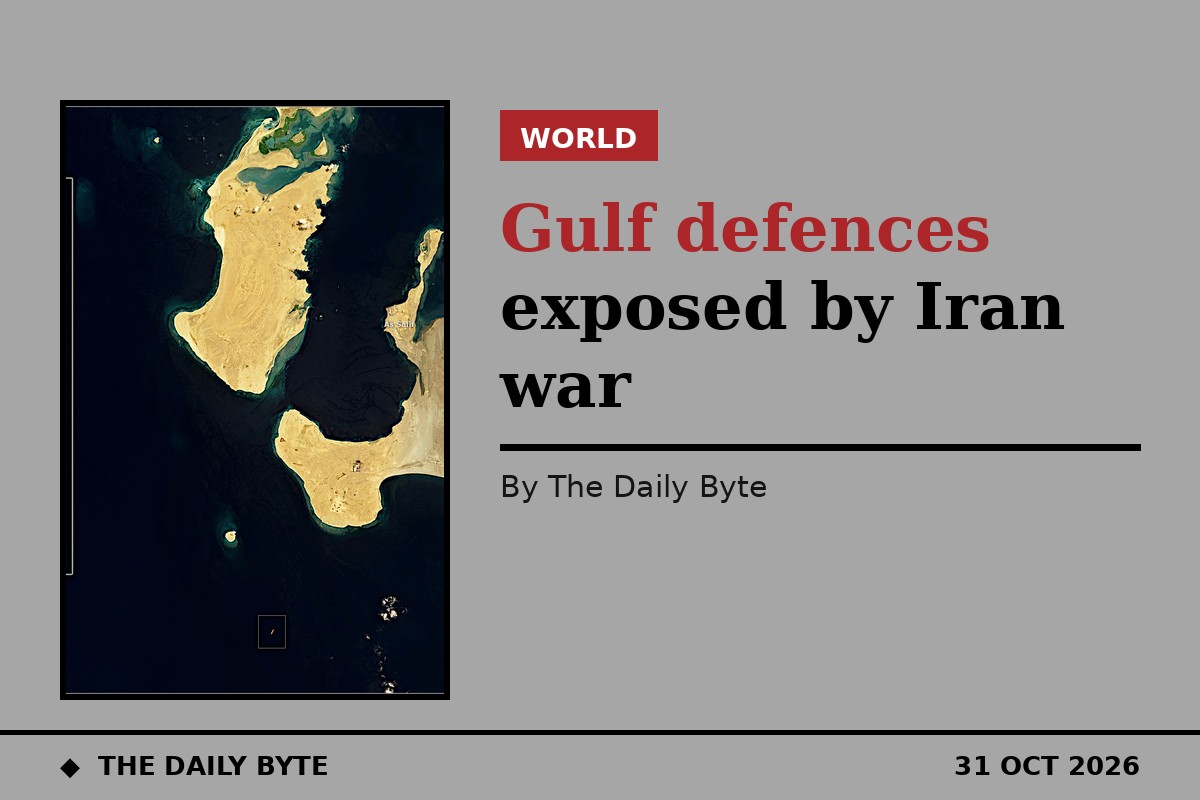
Gulf states must rethink defences built around expensive American weapons and security guarantees, according to a new dossier from the International Institute for Strategic Studies (IISS). The study, titled The Gulf at War and published on 30 October, examines how the war with Iran affected Bahrain, Qatar, Oman, Kuwait, Saudi Arabia and the United Arab Emirates.
Its central finding is a mismatch between cost and threat. In the weeks before the 8 April ceasefire, 12 regional states, mostly in the Gulf, faced 4,670 Iranian one-way attack drones and more than 1,400 ballistic missiles, the report says. Nearly half of those attacks were aimed at the United Arab Emirates. Most incoming weapons were intercepted, and Gulf air and missile defences generally performed well, but using costly interceptors against much cheaper drones and missiles proved financially punishing. One estimate cited in the report puts damage to energy infrastructure as high as 58 billion dollars.
Four capability gaps the report identifies
First, replenish air-defence stockpiles amid global shortages. Second, find cheaper counters to mass drone attacks instead of high-end systems for every threat. Third, acquire long-range strike options to rebuild deterrence. Fourth, close maritime gaps, including minesweeping and sea awareness.
The report also challenges a long-held assumption: that wealth, energy importance and close ties with Washington would insulate Gulf states from regional war. Instead, it argues, they now face a more volatile future, with divisions over whether to accommodate, engage or deter Iran, and doubts about American guarantees alongside continued dependence on American technology. It warns that any reduction in United States forces could be presented by Tehran as a strategic success. For Gulf capitals, the lesson is not that their defences failed, but that the next conflict may test them in the same costly way.