IMF: Lebanon Bank Reform Progress, But No Deal Yet
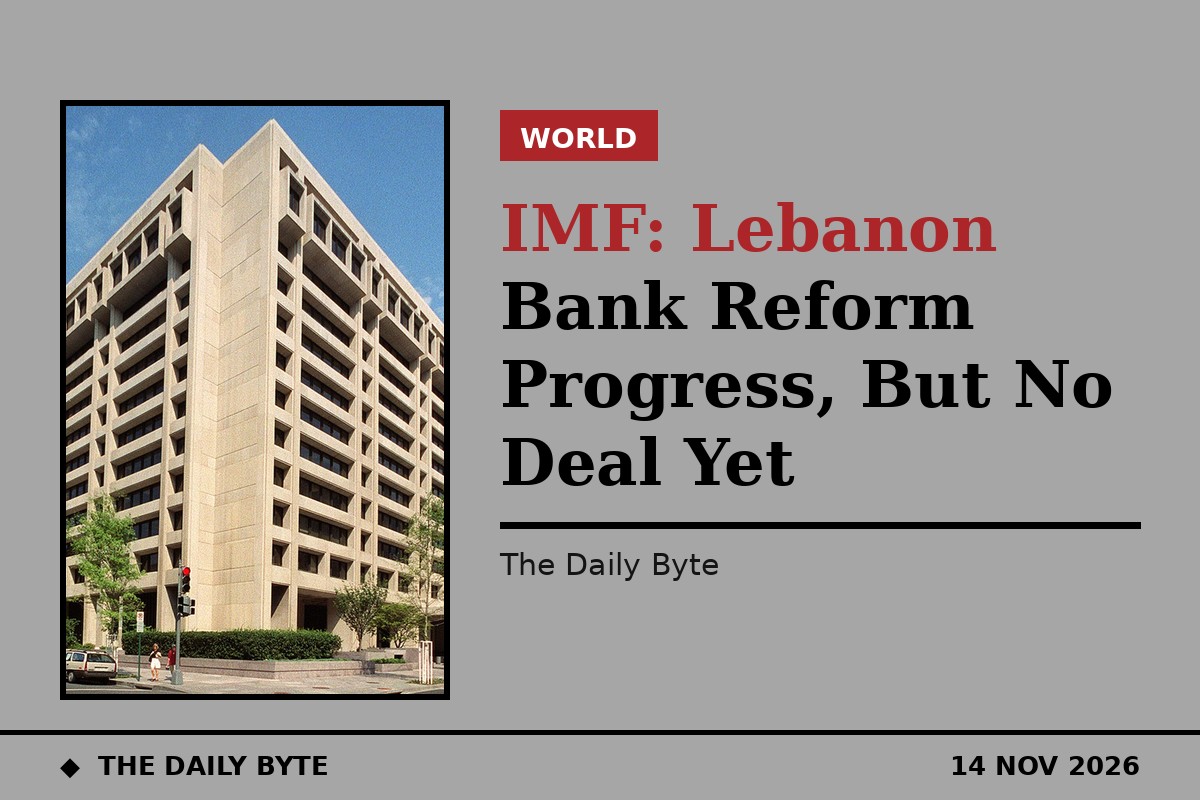
The International Monetary Fund has said its talks with Lebanon on restructuring the country’s banks made progress but produced no agreement on a strategy. A statement issued on Friday followed a mission to Beirut from 10 to 13 November, led by the fund’s mission chief Ernesto Ramirez Rigo.
The visit continued discussions begun in September on the key elements of a restructuring plan. Much of the focus fell on aligning the draft Financial Stabilization and Deposits Recovery Law, which is before parliament, with international standards. Ramirez Rigo said the mission made progress in clarifying the approaches under consideration by Banque du Liban, the central bank, and the government, but more work is needed before the two sides agree a strategy for an effective and durable restructuring that leaves a sound, resilient banking system.
What the fund wants from the deposits law
The fund said the Bank Resolution Law, which sets out how distressed banks are resolved and liquidated, should be applied in all cases, so the process is transparent and predictable. It also said the deposits law has to preserve the hierarchy of claims when losses are allocated, which would give depositors the greatest protection. In practice that means shareholders and junior creditors should absorb losses before savers.
Further talks are needed on the criteria for maximising the amounts returned to depositors. Those criteria must be consistent with liquidity at Banque du Liban and across the banking sector, with public debt sustainability and with restoring the central bank’s solvency. Implementing the resolution law alongside the deposits law, once the latter is adopted, is essential, the fund said.
Lebanon’s crisis has locked depositors out of their savings since 2019, shattered trust in the banks and pushed the economy towards cash. In early 2022 the authorities put the losses at nearly $70 billion, and experts say they have grown since. Parliament has yet to pass the law that will split those losses between the state, the central bank, commercial banks and depositors, with politicians and banking representatives still contesting how much each party should bear.
Long road back to an IMF programme
Finance Minister Yassine Jaber said he hoped to reach an agreement with the IMF in the first quarter of next year, and before the end of 2027 at the latest. In April 2022 Beirut and the fund reached a staff-level agreement on a 46-month programme that could have unlocked $3 billion, on condition that Lebanon pass financial reforms. Those reforms stalled, and the authorities asked for a new fund-supported programme in March 2025.
The November mission followed one on 15 to 18 September, when fund staff welcomed approval of amendments to the Bank Resolution Law and said they aligned Lebanon’s framework with international best practice. In September the fund also said economic activity was expected to contract significantly in 2026, citing conflict and regional security developments, while inflation remained in double digits and the current account deficit had widened, mainly on rising energy costs.
The mission said it looks forward to continuing engagement with the Lebanese authorities in the coming weeks, and that the fund remains committed to supporting a comprehensive economic reform programme. For depositors, however, the message from Beirut is unchanged: there is movement, but still no deal, and no timetable for getting their money back.