IMF: Botswana Needs New Growth Model Beyond Diamonds
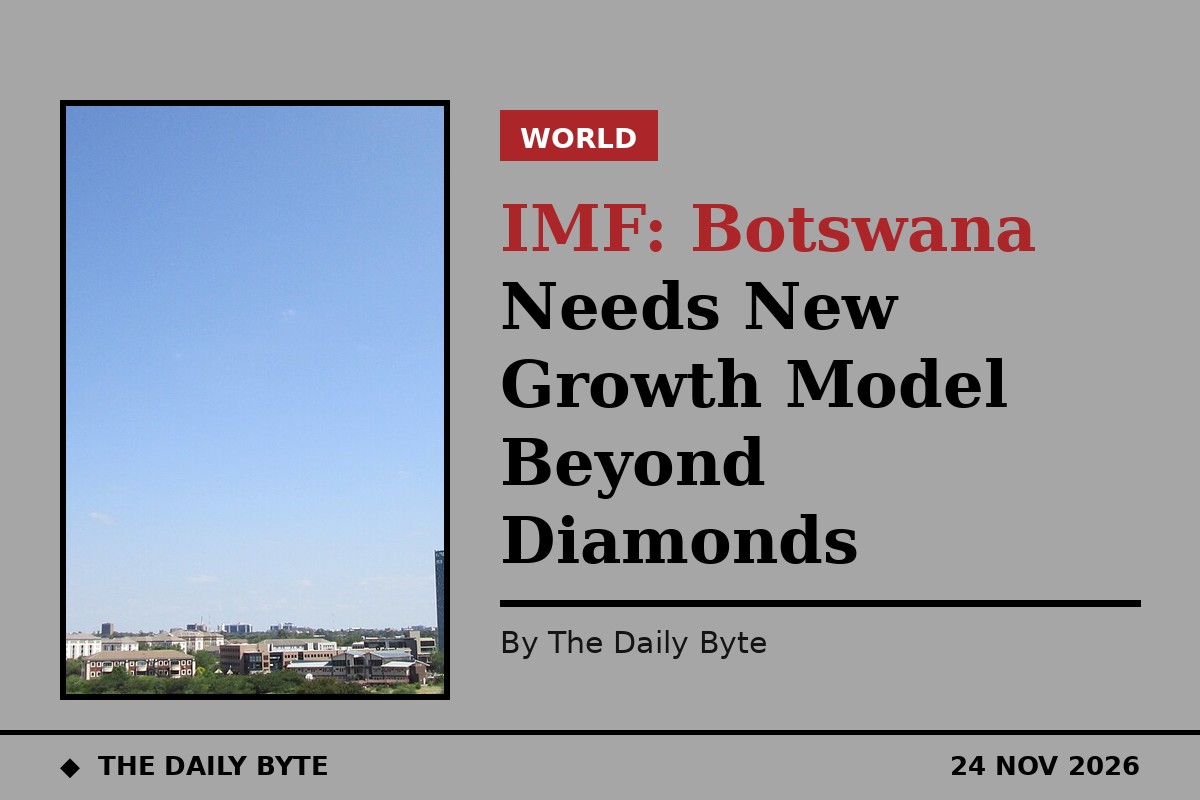
Botswana needs a new growth model built on private business outside mining, the International Monetary Fund has said, after two years of economic contraction exposed the country's heavy reliance on diamonds.
An IMF staff team led by Faisal Ahmed visited Gaborone from 9 to 23 November for the Fund's 2026 Article IV consultation, its regular health check of the economy. In a statement issued at the end of the visit on 23 November, Ahmed said the medium-term outlook "remains challenging amid structural vulnerabilities and weaker buffers".
Weak demand for natural diamonds and growing competition from lab-grown stones contributed to two years of contraction, the IMF said, while unemployment, particularly among young people, remains high.
There are early signs of a turnaround. Economic activity rebounded in early 2026, supported by mining, and the economy is projected to grow by 3 percent in 2026 after two years of shrinkage. But the Fund warned that demand for natural diamonds is expected to stay subdued and that growth outside mining would recover only gradually without sustained structural reforms.
Inflation and the public finances
Inflation remained elevated at 7.6 percent in October 2026, largely reflecting higher fuel prices, and is projected at 8.2 percent for the year as a whole. The Bank of Botswana raised its policy rate to 5.5 percent in April 2026, and IMF staff said further tightening may be needed if price pressures persist.
The public finances have improved on the surface but remain strained. The fiscal deficit narrowed to an estimated 6.3 percent of gross domestic product in the 2025/26 fiscal year, helped by stronger mineral revenue and lower capital spending. Even so, the wage bill continued to rise, and public debt reached about 34 percent of GDP, up from 22.5 percent two years earlier.
The IMF called for fiscal consolidation led by spending restraint and greater efficiency, including containing the wage bill, better targeting of social programmes and subsidies, and stronger management of public investment. Revenue efforts, it said, should focus on broadening the tax base and improving tax administration, while a debt anchor, an expenditure rule and an adequate liquid-asset buffer should strengthen the fiscal framework.
On the external side, the current account is projected to reverse to a deficit of 0.2 percent of GDP in 2026, driven by a decline in net diamond exports and a substantial increase in fuel imports. Financial inflows are nevertheless expected to support reserve accumulation, with international reserves remaining above five months of import cover at the end of 2026.
A new growth model
The heart of the IMF's message was diversification. "Botswana's prolonged slowdown underscores the need for a new growth model driven by non-mineral, private-sector-led activity," Ahmed said, adding that lessons from the Botswana Economic Transformation Plan should be applied across the whole economy.
The Fund listed access to finance, land administration, electricity supply, labour-market flexibility, competition, governance and trade openness as priorities for reform, alongside reducing the footprint of state-owned enterprises. Better education, health outcomes and skills will also be critical for stronger and more job-rich growth, it said.
The IMF also said the exchange rate regime has served Botswana well but can limit its ability to absorb shocks over the medium term, and that any move toward greater exchange-rate flexibility should be gradual, carefully sequenced, coordinated with fiscal and monetary policy and clearly communicated.
If the authorities implement ambitious reforms to ensure fiscal and external sustainability and diversify the economy, growth could recover gradually to more than 4 percent over the medium term, the Fund said. The financial sector, it added, remains resilient, with banks well capitalised and profitable.
The findings are the visiting IMF team's assessment following its consultation discussions, reported by the International Monetary Fund and Habari Entertainment. The government has not yet published a formal response to the statement.


