Immigration misperceptions widespread, study finds
Most people in Britain hold the wrong idea about immigration, with only one in 50 correctly saying net migration fell sharply over the past year, a new study has found.
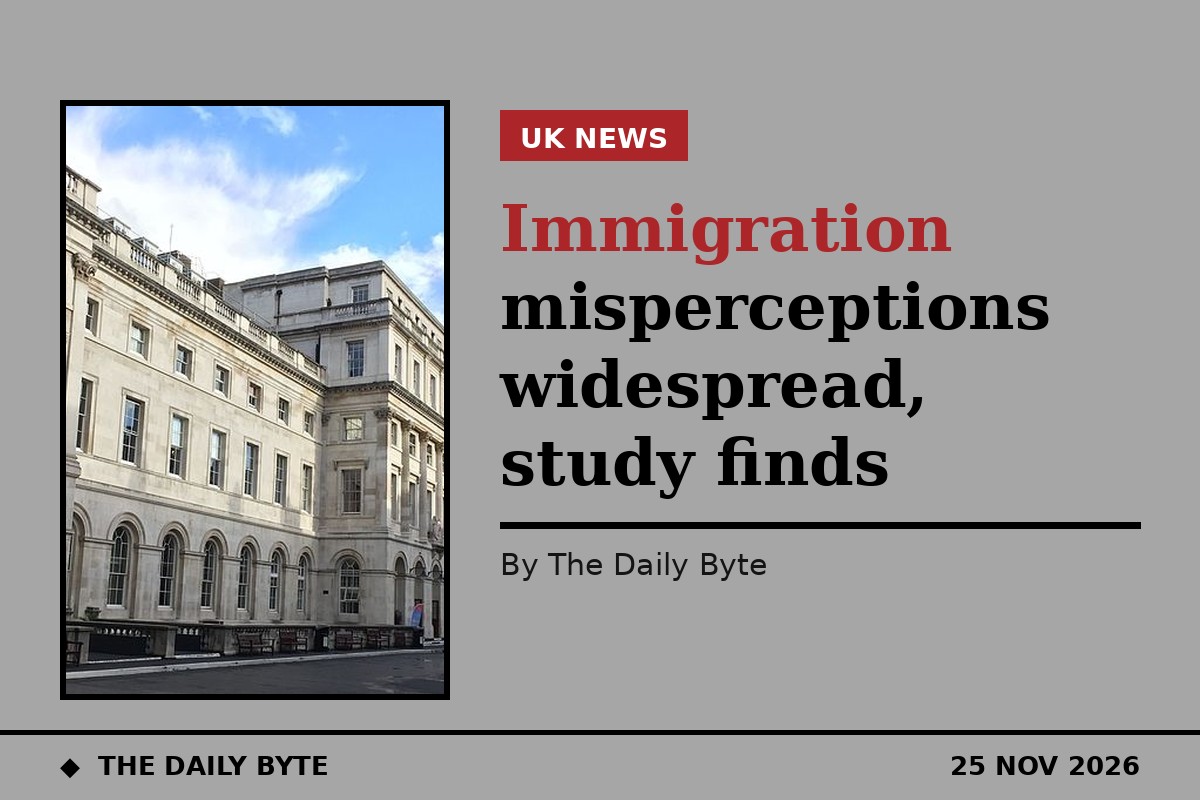
The survey by the Policy Institute at King's College London (KCL), carried out with YouGov, found widespread errors about the scale of migration, the number of small-boat arrivals, how many refugees Britain hosts and what support asylum seekers receive.
The authors say the mistakes matter because people who hold the most inaccurate views also tend to hold the firmest views against immigration and to back tougher policies.
Net migration fell by two-thirds
Almost two-thirds of those surveyed, 63%, wrongly believed net migration rose between June 2024 and June 2025. In fact it fell from 649,000 to 219,000 people, a drop of 66%.
Only one in 50 people correctly said net migration had fallen significantly over that period.
People also overestimated the rise in small-boat crossings. Almost half, 46%, thought the number of people detected crossing the Channel in small boats rose by about 30% or more between 2024 and 2025. The real rise was 13%.
The study notes that while record numbers of people have crossed in a single boat this year, the number of small boats arriving in the past year is at its lowest rate since 2019/20.
Refugees and foreign-born population
Asked which of the UK, Turkey, Germany, Poland and France hosts the most refugees, 44% said the UK hosted the most or second most. In fact, as of 2025, the UK hosts the fewest of the five countries.
Almost half, 48%, believed the UK had the highest or second-highest share of foreign-born people out of a list of seven countries. In reality it ranks joint fifth with Germany.
People also misjudged who comes to Britain. On average they guessed that 21% of new arrivals were students and their dependants, when the real figure is 43%. They put asylum seekers at 31% of new migrants, against a real figure of 20%.
Half of those surveyed wrongly believed asylum seekers get free housing once their claim is approved. In fact, once a claim succeeds and refugee status is granted, people must leave government-provided accommodation within a set period.
Almost half, 46%, also thought refugees get priority for social housing. Refugees apply on the same basis as everyone else. The public estimated that 30% of all new social housing in 2023/24 went to non-UK nationals; the real figure was 13%.
Views differ by party
The errors varied with political allegiance. Reform UK supporters, at 57%, were the only group in which a majority wrongly believed net migration had risen significantly. Supporters of the Greens, Liberal Democrats and Labour were less aware that asylum seekers can use free NHS and dental care while their claims are processed.
Immigration remains a top concern: 49% of the public told YouGov it is one of the biggest issues facing the country, compared with 56% in June 2016. And 43% said they wanted immigration reduced a lot.
Most people, 53%, expected immigration to rise in 2026, although the Office for Budget Responsibility and the Office for National Statistics predict it will fall.
Some things the public gets right
The picture is not one-sided. People estimated the share of the UK population born abroad at 18%, close to the official figure of 18.9%. More than seven in 10 correctly said asylum seekers are not allowed to work as soon as they arrive.
But on other measures people underestimated the scale of change: 39.5% of babies born in England and Wales have at least one parent from outside the UK, while the public guessed two or three in 10.
Professor Bobby Duffy, director of KCL's Policy Institute, said: "Immigration is a top national concern among the public and central to political debate. But this study shows that the immigration many people imagine is often very different from the reality."
He added that misperceptions were "as much an expression of concern as a careful reading of the facts", and warned that correcting them alone would not automatically soften views, because the divides were partly driven by deep differences in values and identity. "We're all entitled to our own opinions on immigration, but not our own facts," he said.
The survey questioned 1,827 UK adults between 23 and 27 March 2026 as part of the institute's Mistaken Britain research series.