Moroccan-born Inass Touloub's parents jailed 39 years on
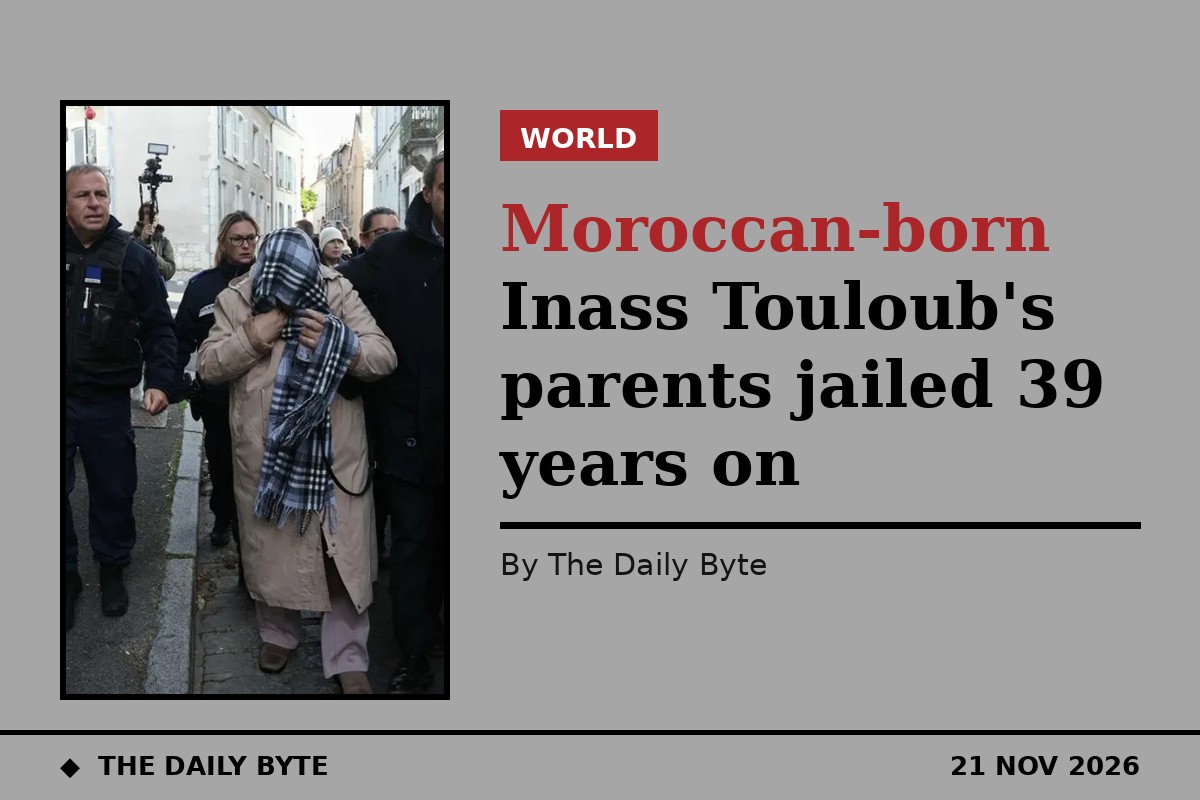
A court in Blois, central France, has sentenced the parents of Moroccan-born Inass Touloub to prison, 39 years after the four-year-old girl's tortured body was found beside the A10 motorway, closing one of France's most haunting cold cases.
On Tuesday, 17 November, the Loir-et-Cher criminal court sentenced Halima El Bakhti, 72, to 20 years in prison for acts of torture and barbarity that led to her daughter's death without intent to kill. The girl's father, Ahmed Touloub, 74, received 15 years for complicity. Both were taken into custody immediately after the verdict, which followed seven hours of deliberation. Touloub's lawyers immediately announced they would appeal.
For the mother, the sentence matched exactly what prosecutors had requested the day before. The court recognised that her mental capacity had been diminished at the time of the events, which under the criminal code in force in 1987 capped her sentence at 20 years rather than life imprisonment. For the father, the 15-year term was one year longer than the 14 years prosecutors had sought.
A body without a name
Inass Touloub was born in Casablanca, Morocco, on 3 July 1983. Her body was found on 11 August 1987 in a ditch beside the A10 motorway at Suevres, a village between Orleans and Tours. She was four years old. A forensic examination found about twenty bite marks, multiple fractures, burns from an iron and other injuries. Her parents drove on to Morocco with their five other children, leaving her body behind.
With no missing child reported in the area, investigators launched an international appeal across 30 countries, and her photograph was distributed to tens of thousands of schools and town halls across France. She was buried in the cemetery at Suevres, where the village tended her grave for 31 years, known only as the "little martyr of the A10".
The case was solved only in 2018, when DNA from a man arrested after a street fight matched genetic material recovered from the blanket covering the girl's body. The DNA belonged to her brother, leading investigators back to the family. Her parents were arrested on 12 June 2018. Her six siblings joined the trial as civil parties, alongside child protection groups and the town of Suevres.
Two weeks in court
The trial opened on 2 November and ran for two weeks. Prosecutor Stephane Javet described abuse "each more monstrous than the other", recalling the girl's bruised face and silenced voice. The presiding judge, Audrey Debeugny, said the acts of torture and barbarity were "perfectly characterised", and that the forensic findings showed acts exceeding "in their number, intensity and location, simple wilful violence". She said Inass "was no longer considered a child but had become the receptacle of maternal cruelty".
El Bakhti, who had told the court "I was not a human being, I hit her without knowing why", was unable to explain the injuries and at one point collapsed in court as autopsy photographs were shown, briefly suspending the hearing. Her lawyer, Camille Radot, said she was in denial because she could not face what she had done, but insisted: "She never wanted to kill that child."
Touloub admitted he had been "unable to protect" his daughter. His lawyers argued that complicity required a positive act, not inaction, and that the "crime of cowardice does not exist in the penal code". The court disagreed, holding that as a father he had a duty to guarantee his daughter's safety, protection and health, and that he could not have been unaware of the abuse.
Before the verdict, El Bakhti told the court, in tears: "I'm sorry, I regret." The couple entered the courthouse as free individuals and left in a prison van the same evening.