India Cabinet approves Rs 62,370 crore fertiliser subsidy
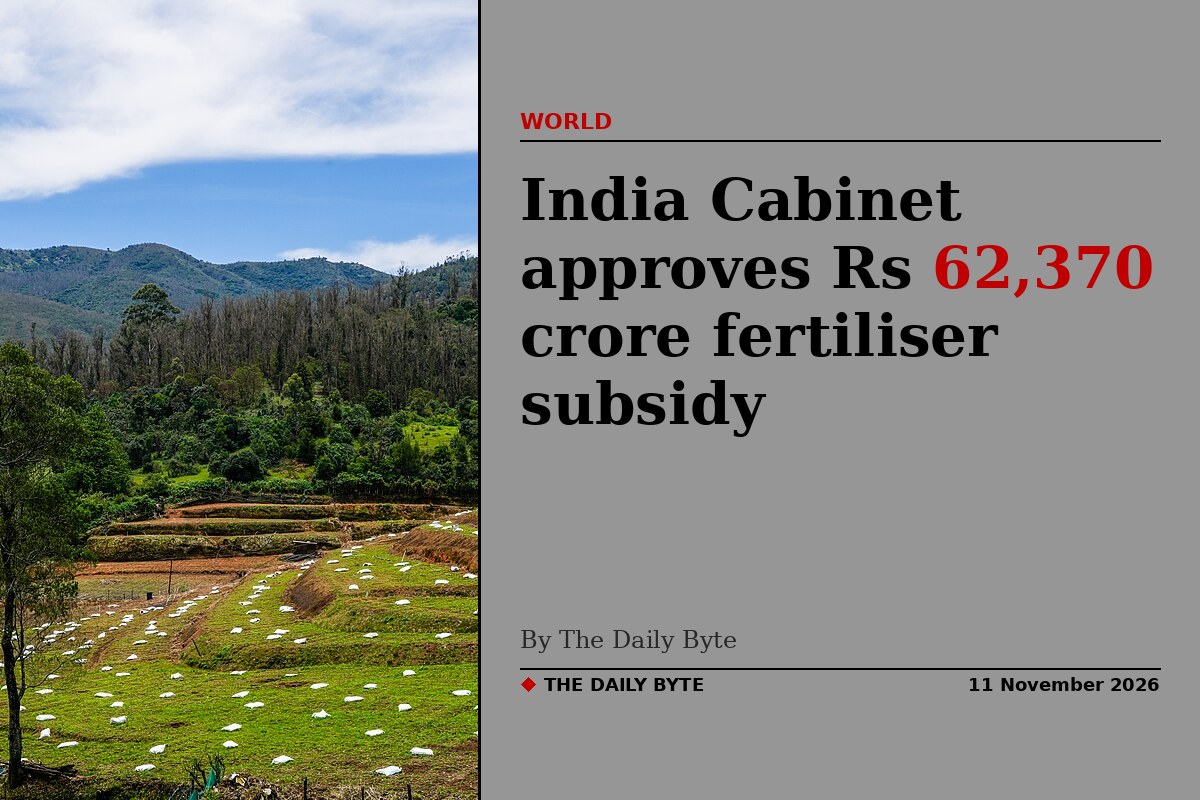
The Union Cabinet, chaired by Prime Minister Narendra Modi, on Wednesday approved nutrient-based subsidy rates for phosphatic and potassic fertilisers for the Rabi 2026-27 season, with a tentative budgetary outlay of Rs 62,370.02 crore. The figure is about 64 per cent higher than the Rs 37,952.29 crore set aside for the Rabi season last year, an increase of Rs 24,417.73 crore.
The rates cover the period from 1 October 2026 to 31 March 2027 and apply to 28 grades of phosphatic and potassic fertilisers, including di-ammonium phosphate (DAP) and NPKS blends. The subsidy is paid to fertiliser manufacturers and importers, who then sell to farmers at subsidised prices.
What farmers will pay
Under the approved rates, the subsidy has been fixed at Rs 94.21 per kg for nitrogen, Rs 66.11 per kg for phosphorus, Rs 2.38 per kg for potash and Rs 10.42 per kg for sulphur. The government will keep DAP available at a fixed price of Rs 1,350 per 50 kg bag.
Special assistance for DAP beyond the nutrient-based framework will continue, and has been extended to triple superphosphate and monoammonium phosphate, whether imported or produced in India. The freight subsidy on single superphosphate will also continue, to encourage its use as an affordable alternative to DAP, and the subsidy on imported and domestic ammonium sulphate will carry on through the season.
Push for domestic production
In a move to strengthen domestic production and reduce import dependence, the Cabinet also approved a sulphur package for Indian manufacturers. They will receive 20 per cent of the actual procurement cost of sulphur, subject to a floor price of 800 dollars per tonne, and the same share of the cost of sulphuric acid, subject to a floor of 266.67 dollars per tonne. Detailed guidelines will be issued by the Department of Fertilisers.
The government expects the package to revive domestic production, cut reliance on imports and promote balanced nutrient use, with single superphosphate used in place of DAP and ammonium sulphate in place of urea where suitable. The nutrient-based subsidy scheme itself has been in operation since 1 April 2010.
Stocks and the global backdrop
The higher outlay comes against global fertiliser price volatility and disruption linked to the West Asia crisis. The government said the package would ensure adequate availability through the Rabi sowing season while keeping input costs stable for farmers.
Total fertiliser stocks stood at 235.21 lakh tonnes on 10 November, against 173.46 lakh tonnes on the same date last year. Urea stocks were 103.12 lakh tonnes, up from 72.14 lakh tonnes a year ago, while DAP stocks rose to 28.65 lakh tonnes from 24.86 lakh tonnes. NPK stocks increased to 60.87 lakh tonnes from 42.44 lakh tonnes, muriate of potash nearly doubled to 20.08 lakh tonnes from 10.78 lakh tonnes, and single superphosphate stocks were marginally lower at 22.49 lakh tonnes against 23.24 lakh tonnes.


