India Chile Trade Pact Nears Deal by Year End
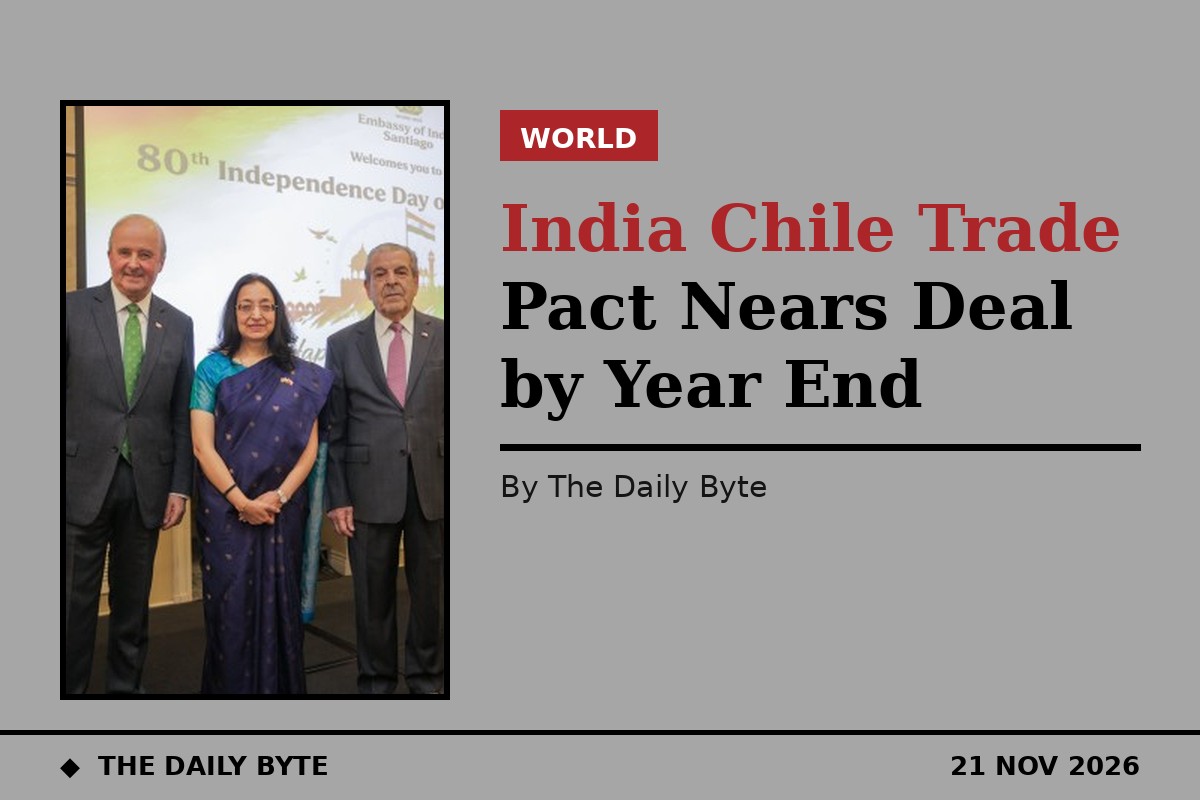
India and Chile are close to concluding a comprehensive trade pact, with a high-level Chilean delegation due in New Delhi next week to settle the remaining differences ahead of a proposed signing by the end of 2026.
The talks cover a comprehensive economic partnership agreement (CEPA) that would significantly widen the existing preferential trade agreement between the two countries, which was signed in 2006 and expanded in 2017. Commerce and Industry Minister Piyush Goyal has described the negotiations as "quite ripe" for conclusion.
The delegation is expected to visit at the invitation of Commerce Secretary Rajesh Agrawal, with discussions focused on the outstanding issues and on completing the negotiations.
Copper and lithium at the centre
Critical minerals are expected to be one of the most important parts of the deal. Chile is the world's largest copper producer, and copper and lithium are in growing demand for electric mobility, renewable energy, power infrastructure and data centres.
The proposed agreement would cover goods, services, investment, critical minerals and digital trade. For India, greater access to copper and lithium, alongside investment opportunities in mining and renewable energy, could strengthen economic cooperation with Chile well beyond tariff cuts.
The deal could also open opportunities for Indian companies in mining, pharmaceuticals, automobiles, engineering and services, while improving access for Chilean agricultural and mineral products in the Indian market.
Renewables, hydrogen and farming
Chile's ambassador to India, Juan Rolando Angulo, has highlighted opportunities for Indian investment in Chile's mining and renewable energy sectors. Other areas identified for cooperation include green hydrogen, agriculture, pharmaceuticals and technology.
Cooperation on lithium extraction and related technologies is also under consideration. Chile, along with Argentina and Bolivia, is part of South America's lithium-rich region, and renewable energy and green hydrogen offer further areas for collaboration, given Chile's solar and wind resources.
Agriculture is another component of the proposed partnership, with discussions covering market access, sanitary requirements, cold-chain infrastructure and agricultural research. Chilean fruits and other seasonal products could find greater access to the Indian market under the deal.
India's wider South America push
The Chile talks are part of a broader Indian effort to deepen trade ties across Latin America. India is also preparing to expand its preferential trade agreement with Mercosur, the South American bloc whose founding members are Brazil, Argentina, Paraguay and Uruguay, and which Bolivia has also joined.
The existing India-Mercosur agreement has been operational since 1 June 2009, providing preferential tariff concessions across 450 product categories from India and 452 from the Mercosur side, with tariff reductions ranging from 10 per cent to 100 per cent. Both sides are working towards expanding the agreement, with negotiations expected to progress once the terms of reference are finalised.
Goyal has expressed hope that political continuity in Brazil would help accelerate those negotiations, reflecting the country's importance within the grouping. An expanded agreement could improve access for Indian pharmaceuticals, automobiles, engineering goods, chemicals and machinery in South American markets.
India is pursuing separate trade arrangements with other Latin American economies, including Mexico, Ecuador and Guatemala. Agrawal's visit to Mexico City in October facilitated the signing of the terms of reference for negotiations on an India-Mexico preferential trade agreement. Mexico has expressed interest in an early-harvest arrangement covering selected products, while India hopes to make progress on the first phase of the proposed agreement over the coming months. Ecuador and Guatemala have also expressed interest in trade agreements with India, according to Goyal.
The negotiations reflect India's effort to diversify its export markets, improve access for domestic manufacturers and strengthen supply chains for essential raw materials. The immediate priority is to resolve the remaining differences during next week's expected visit by the Chilean delegation and keep the talks on track for the December 2026 target.