India weighs 20% rice export duty as prices rise
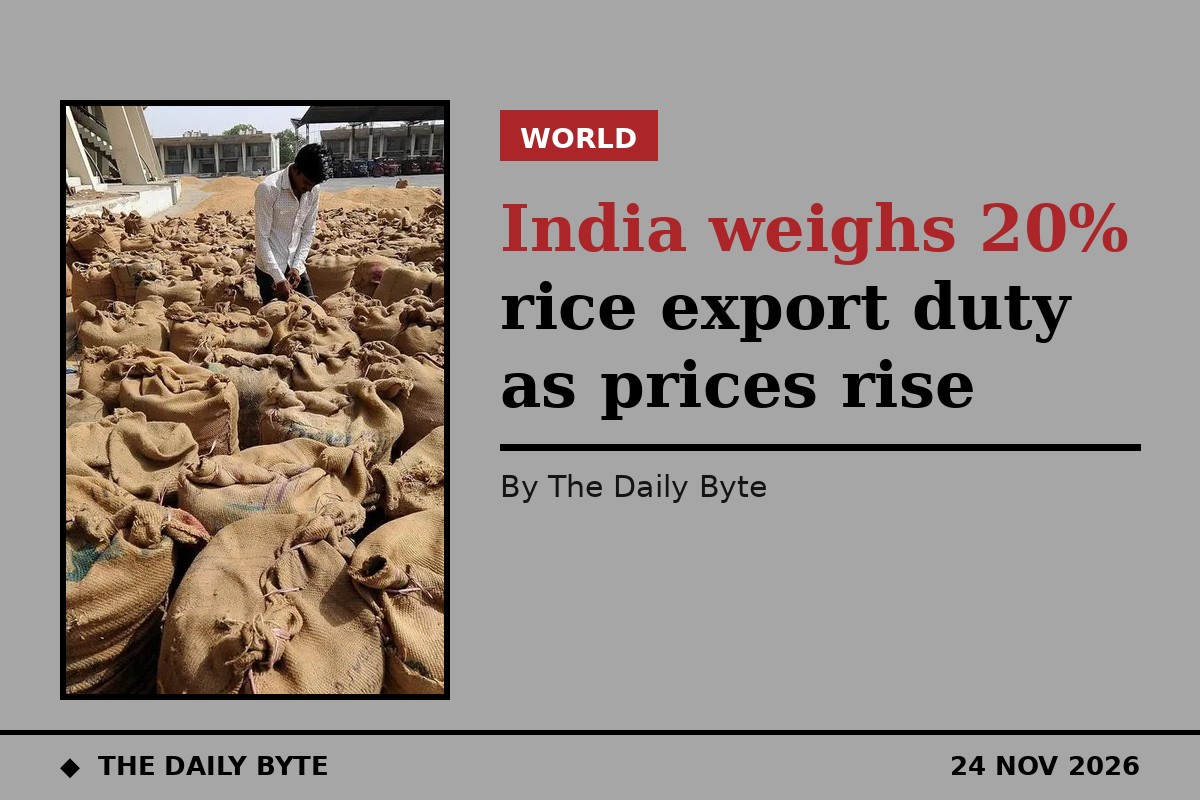
India is considering export duties on some rice varieties as prices rise at home, Reuters reported on 23 November, citing two government and two industry sources. The government is weighing a duty of around 20 per cent on varieties that have seen sharp price increases, with a final decision to follow consultations with all relevant ministries.
The curbs under discussion would target particular grades rather than all rice exports. According to the sources, the government is looking most closely at 100 per cent broken rice and some premium non-Basmati grades that are in short supply in southern states. The sources spoke on condition of anonymity because the discussions are not public, and a government spokesperson did not immediately respond to a request for comment.
Broken rice is the grade at the centre of the debate. The poultry and cattle feed industries have been hardest hit by a sharp rise in broken-rice prices and have urged the government to restrict shipments, one government official told Reuters. "We are considering measures to limit exports and support the domestic industry," the official said.
The aim, according to the sources, is to improve domestic supplies and ease the price increases facing consumers and industry in India. A duty would make the affected grades more expensive for overseas buyers, which could redirect some supply back to the home market. It would not be a ban, and officials have not said when a decision will be taken.
There is disagreement within the trade about whether any curb is needed. Prices of some premium non-Basmati varieties have risen, but those of other grades remain largely stable, and domestic supplies comfortably exceed demand, said Mukesh Jain, an exporter based in Raipur in the central state of Chhattisgarh. "There is no need to restrict rice exports. Exports should continue uninterrupted to help create storage space for the new crop," he told Reuters.
The scale of India's stocks adds to that argument. State reserves of rice, including unmilled paddy, totalled a record 55.3 million metric tons as of 1 November, nearly four times the government's target. The tension in the debate is therefore not about overall supply, but about particular grades in particular places: broken rice for animal feed, and premium non-Basmati rice in the south.
Any duty would also be felt beyond India. The country is the world's top rice exporter, and Reuters reports that the proposed duties could help rival exporters such as Thailand, Vietnam and Myanmar, which have struggled to compete with cheaper Indian supplies. A New Delhi-based dealer with a global trade house told Reuters that an export duty may slow Indian rice exports but is unlikely to stop shipments, given the country's price advantage over rival suppliers.
For households, the immediate question is whether the price rises spread. Broken rice feeds into the cost of poultry and dairy production, so sustained increases can reach consumers through meat, egg and milk prices as well as through the price of rice itself. For the feed industry, a duty that keeps more broken rice at home would be welcome relief after a period of sharp increases.
For exporters, the calculation is different. A 20 per cent duty would narrow their margins on the affected grades and could push some buyers towards Thailand or Vietnam, even if Indian rice remained competitive overall. Exporters in Raipur and other trading centres will be watching the inter-ministerial consultations closely, since the difference between a duty on broken rice alone and a wider duty on premium non-Basmati grades is considerable.
No decision has been announced, and the proposal remains at the discussion stage. If the government proceeds, the formal notification will show which grades are covered and at what rate. Until then, the report signals that New Delhi is prepared to intervene in the rice trade again to protect domestic users, even while its warehouses hold record stocks.


