India launches first home-grown H5N1 bird flu vaccine
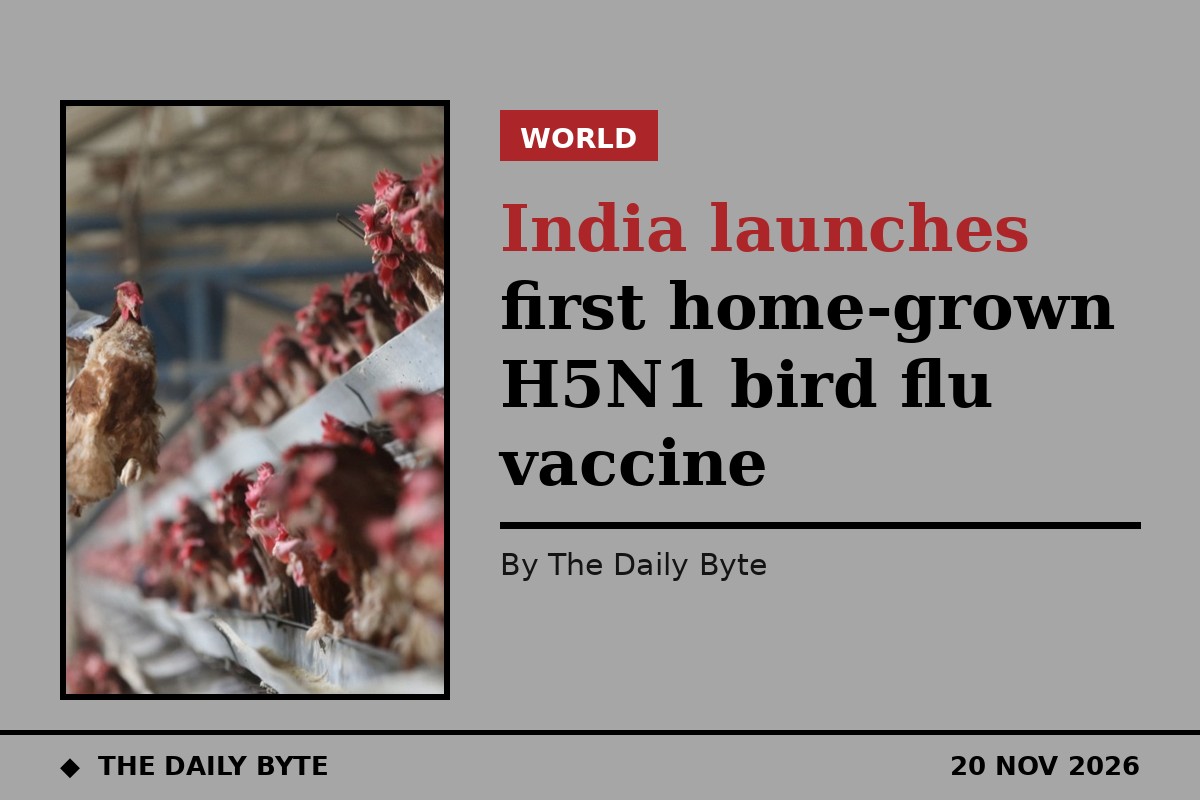
India has unveiled its first home-grown vaccine against the H5N1 strain of bird flu, in a step the government says will protect poultry farmers from outbreaks that have killed millions of birds.
Union Agriculture Minister Shivraj Singh Chouhan dedicated the vaccine to the nation on Friday at the ICAR-National Institute of High Security Animal Diseases (NIHSAD) in Bhopal. It is an inactivated vaccine against highly pathogenic avian influenza (HPAI) caused by the H5N1 virus of Clade 2.3.2.1a, developed by scientists at the institute, and the first vaccine of its kind developed in India against this strain.
Each dose is expected to cost between one and two rupees, a price the minister said was set so that even small poultry farmers can afford to protect their flocks. The vaccine is for chickens, not for human use.
Chouhan also announced a new state-of-the-art animal disease research laboratory in Bhopal, with an investment of 300 crore rupees, to expand India's veterinary research, disease surveillance and vaccine development capacity.
Why the vaccine matters
Bird flu was first detected in India in 2006, and more than 500 outbreaks of the H5N1 and H5N8 strains have been reported since then. Outbreaks can cause nearly 100 per cent mortality among infected birds, along with large-scale culling and trade restrictions.
Chouhan said India had lost 10 lakh chickens to bird flu in 2006, nine lakh in 2021 and two lakh so far this year. In May 2026, an outbreak in Navapur in Maharashtra's Nandurbar district led to the culling of nearly 400,000 poultry birds across 13 farms.
Until now, no specific commercial vaccine was available in India against the H5N1 virus of Clade 2.3.2.1a, the strain behind most bird flu outbreaks in chickens in the country. The strain has also been detected in other animal species, including mammals, along with three human cases, according to the Press Information Bureau.
The World Health Organization has reported 1,003 human cases of H5N1 avian influenza, including 479 deaths, across 25 countries since 2003.
Cost to farmers and the economy
Poultry contributes about one per cent of India's GDP, and animal husbandry is a main source of income for many rural families. Chouhan pointed to annual losses of 22,000 crore rupees from foot and mouth disease and 20,000 crore rupees from lumpy skin disease as evidence of the need for domestic vaccine production.
The government's National Animal Disease Control Programme has already distributed more than 147 crore free vaccine doses against foot and mouth disease. Officials hope the new H5N1 vaccine will reduce the economic burden on farmers and stabilise the poultry supply chain.
Details of the vaccine's commercial rollout, production capacity and nationwide deployment schedule have yet to be finalised, and the government has not yet said when it will reach poultry farms.
Sources
Press Information Bureau: ICAR-NIHSAD Develops Indigenous H5N1 Vaccine
Mirror Now: India Launches First Indigenous H5N1 Vaccine to Combat Bird Flu


