Indonesia raises interest rate to 6 percent
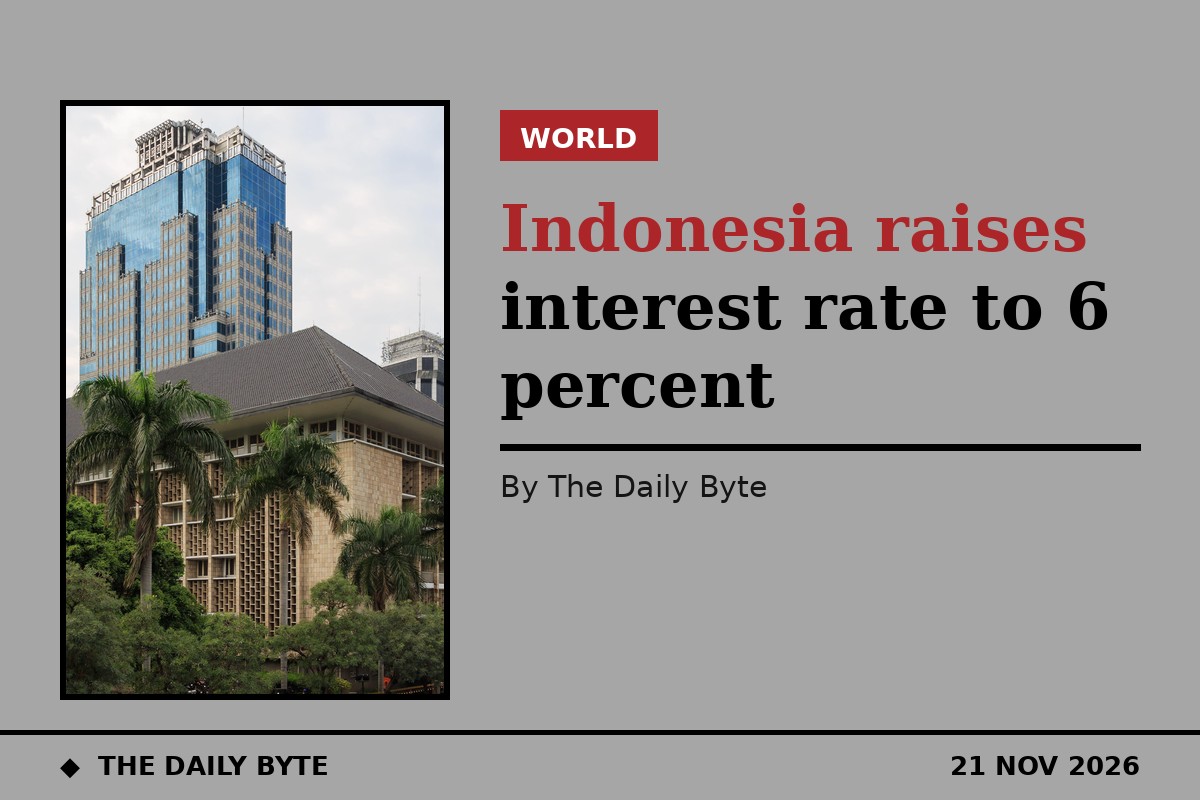
Bank Indonesia has unexpectedly raised its benchmark interest rate to 6.00 percent, resuming its tightening cycle in an effort to steady the rupiah after the currency slid to a record low.
The central bank raised its seven-day reverse repo rate by 25 basis points at its board of governors meeting on 17 and 18 November, the highest level since January 2025. It also lifted its overnight deposit facility rate by the same amount to 5.25 percent and its lending facility rate to 6.75 percent.
The move surprised many economists. Only 10 of the 27 economists polled by Reuters had predicted a rise, with the consensus expecting the rate to stay at 5.75 percent. The rupiah had fallen to a record low of about 18,285 per US dollar before the decision, and briefly strengthened after the announcement, pulling back from a record high for the dollar of about 18,289.
Defending the rupiah
Bank Indonesia Governor Destry Damayanti said the move was aimed at stabilising the rupiah amid heightened global uncertainty. She described it as a pre-emptive step to keep inflation within the target range of 1.5 to 3.5 percent in 2026 and 2027.
The bank has now delivered 125 basis points of tightening in this cycle, bringing rates to their highest since early 2025. The latest rise was the fourth increase this year, and the first since June, ending a pause that had lasted since July. Analysts said the decision was driven more by the need to defend the currency than by domestic inflation, which remains inside the target band.
Domestic political turmoil, tighter global monetary conditions and market uncertainty have all weighed on the rupiah in recent weeks. The currency's slide to record lows had raised concerns about imported inflation and about the cost of servicing foreign-currency debt, and the central bank had already been intervening in the market to support it.
More tightening may follow
Economists are divided on whether Wednesday's rise is a one-off or the start of a longer tightening phase. Barclays economists added another rate rise to their forecast for Bank Indonesia, tipping the terminal rate at 6.75 percent. Others cautioned that higher borrowing costs will weigh on growth, and that the bank will want to see how the rupiah responds before moving again.
Commerzbank analysts described the move as a surprise hawkish turn, aimed at stabilising the rupiah rather than tackling inflation, and warned of further tightening risks. Brown Brothers Harriman noted that the hike only partly relieved the pressure on the currency, with the dollar pulling back only slightly from its record high.
For households and businesses in Indonesia, the decision means more expensive borrowing. Higher policy rates feed through to bank lending rates, raising the cost of mortgages, business loans and consumer credit at a time when the economy is already facing headwinds from weak global demand.
A regional pattern
Indonesia's move fits a wider pattern across Southeast Asia this week, where central banks and governments have been balancing growth against currency and price pressures. Bank Indonesia's decision came in the same week that Singapore reported a sharp rise in exports and Thailand reported stronger-than-expected growth, underlining how differently the region's economies are performing.
The central bank will publish the full details of its assessment in the coming days, and markets will be watching the rupiah closely for signs of whether the 25-basis-point rise is enough to put a floor under the currency, or whether Bank Indonesia will need to act again before the end of the year.


