Indonesia wildfires: El Niño and climate blamed
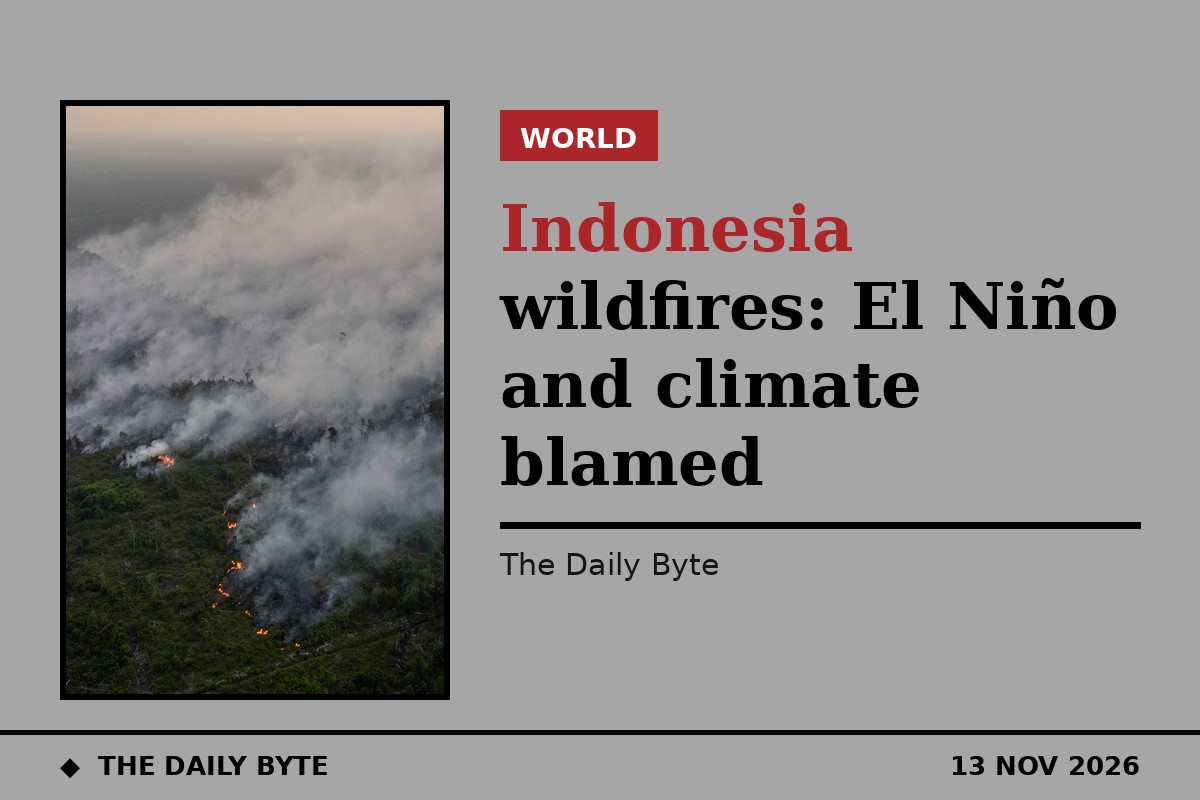
Wildfires that swept across Indonesia this year were driven largely by a strong El Niño, but human-caused climate change made the hot, dry conditions behind them far more likely and more intense, scientists said on Friday.
A report by the World Weather Attribution group, released on 12 November, found that El Niño was largely to blame for an extreme lack of rainfall in Indonesia from July to October, reducing seasonal rainfall by about half. Climate change contributed by driving up temperatures, adding about 1.6 degrees Celsius of heat during the fire season.
"Seasonal temperatures from August to October were dominated by climate change, primarily from the burning of fossil fuels, which made the seasonal heat about 1.6C hotter," the report said. It added that human-induced warming made the fire-prone atmospheric conditions about three times more likely, as well as more intense.
The researchers also pointed to deforestation and peatland drainage for agriculture, mining and logging as major contributors to the disaster. Drained peatlands and degraded forest can remain combustible for long periods once they dry out.
"Indonesia's landscapes have changed dramatically over the last 30 years, with extensive peatland drainage and deforestation creating landscapes that can be extremely vulnerable to ignition," said meteorologist Pramudhian Firdaus of the FLARE Wildfire Research group. "These findings show how both emissions reductions and sustained forest and peatland protection are important in reducing future risk."
Nearly 2.9 million hectares affected
Wildfires have burned through 2.88 million hectares, or 7.1 million acres, of Indonesian land so far in 2026, according to the Nusantara Atlas deforestation monitor, as reported by Phys.org and Reuters. The figure rose by nearly one million hectares in October alone.
September 2026 was Indonesia's fifth-driest September since 1991, with rainfall below normal levels across 84 per cent of the country, according to Firdaus, a wildfire researcher at Melbourne University. Fires were concentrated in parts of Sumatra and Kalimantan, where drained peatlands and degraded forest are most at risk.
The Indonesian government has not confirmed or rejected the 2.88-million-hectare figure, and has not released its own estimate of the area burned since July. Indonesia experiences fires every dry season, but this year's blazes have been particularly severe.
Haze across four countries
Smoke from the wildfires made hundreds of thousands of people ill in Indonesia from breathing in toxic haze, and exposed many more in neighbouring countries to dangerously high air pollution levels. The study estimated that about 12.5 million people across Indonesia, Malaysia, Singapore and Timor-Leste were exposed to haze, and that more than 400,000 respiratory infections had been recorded by November.
Theodore Keeping, a researcher into wildfires and extreme weather at Imperial College London who contributed to the report, said the heat seen this year would not have happened without human-caused warming, even with a very strong El Niño.
"The conditions that we saw this year would simply just not have happened in a world without the human contribution to climate change, even with the very strong El Niño that we're seeing," Keeping said.
The study does not claim that climate change alone caused individual fires, or explain every hectare burned. It measures how warming and El Niño changed the weather conditions around the fires. Its authors say the findings underline the need both to cut emissions and to protect forests and peatlands, so that future dry seasons are less likely to turn into fire disasters on this scale.


