INEC Removes 1.6m Invalid Voter Records in Nigeria
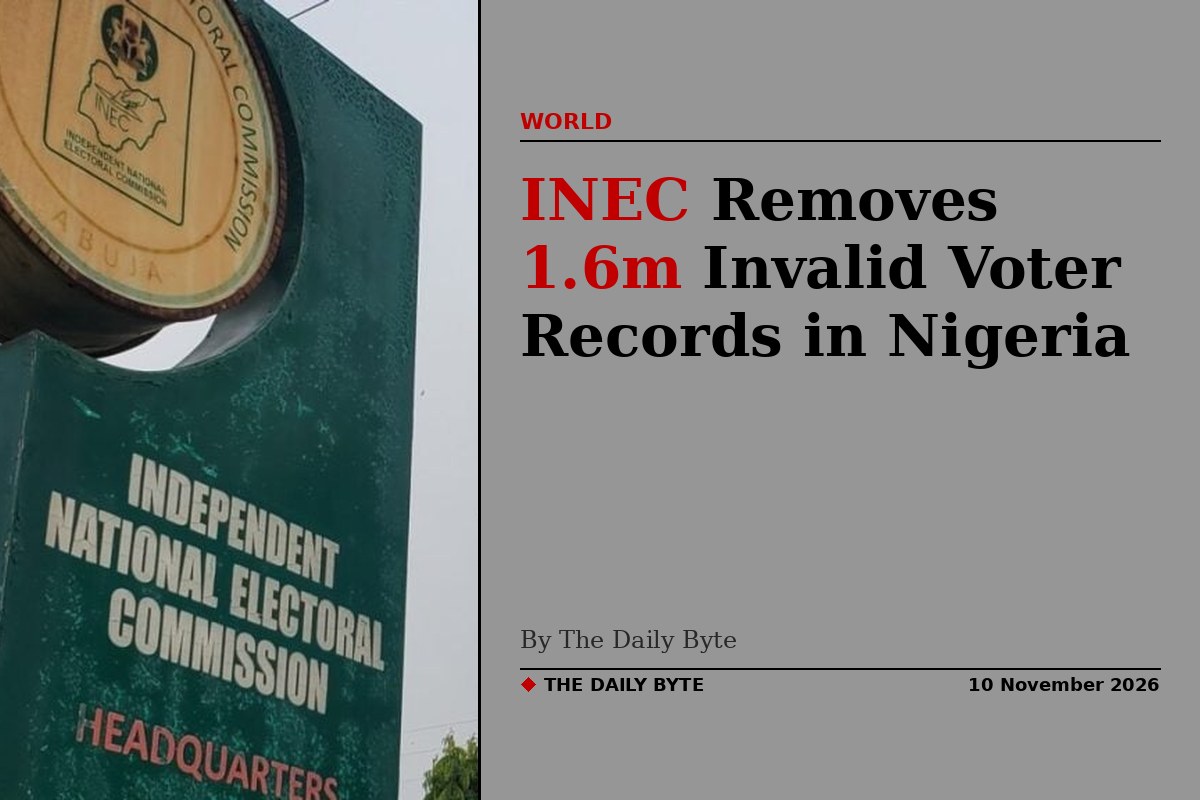
Nigeria's Independent National Electoral Commission (INEC) has removed 1,609,553 records from the national voter register after a clean-up exercise uncovered invalid registrations, biometric irregularities and the records of deceased voters ahead of the 2027 general elections.
INEC Chairman Professor Joash Ojo Amupitan, SAN, announced the purge at a press conference in Abuja on Monday, saying the affected records comprised 1,608,660 confirmed invalid registrations and 873 records belonging to verified deceased voters.
The commission also identified 54 registration personnel across 10 states for disciplinary action, including possible prosecution, over alleged complicity in manipulating the registration process.
How the irregularities were found
The commission said it harvested 11,088,238 registration records from the three phases of its 2025/2026 Continuous Voter Registration (CVR) exercise. Its Automated Biometric Identification System (ABIS) initially flagged 1,545,052 records for further examination, of which 1,277,052 were confirmed invalid and excluded before the preliminary register was published.
The preliminary Register of Voters was then displayed at registration wards between 9 and 15 October 2026 and published online for public scrutiny. Members of the public submitted claims, objections and complaints within the 14-day window allowed under the Electoral Act, raising concerns over suspicious photographs, alleged duplicate entries and the names of deceased persons appearing on the register.
Further screening after the public display identified another 331,608 invalid registrations, bringing the total confirmed invalid registrations to 1,608,660. Amupitan said investigations revealed instances in which registration personnel deliberately circumvented established procedures and abused provisions designed to accommodate exceptional circumstances, including the registration of persons with disabilities.
Officials face prosecution
Amupitan said the 54 officials identified across 10 states had allegedly manipulated registration procedures. He said the commission would take disciplinary action against them, including possible prosecution, and warned that the detection of irregularities raised legitimate questions about how they arose.
"The response is evidence-led investigation, completed corrective action and stronger preventive controls," Amupitan said. He added that INEC would continue to communicate verifiable aggregate outcomes while protecting personal information and the integrity of ongoing investigations.
Reports of the exercise also pointed to unusual registration patterns, substituted photographs and fraudulent multiple registrations uncovered by the technical audit. Some reports said artificial intelligence-generated photographs were among the anomalies spotted on the preliminary register after it was published online on 26 October 2026.
Final register and voter cards
INEC said the clean-up of the 2025/2026 registration exercise had been concluded, with final reconciliation, quality assurance and publication checks continuing ahead of the release of the Final Register of Voters on 15 December 2026.
The commission also explained the delay in producing Permanent Voter Cards (PVCs) for Nigerians who registered in the third phase of the CVR exercise. A total of 2,970,257 Nigerians registered during the third phase before the commission's de-duplication process, and distribution of the cards will return to Registration Areas nationwide from 1 December 2026.
Amupitan cautioned, however, that removing the irregularities found in the latest exercise would not completely resolve the historical problems affecting the register. He said legacy duplications carried over from 2011 to 2023 continued to present a challenge, and that a proposed nationwide voter revalidation exercise, first announced in February 2026, had been deferred until after the 2027 general elections following concerns from stakeholders about its proximity to the polls and the possible disenfranchisement of eligible voters.


