Paydon Breach Leaks 251,172 Records in Japan
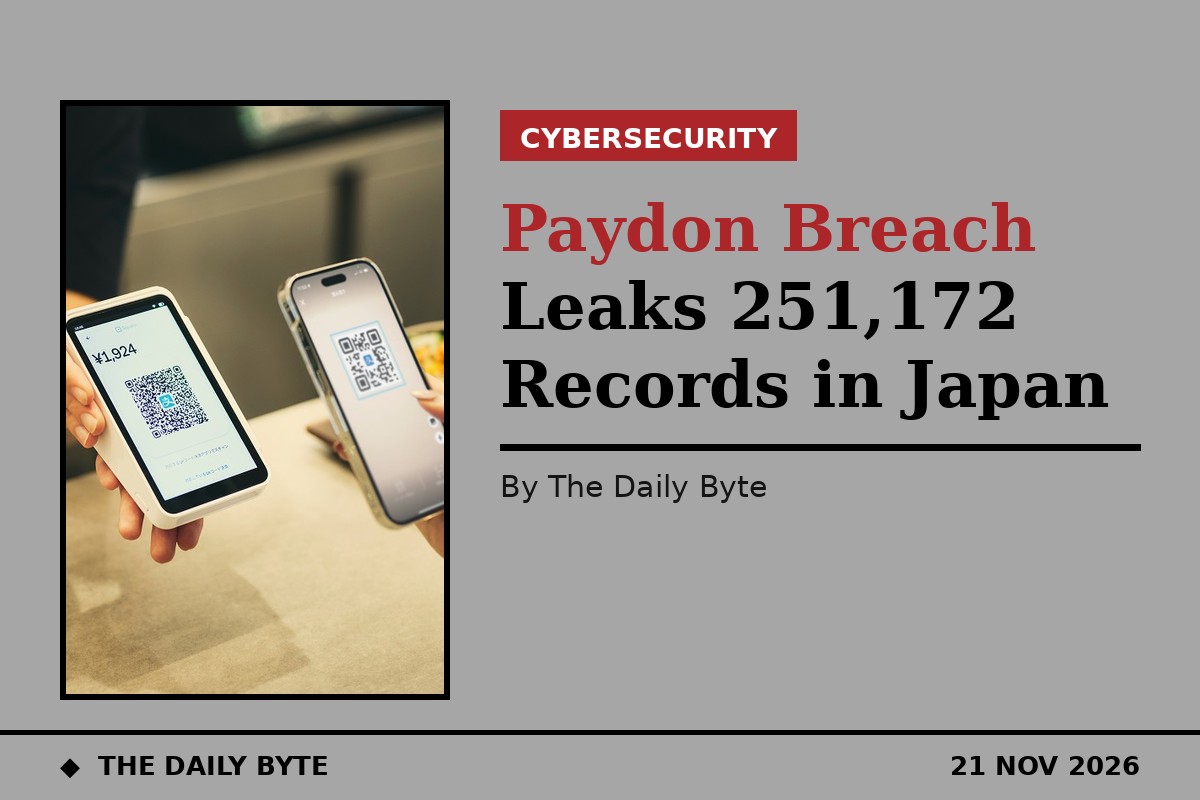
A Japanese payment app has halted all of its services after a breach at the platform behind it leaked the personal details of 251,172 people, including passwords and bank account information.
Paydon (Payどん), a cashless payment app used in Kagoshima, in southern Japan, is run jointly by four local lenders: Kagoshima Bank, Minami-Nippon Bank, Kagoshima Sogo Shinkin Bank and Kagoshima Shinkin Bank. The four banks said in a joint statement that the records leaked after attackers gained unauthorised access to Wallet Station, the smartphone payment platform run by Japanese fintech company Infcurion, and that they stopped every Paydon service at 06:20 Japan time on 20 November to limit further damage.
Infcurion said it detected heavy access to Wallet Station on the night of 19 November and confirmed the unauthorised access the same day. By 20 November it had blocked the suspicious traffic, stopped the affected function and suspended Wallet Station for the clients that were affected. A third report from Infcurion, published on 21 November, said checks were continuing and that clients whose checks were complete were resuming in stages.
What leaked from Paydon
According to the four lenders, the information that may have leaked covers users’ names, dates of birth, phone numbers, gender, email addresses and passwords, as well as their payment methods, meaning bank account details, point balances and balances of regional voucher points. Transaction history is also in scope, including the date and time, the shop and the amount, along with merchants’ names and phone numbers.
The statement does not say whether the passwords were stored in a form that cannot be read directly, or how many of the 251,172 records include account details. Infcurion has put the overall figure at up to about 250,000 records without naming the client, which appears to cover the same data as the banks’ figure.
Infcurion says no misuse of the stolen data has been confirmed so far. It calls its notice a first report whose contents may change as the investigation continues.
AEON Pay also affected
A second client has felt the effects. AEON Financial Service, which runs AEON Pay, the payment app of Japanese retail group AEON, said its contractor Infcurion was carrying out emergency maintenance after the breach. From 17:00 Japan time, AEON Pay stopped payments in which customers scan a code displayed in a shop, along with donations through the app, while payments in which shop staff scan the customer’s code still work.
AEON says it has found no leak of its customers’ personal data so far. Infcurion says it is also monitoring Wallet Station for suspicious traffic at clients that were not affected.
How the attackers got in
Neither notice says how the attackers entered the system. The four lenders say a patch for a vulnerability has been applied as an emergency measure and the route the attackers used has been cut off, without naming the vulnerability. Infcurion has not said when the attackers first got in, which other payment apps run on the affected part of Wallet Station, or when service will resume. It says it will decide on restarting with each client once security measures are in place.
The banks also say the breach is unrelated to an earlier incident disclosed on 4 November, in which email addresses of Paydon users leaked through a different contractor, Arara. Infcurion itself disclosed a separate leak on 18 November: in a stock exchange filing, it said 232 records about its business contacts, job applicants and staff were taken from its Notion AI history when Fireworks AI, a provider Notion uses, was breached. It said then that its own services and systems had not been accessed.
What users should do
Both notices warn users to expect fraudulent emails, text messages and calls that use the leaked data, and not to open links in them or enter login IDs, passwords, authentication codes or account details. Infcurion says neither it nor its clients ask for passwords by phone or email.
Until Infcurion or the banks issue further guidance, Paydon users should treat any message that refers to their account details with suspicion, watch the bank account linked to the service for unfamiliar transactions, and change the Paydon password and any password reused elsewhere once the service returns.


