Iran Pledges Three Months of Stable Basic Prices
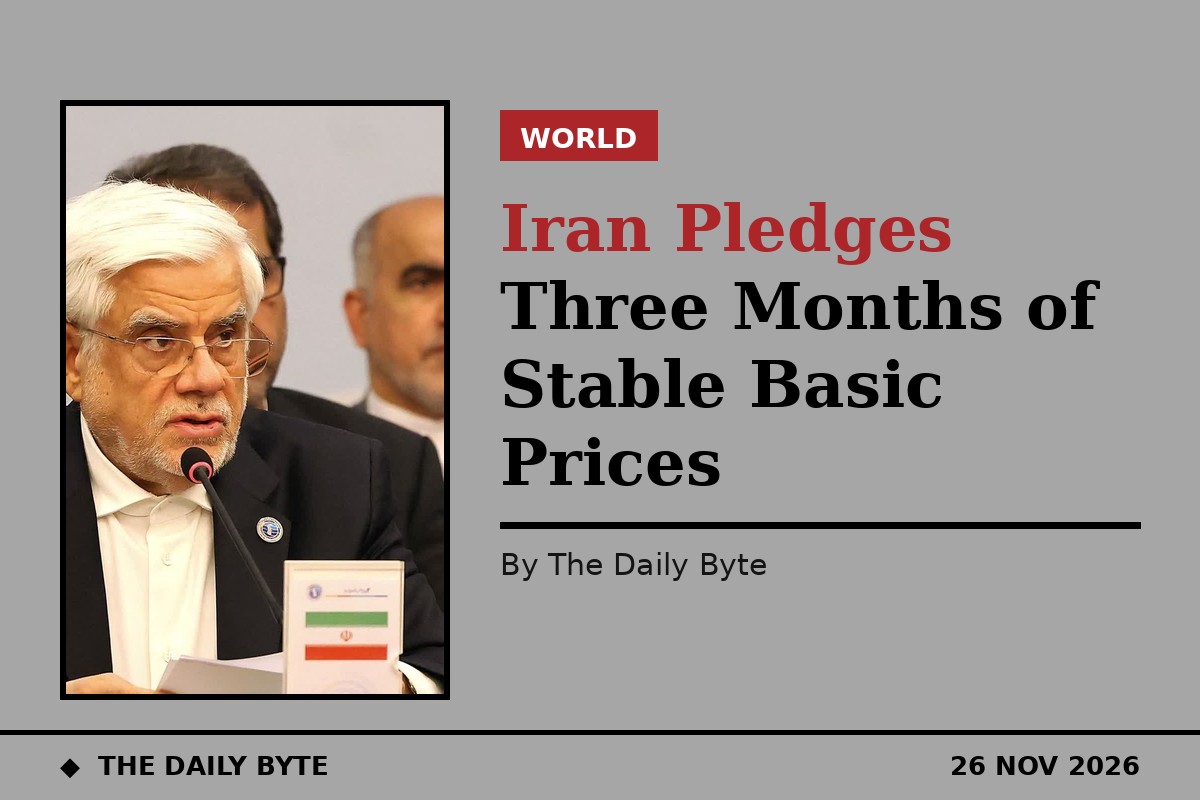
Iran's government is working to hold basic goods prices steady for at least three months, First Vice President Mohammad Reza Aref said on Wednesday, as the country faces one of its worst inflation surges in decades.
Mr Aref said Tehran was not concerned about the United States naval blockade of Iranian ports, pointing to a significant increase in cargo moving through Iran's other borders. Strategic goods reserves were strong and supplies plentiful, he added, without giving any figures.
What Aref promised
"The increase in the unloading and clearance of goods through non-southern borders sends the message that we are not concerned about the enemy's naval blockade," Mr Aref said, according to Xinhua.
He said the government was seeking to prevent increases in basic goods prices for at least three months. Details of the plan, including which goods would be covered and how the government would bear the costs, remain to be worked out.
President Masoud Pezeshkian separately said the government was seeking to direct more budget resources and savings from energy conservation towards improving living standards in poorer communities.
The prices Iranians face
The pledge comes against severe price pressure. Consumer prices in Iran in October were 88.7 per cent higher than a year earlier, while annual average inflation accelerated to 76.8 per cent, Xinhua reported, citing the Statistical Centre of Iran.
Food and beverage prices rose 112.6 per cent year on year in the month ending in October. On that measure, food and drink that cost 100 currency units a year earlier would now cost about 213 units. Monthly inflation stood at 4.4 per cent.
The figures describe an economy under strain from nearly nine months of war with the United States and Israel, alongside sanctions that have squeezed Iranian trade and the value of the rial.
Pressure from Washington
The United States reimposed its naval blockade of Iranian ports in July, and earlier this month announced a task force to restrict the movement of weapons and sanctioned materials across Iran's land borders and the Caspian Sea.
The US Treasury Department earlier this week imposed sanctions on what it described as more than two dozen Iranian exchange houses, front companies and key personnel, in an effort to sever Iran's global shadow banking networks.
Tehran has sought to reassure the public that it can maintain supplies and contain the economic fallout. Mr Aref pointed to increased cargo unloading and customs clearance at borders outside the south as evidence that Iran still had other supply routes.
Whether the three-month price objective can be achieved will depend on actual retail prices for basic goods, and on when the resources Mr Pezeshkian promised reach the households concerned.


