Iran claims strikes on US bases in Bahrain
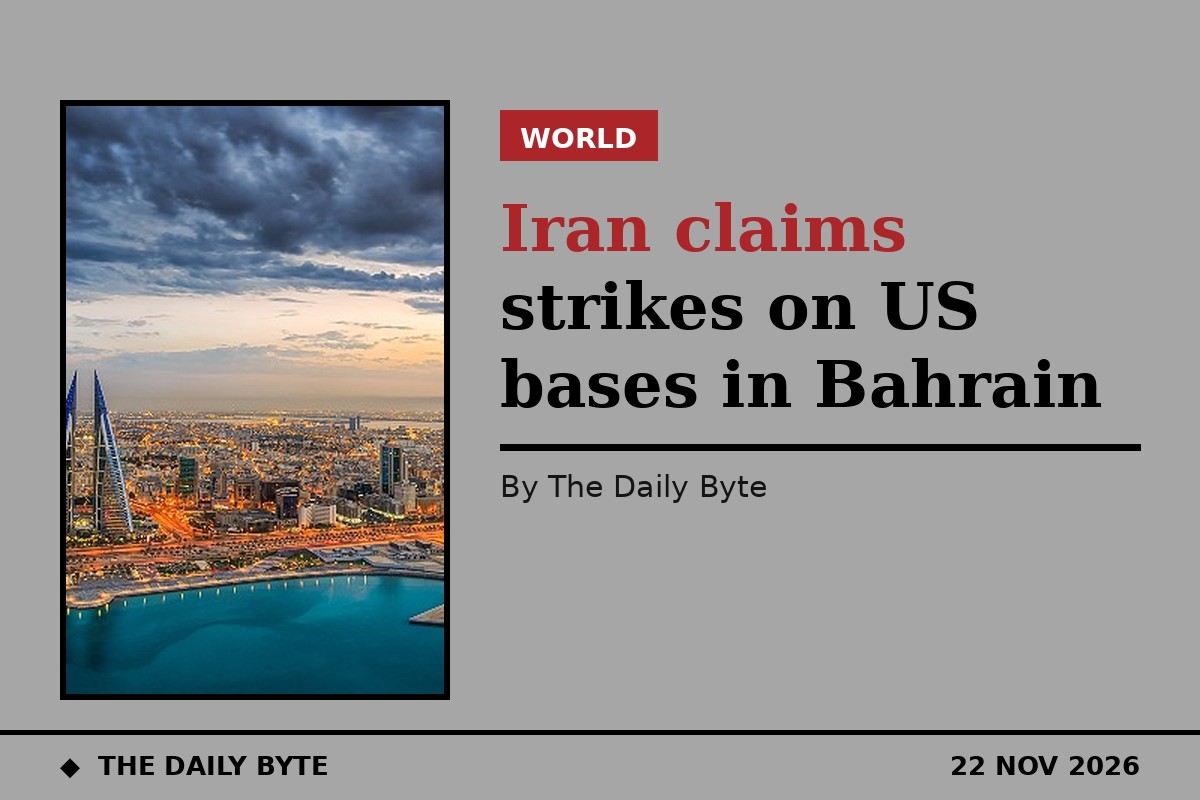
Iran launched two waves of drone and ballistic missile attacks on Saturday night against four United States bases in Bahrain, Iranian media reported, in the sharpest escalation yet of the confrontation between Tehran and Washington in the Gulf.
Bahrain, home to the headquarters of the US Navy's Fifth Fleet, confirmed the attacks and warned residents to take shelter. Iranian media said the strikes were a response to continued US incursions into Iranian airspace, a claim Washington has not accepted.
What Iran claimed, and what was confirmed
Iran's semi-official Fars news agency said the Iranian military targeted four US bases in Bahrain, naming Sheikh Isa and Juffair among them. The Islamic Revolutionary Guard Corps (IRGC) claimed it had struck two Patriot air-defence batteries and a radar system.
Neither Bahrain nor the US military confirmed those claims. Bahrain said its air defences intercepted several of the incoming attacks and described the assault as a heinous Iranian aggression. Local sources reported loud explosions, and Bahrain's Interior Ministry said a fire broke out at a civilian industrial compound, with no injuries reported.
Shortly after the Bahrain attack, reports emerged of explosions in Sirik, in southern Iran. The US military has retaliated regularly against Iranian military facilities in recent weeks. Earlier on Saturday, US Central Command (CENTCOM) denied Iranian claims that a surface-to-air missile had damaged a US F-16 fighter jet on Friday evening.
Tanker attacks in the Strait of Hormuz
The Bahrain strikes came alongside a fresh round of attacks on shipping. At least three oil tankers were attacked in or near the Strait of Hormuz on Saturday, in what appeared to be the latest Iranian strikes on vessels passing through the strategic chokepoint.
The UK military's maritime security centre, UKMTO, said two tankers were struck separately by projectiles early on Saturday while leaving the Persian Gulf through the strait. There were no reports of casualties. The Iranian navy said in a statement carried on state media that a tanker had hit a naval mine east of the strait and caught fire, and state media said the military had carried out its most intense and varied operations yet in the strait overnight.
Brigadier General Mohammad Akraminia, a spokesman for Iran's army, warned again on Saturday that any attack on Iran would be met with a decisive and immediate response. Iranian television showed ground troops deployed into defensive positions along the southern coast for the first time.
Tanker convoy and the blockade
Meanwhile, more than 14 Iranian tankers are reported to be prepared off Kharg Island to break out of the US military blockade in the coming days. Iran's Deputy Foreign Minister Kazem Gharibabadi told Iranian media that the US blockade of Iranian ports is an act of war and that Tehran would take any necessary measures to break what he called an economic siege.
Iran warned of a fierce military response if the convoy was engaged by the US military, threatening widespread attacks on energy infrastructure across the Gulf region. President Masoud Pezeshkian said Iran faced a silent economic war that was tougher than a war with missiles, adding that the country had the capability to withstand it.
Diplomatic channels remain open even as the fighting intensifies. A Qatari delegation held talks with Iranian officials on Friday evening for about two hours before returning to Doha, and negotiations between the US and Iran spearheaded by Qatar continue. Foreign Minister Abbas Araghchi suggested a deal was possible, saying reopening the Strait of Hormuz would be not difficult if the US accepted Iran's reasonable conditions, above all ending a blockade he called completely illegal, lifting sanctions and acknowledging past mistakes.
President Donald Trump told Fox News on Saturday that he planned to make a permanent deal with Iran to prevent it from acquiring a nuclear weapon, and that he was never interested in regime change in Iran.


