Iran Building Underground Base Near Isfahan
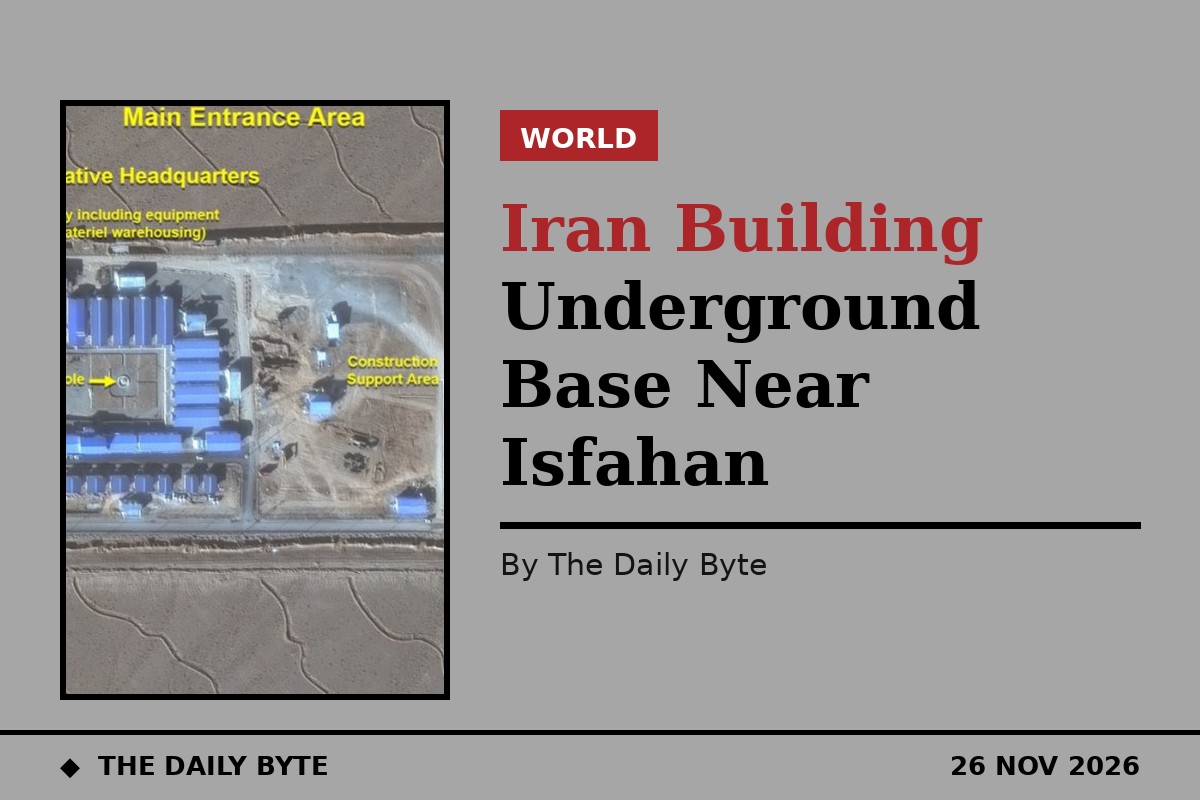
Iran is rapidly building a hardened underground facility inside a mountain midway between its Isfahan and Natanz nuclear sites, according to new satellite imagery published by a Washington-based research institute.
The Institute for Science and International Security said on Wednesday that the facility at Behjatabad, about 62 kilometres from both the Isfahan nuclear complex and Pickaxe Mountain near Natanz, was undergoing unusually fast construction. Satellite images from Vantor Technologies, annotated by the institute, show four active tunnel entrances in a mountain valley, along with an administrative area, a covered vehicle parking area and security checkpoints.
“The Behjatabad Underground Facility is a buried hardened facility built into a mountain that is undergoing rapid construction,” the institute said. “Iran is known to have established a multitude of dispersed facilities of this type, but this facility is unusual.”
Construction traced back to December 2025
Drawing on satellite imagery from Vantor and Sentinel-2, the institute traced the project back to December 2025. The first signs of earthwork and clearing appeared between 7 and 12 December 2025, and by 11 January 2026 a new road ran from the administrative section towards the tunnel site.
Activity at the eastern tunnel area was first observed on 3 April 2026, a spoil pile appeared on 28 April, and work on a second tunnel section in the western part of the complex began on 12 June. A satellite image provided by Vantor on Tuesday 24 November showed the latest state of construction.
Iran has also begun installing an outer perimeter security barrier around the site. The institute estimates that when complete, the site will cover about 5,000 hectares, or about 12,000 acres.
Purpose remains unclear
The institute said there was not yet enough information to determine the facility's purpose. Given the site's location, its security measures, the speed of construction and Iran's past building patterns, it said the site could be linked to military activity, including missile systems or other major weapons. It also did not rule out a nuclear purpose.
Iran has not issued any official comment on the facility. The institute said it would publish more satellite images and details of the construction in a forthcoming report.
The findings come as Western concerns grow over Iran's expansion of underground fortified facilities following US and Israeli strikes. In October, the same institute published an assessment of satellite imagery concluding that Tehran had continued excavating tunnels at missile complexes such as Shahroud, despite extensive damage to exposed production facilities.
The site was first identified in satellite images by open-source researcher Ben-Zion Makles. The institute said the pace of work at Behjatabad stood out even by Iran's record of building dispersed underground sites, and that construction had continued without pause during the war.


