Iran caps subsidised bread in three provinces
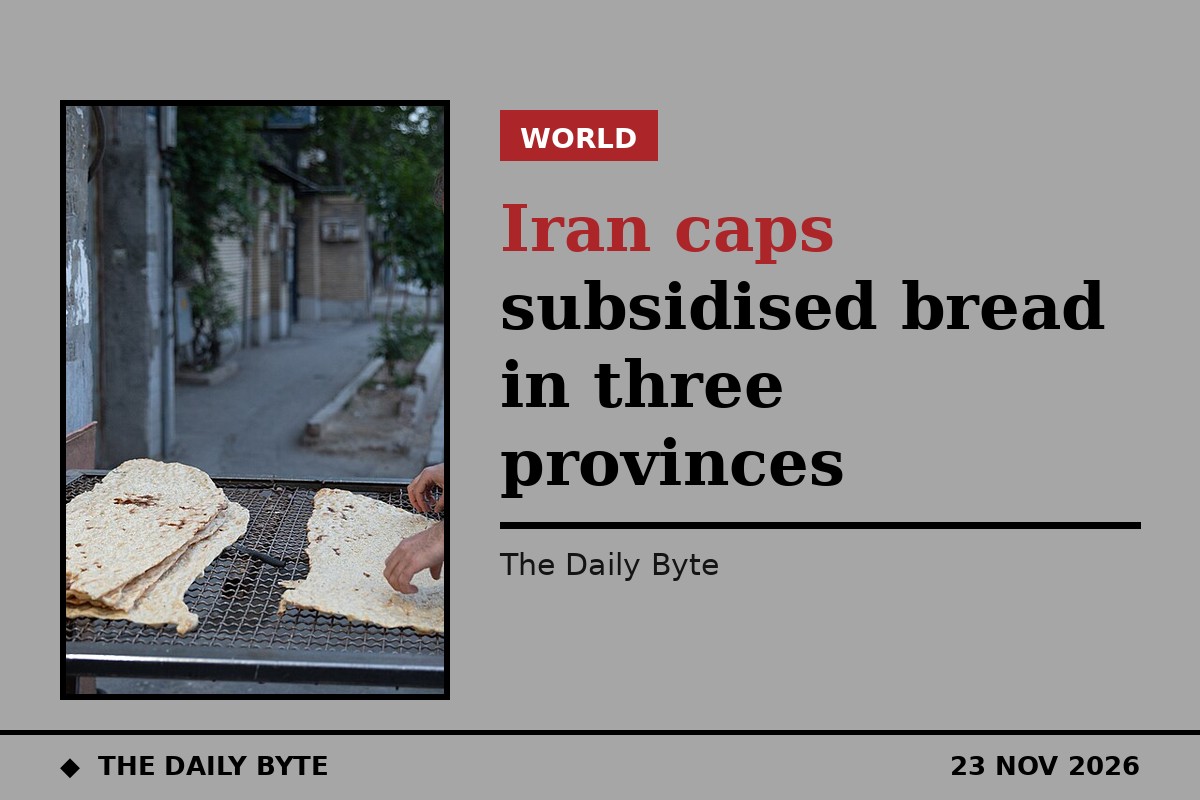
Iran has quietly capped how much subsidised bread households can buy in at least three provinces, with bread beyond a monthly quota charged at more than five times the state price. The move, which officials call “bread purchase management”, was switched on without a public announcement — and it has drawn rare criticism even from hard-line media normally loyal to the government.
According to RFE/RL’s Radio Farda, the Interior Ministry activated the scheme through bakeries’ card readers in Markazi, Khuzestan and Zanjan provinces. Iranian media reported the activation on 18 November 2026, but neither bakers nor customers were briefed in advance.
What the cap means for shoppers
Under the scheme, each person is allotted about 8 kilograms of subsidised flour a month, priced at 23,000 rials a kilogram. Once that quota runs out, bread is charged at the free-market rate of 126,500 rials a kilogram — roughly five and a half times the subsidised price.
The sums look small in dollar terms only because Iran’s currency has collapsed. The dollar trades at around 2.7 million rials on the open market, and the monthly minimum wage of about 166 million rials is worth roughly $61, according to RFE/RL.
Local media had earlier reported tighter daily limits in parts of Khuzestan province, including Shadegan, Andimeshk, Omidiyeh and Zeydun, where daily bread allocations were set at between two and 2.5 loaves per person.
Criticism from an unlikely quarter
The hard-line daily Keyhan, whose chief editor is appointed by the supreme leader, accused President Masud Pezeshkian’s government on 16 November of the “secret and suspicious implementation of bread rationing”. The paper said the restrictions had prompted residents to rush to bakeries and led to verbal confrontations.
Officials have given conflicting accounts of what is happening. Some have described the system as a way to stop abuse of subsidised flour, while others have denied that ordinary households face restrictions at all.
Reporting carried by Europe Says, citing the official IRNA news agency, quotes provincial grain officials saying the system is being rolled out across Iran, but that ordinary household purchases will not face higher prices. Thresholds are calculated from purchasing data collected over the past two years, and guidelines were issued on 15 November. The programme was first tested in Markazi province before being extended.
President Pezeshkian defended the tighter controls on 18 November, arguing that abuse of subsidised goods and energy has become widespread.
Why bread matters so much in Iran
Bread is the staple food for millions of Iranian households, and subsidised bread has long been treated as non-negotiable by the state. The cap arrives as Iranians face soaring prices, a collapsing currency and a US naval blockade that has squeezed oil exports — the government’s main source of revenue.
It also comes days before nationwide electricity rationing began on 22 November, with rolling power cuts of up to two hours a day blamed on fuel-supply problems and damage to gas infrastructure.
For now, the scheme has been reported in three provinces. Whether it will be expanded, rolled back or adjusted in response to public pressure remains unclear.
Frequently asked questions
Which provinces have the bread cap?
Markazi, Khuzestan and Zanjan provinces, according to Iranian media reports cited by RFE/RL.
How much subsidised bread can each person buy?
About 8 kilograms of subsidised flour a month per person, at 23,000 rials a kilogram.
What happens above the quota?
Bread beyond the monthly allowance is charged at the free-market rate of 126,500 rials a kilogram — more than five times the subsidised price.
Has the government called it rationing?
No. Officials call it “bread purchase management” and some deny ordinary households face restrictions, but critics — including the hard-line Keyhan newspaper — describe it as rationing.


