Iran Denies $8bn Deal to Reopen Strait of Hormuz
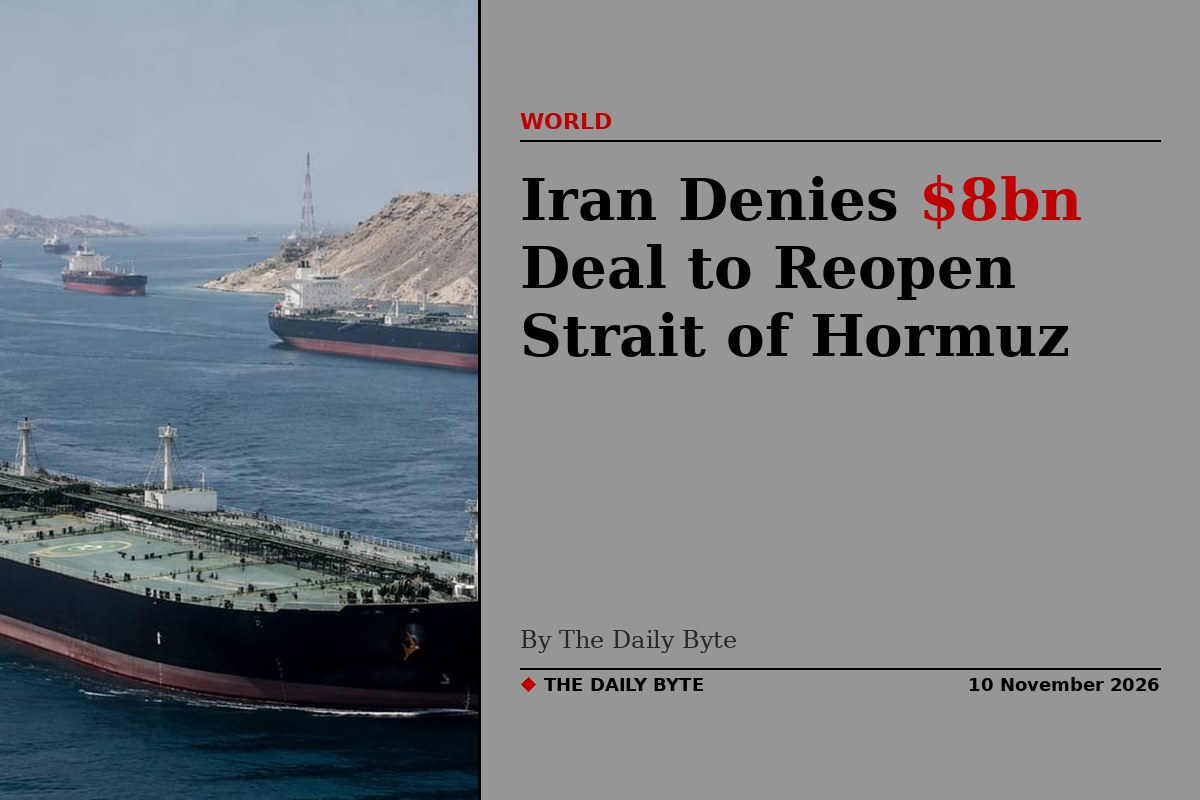
Iran has denied reports that it agreed to reopen the Strait of Hormuz in exchange for the release of $8 billion in frozen assets, pushing back against claims that a deal was close.
Iran’s Fars news agency quoted a senior Iranian official as saying that reports Tehran was negotiating the reopening of the waterway for $8 billion were completely false. The denial was reported on Tuesday, 10 November, a day after the original claim moved oil markets.
According to the official, Iran maintains its position that negotiations can only take place if the United States meets seven conditions set by Tehran, including ending hostilities on all fronts, releasing frozen assets and lifting sanctions.
What the report claimed
Israeli newspaper Israel Hayom reported on Monday, citing two diplomatic sources, that Iran had offered to reopen the Strait of Hormuz in return for the release of $8 billion in Iranian funds held in Qatar. Under the reported terms, the United States would end its naval blockade of Iran and Iran would stop attacking cargo ships in the Gulf.
The report said Tehran had also dropped an earlier demand to control the strait and charge passing ships a fee. It said Vice President JD Vance was leading the push for the agreement inside the White House, while Secretary of State Marco Rubio and Treasury Secretary Scott Bessent opposed it.
President Donald Trump was due to meet Qatar’s prime minister, Sheikh Mohammed bin Abdulrahman Al Thani, in Washington on Monday to discuss the reported offer. Qatar has acted as a key mediator between Washington and Tehran.
Oil prices fell on the report
Brent crude fell sharply on Monday after the report, settling down 5.85 percent in the session, according to Reuters, before edging lower again on Tuesday. The market reaction showed how sensitive oil prices remain to any sign of movement on the strait, through which a fifth of the world’s traded oil and gas passed before the war.
Neither the United States nor Iran has confirmed the terms described in the report. A similar interim arrangement reached in Switzerland in May collapsed after an Iranian tanker attack, according to Israel Hayom.
Denial follows a flurry of diplomacy
The denial came after days of intense mediation. Iraq’s Prime Minister Ali al-Zaidi made a secret visit to Tehran on Friday, 6 November, holding talks for several hours with parliament speaker Mohammad Baqer Qalibaf, who heads Iran’s negotiating team.
Iran has repeatedly said its conditions for reopening the strait include an end to the US naval blockade, the lifting of sanctions and a halt to bombing, with talks on its nuclear programme to follow. Washington has rejected those terms, with Mr Rubio describing some of Tehran’s demands as outrageous and unrealistic.
On Monday, Mr Trump said the war in Iran was effectively over in military terms and that he did not plan to order new American strikes for now, while keeping US forces ready to act if circumstances changed.
What happens next
With Tehran now publicly denying the $8 billion figure, the reported offer appears to have stalled, at least in the form described by Israel Hayom. Mediators in Qatar are expected to keep working on the proposals, but neither side has announced a breakthrough.
The strait remains closed to normal commercial shipping under Iran’s control, and the US naval blockade of Iranian ports remains in place. For now, the diplomatic track continues through intermediaries, with the two sides still far apart on the terms of any deal.


