Iran drones target US radar in Bahrain as Hormuz stays shut
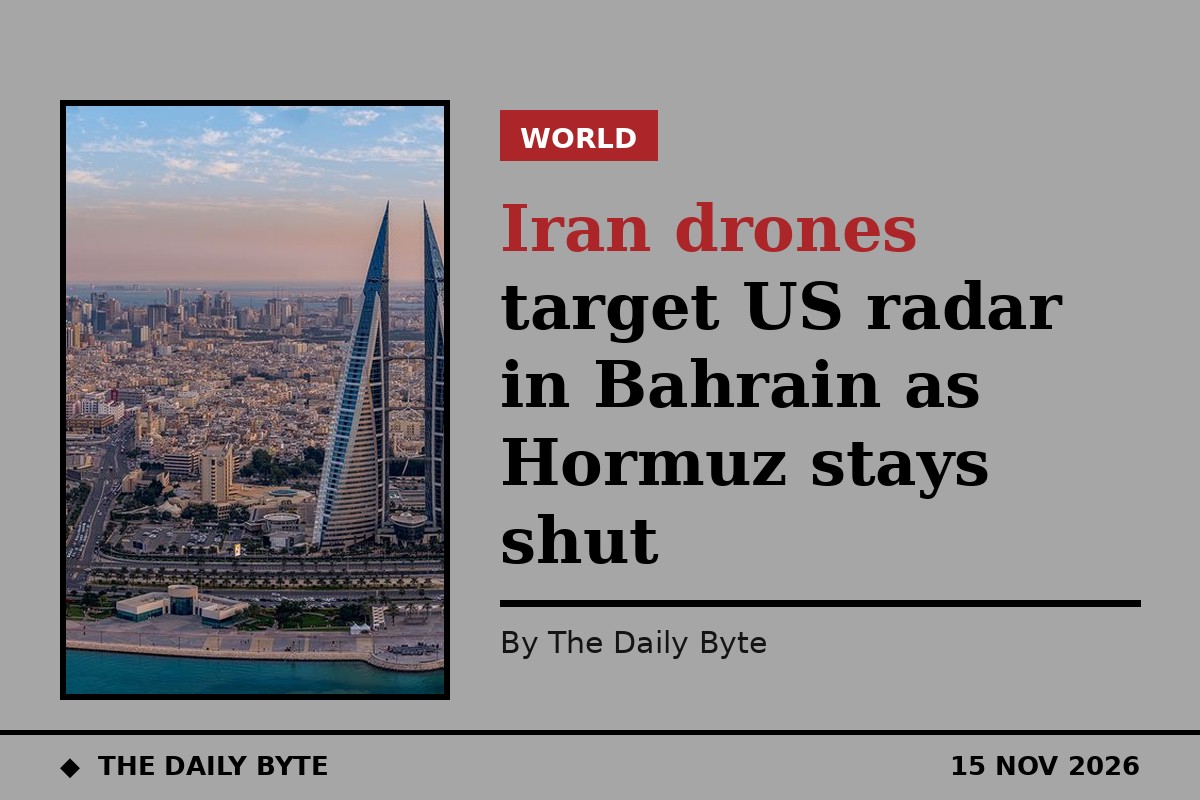
Iran said on Sunday that its forces had targeted a US air defence radar in Bahrain with six drones, in the second such claim in three days, as Bahrain issued its first threat alerts since September and Tehran said the Strait of Hormuz remained closed.
Iran's Islamic Revolutionary Guard Corps said its Aerospace Force had targeted the US air defence radar system at the Al-Riffa helicopter base in Bahrain, according to a statement carried by Iranian state media. The Guards described the operation as the second phase of retaliation for what it called hostile US actions.
Neither the United States nor Bahrain had confirmed that the radar had been hit. Bahrain's military said its air defences had intercepted several Iranian aerial attacks before they reached their targets. Reuters, reporting on Sunday, said there was no immediate confirmation from US or Bahraini authorities that the radar had been struck or damaged.
Bahrain issues threat alerts
Bahrain issued two alerts of potential threats on Sunday, its first such warnings since September, and urged citizens and residents to remain calm and proceed to the nearest safe location, the interior ministry said. The ministry did not give further details about the threats.
Explosions were reported around Bahrain at about 4am local time and again at about 6.30am, according to an AFP journalist in the country. Bahrain is home to the US Navy's Fifth Fleet and has been heavily targeted during the war in the region, which began on 28 February with US and Israeli strikes on Iran and then spread across the region.
In the same statement, the Revolutionary Guards said the Strait of Hormuz remained closed and warned that any further aggression by the United States would be met with a harsher and more forceful response. The strait carries about one-fifth of the world's oil consumption, according to the US Energy Information Administration, which said an average of 20 million barrels of oil a day passed through it in 2024.
A claim denied two days earlier
The latest claim followed a similar Iranian statement on Friday 13 November, when the Guards said they had hit a US early-warning radar in Bahrain. The US military denied that claim, saying it had intercepted two Iranian drones without any casualties or damage.
The pattern matters because it shows how hard it has become to establish what has happened in each incident. Iran has presented both attacks as successful strikes on US radar systems. The US military has said the first was intercepted and has not commented on the second. Until Washington or Manama publishes its own account of Sunday's incident, the claim that the radar was hit remains unverified.
Talks still without a breakthrough
Diplomatic efforts to end the conflict have yet to produce a breakthrough, although Washington and Tehran have held off on direct attacks for long stretches of the war. President Donald Trump has said in recent days that he might hold off on attacking Iran if the United States faces no new provocations from Tehran or the Iran-backed Houthis in Yemen, but that he would maintain a US naval blockade, Reuters reported on Saturday.
Iran's parliament speaker, Mohammad Bagher Ghalibaf, said last week that Tehran had set seven preconditions for resuming negotiations, including an end to the US naval blockade of Iranian ports, a halt to interference in the Strait of Hormuz and the lifting of sanctions, according to a report by the Tasnim news agency on 12 November. The Associated Press has reported that Iran does not want to negotiate over its nuclear programme before Washington agrees to basic conditions that Tehran wants included in a ceasefire deal.
For now, the immediate question is whether Sunday's exchange draws a further response. Bahrain's alerts, the disputed radar claim and the warning over Hormuz all point in the same direction: a confrontation that has lasted nearly nine months is still capable of escalating with little warning.


