Iran executes three men over January protests
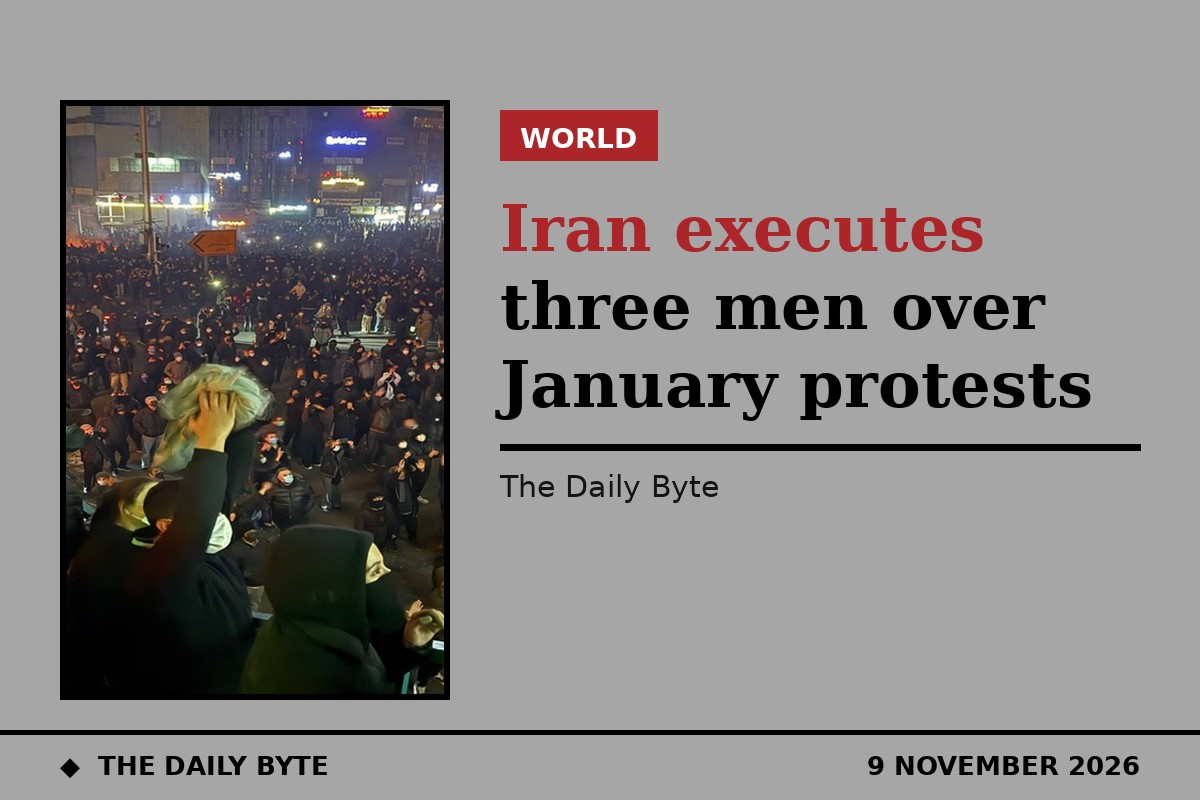
Iran has executed three men convicted of carrying out armed unrest during anti-government protests in January, state media reported on Sunday, 8 November.
The men were identified as Hassan Divband, Hamid Kazemi and Reza Zanganeh. They were executed in the city of Karaj, west of Tehran, in Alborz province, after the Supreme Court upheld their convictions, according to Iran's judiciary and the Tasnim news agency.
The judiciary said the three men were convicted of carrying out operations on behalf of Israel, the United States and hostile groups. Prosecutors accused them of using firearms, grenades and Molotov cocktails, using bladed weapons, setting fire to public facilities and damaging an electricity substation in Karaj that caused power outages in some areas.
What the judiciary said
According to the judiciary's Mizan news agency, Divband was arrested on 11 January after investigations identified him as a suspect in attacks on public property and incitement to violence. Ten other people accused of taking part in the unrest under his supervision were subsequently arrested, according to reports of the case.
The three men were sentenced to death and ordered to have their assets confiscated. Their executions were carried out after the Supreme Court upheld the sentences, while other defendants in the case received prison terms of five to ten years, Reuters reported.
The family of Reza Zanganeh denied the allegation that he had collaborated with Mossad, Israel's intelligence agency, according to reports of the case. Rights groups have challenged the fairness of the proceedings. The Norway-based Iran Human Rights group has described trials linked to the January protests as unfair, with some reports suggesting confessions were coerced in detention.
The January protests
The protests began in December over the rising cost of living before escalating into widespread demonstrations against the government. The unrest peaked on 8 and 9 January, and Iranian authorities reported more than 3,000 deaths, blaming the violence on what they described as terrorist acts backed by Washington and Tel Aviv. Foreign-based rights groups have reported higher death tolls, and accounts received by the BBC indicate that security forces opened fire on unarmed protesters.
The executions are the latest in a series linked to the protests, including those of people accused of having ties to Israel and the United States. The Norway-based Iran Human Rights group said the executions bring the total number of demonstrators hanged following the January unrest to at least 39, according to News Central TV, citing Asharq Al-Awsat. Other reports put the total at 39 to 40.
What happens next
Rights groups have warned that more people arrested during the January protests could face the death penalty, and have called for the trials to be independently reviewed. Iranian authorities have continued to present the executions as punishment for armed attacks on public property, while critics say the proceedings fall short of fair-trial standards. No further executions in this case have been announced.


