Iran Flogging of Singer Was Warning, Insiders Say
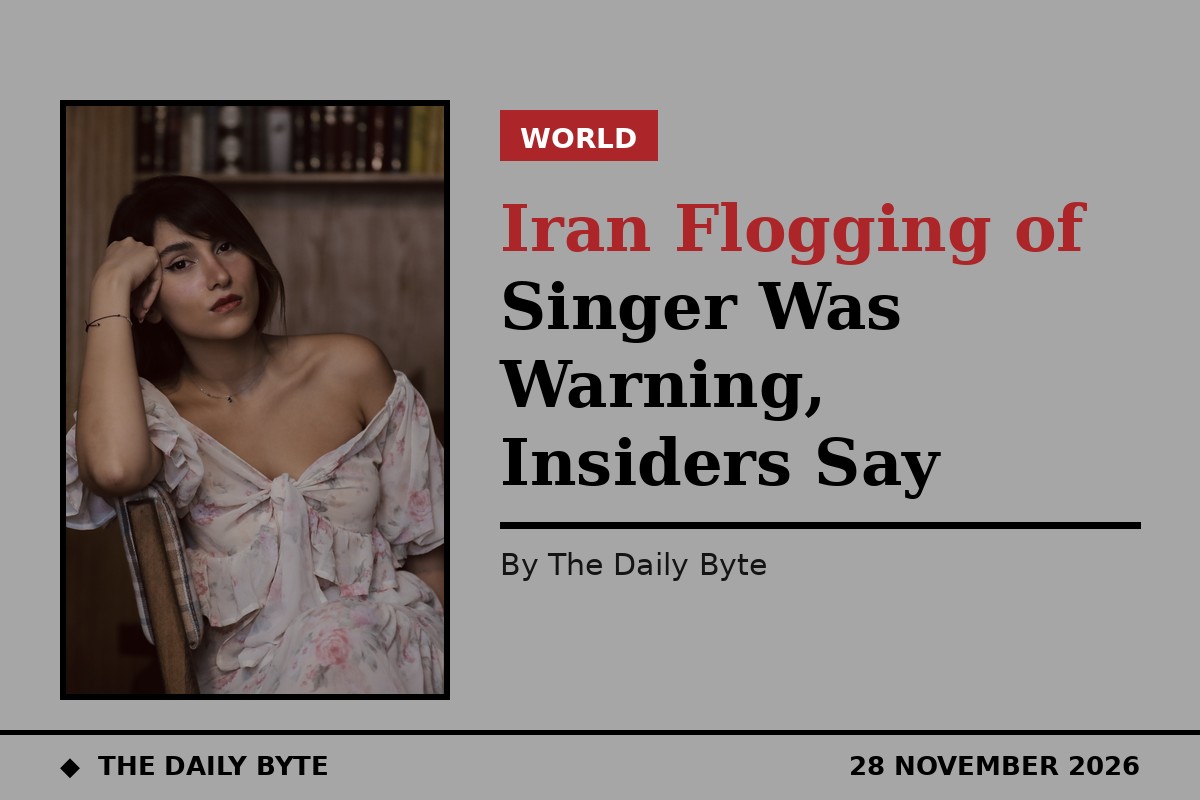
Iran's flogging of the singer Parastoo Ahmadi was intended as a warning to anyone thinking of defying the country's rulers, Iranian insiders have told Reuters, describing the punishment as a show of strength by a leadership worried about its authority nine months into a devastating war.
Ahmadi, 29, and four members of her production team each received 74 lashes on Monday for a livestreamed concert performed in a historic caravanserai near the holy city of Qom, in which she appeared bare-shouldered and without a headscarf, accompanied by male musicians. The concert had been filmed in December 2024 and viewed millions of times online before the sentences were carried out.
A warning, not just a punishment
Reuters, which spoke to three officials and two other establishment insiders on condition of anonymity, reported that the sentence was aimed at potential dissidents and at reassuring hardline supporters whose loyalty the leadership counts on. The sources said the timing was political: the concert footage was almost two years old, and the decision to carry out the flogging now reflected the anxieties of the moment rather than the offence itself.
“I think the authorities are sending a message of fear through the flogging,” Saba Robatjazy, a London-based Iranian singer who has known Ahmadi since childhood, told Reuters. She said the punishment had not stamped out defiance, adding that it was “only bringing up more anger from people”.
The Iranian government says its judiciary is independent and that such punishments have nothing to do with politics.
A system braced for a hard winter
Two of the officials told Reuters that the approaching anniversary of last winter's protests had sharpened the leadership's fears that economic hardship, worsened by the war, could spill onto the streets again. Preventing a new wave of protests was, they said, a priority.
Alex Vatanka, of the Middle East Institute think tank, put it bluntly: “They know it's going to be a hard winter. This war might go on for many more months to come, and they do worry about public protests and they sometimes take decisions like this one just to flex muscle.”
The war began when the United States and Israel attacked Iran on 28 February, and the conflict has ravaged the economy. Since then, hardliners have urged supporters onto the streets in rallies intended as public displays of unity, while the authorities have moved to deny space to internal dissent, Reuters reported.
Hardliners, moderates and the limits of force
The insiders described a leadership divided over the flogging. Hardliners backed it, and three sources said they were angered by lax enforcement of dress codes that have required women to cover their hair and wear a long, loose coat since the 1979 revolution. Those rules have been widely ignored since mass protests in 2022 that followed the death in custody of a woman detained for breaking them.
More moderate officials, however, opposed the move, fearing it would inflame public opinion at a difficult time, one of the sources said. President Masoud Pezeshkian has cautioned the authorities against using force on social and cultural questions, while hardline politicians have demanded action against what they regard as moral backsliding.
By punishing Ahmadi and her team, two insiders said, the establishment may have been trying to reassure its hardline base without risking the backlash a nationwide crackdown on women could provoke. Skylar Thompson, deputy director at the US-based Human Rights Activists News Agency, told Reuters the punishment was part of a broader effort to police how women express themselves and move through daily life.
The United Nations human rights chief has condemned the floggings as a form of torture, which is forbidden under international law.
What happens next
There was no word on Ahmadi's condition or whereabouts after the flogging, and Robatjazy said she had not been in touch with her friend for months, as communications into Iran have become harder this year. For hardliners, the insiders said, leaving such open defiance of compulsory veiling unpunished would amount to conceding that decades of resistance had forced the Islamic Republic to compromise on a founding principle. Whether the warning works, or deepens the anger it was meant to contain, remains to be seen.


