Iran Flogs Singer Parastoo Ahmadi 74 Times
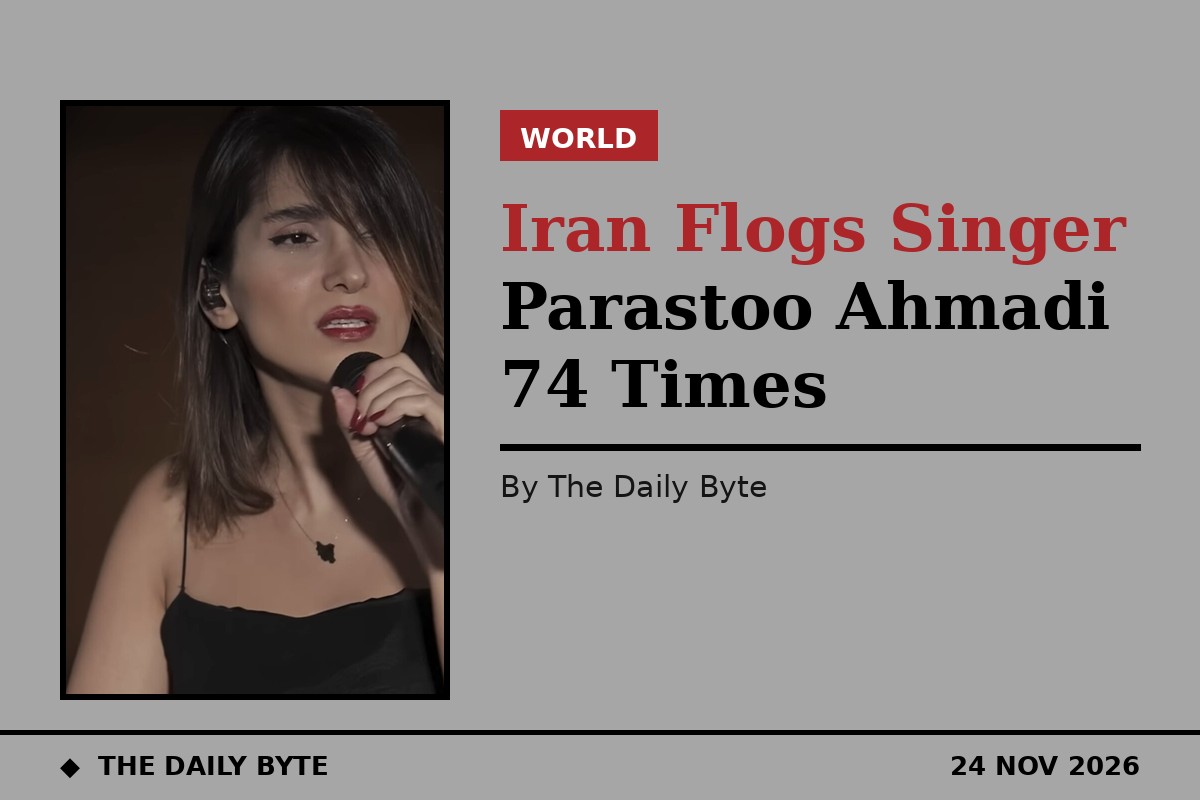
Iran has carried out a sentence of 74 lashes on singer Parastoo Ahmadi and four members of her production team, punishing them for a concert performed without the mandatory hijab almost two years ago. The flogging was carried out on Monday at the sentence enforcement unit of the prosecutor's office in Qom, the singer's lawyer, Mostafa Nili, told the Iranian news website Emtedad. Each of the five received 74 lashes, and each was also given a two-year ban on artistic and musical activities and on foreign travel.
The four others punished alongside Ahmadi were concert organiser Mohsen Lashkari and musicians Soheil Faghih-Nasiri, Amin Taheri and Amir-Ali Pirnia. Their names were reported by the Norway-based group Iran Human Rights, citing Nili, and the case has been reported by international outlets including Reuters, CNN and the BBC.
The case centres on a video posted on YouTube in December 2024 showing Ahmadi performing without a hijab alongside male musicians. The performance, known as the Caravanserai Concert, was filmed at the historic Deir-e Gachin caravanserai near Qom, a city regarded as a centre of Shia scholarship and religious conservatism. Ahmadi, 29, wore a sleeveless dress and sang with her hair uncovered, in open defiance of rules that require women to cover their hair in public and restrict women from singing solo before mixed audiences.
A court in Qom convicted the five in June of offending public decency by producing and publishing what it called obscene and immoral content online. An appeals court upheld the ruling in September, clearing the way for the sentences to be carried out. Iranian authorities did not immediately respond to a request for comment from Reuters.
A punishment meant to send a message
Human rights advocates said the flogging was intended as a warning to others as much as a punishment for Ahmadi herself. Bahar Ghandehari, director of advocacy at the US-based Centre for Human Rights in Iran, told the BBC the punishment was designed to frighten the population into compliance with the country's interpretation of Sharia moral codes. She described Ahmadi's flogging for singing and dressing as she chooses as a flagrant violation of her fundamental rights.
Western governments and human rights groups have long criticised flogging as torture and a violation of international law. Iran rejects accusations about its human rights record, saying Western countries should focus on their own problems.
The rules on women's dress have been a flashpoint in Iran since the death in custody in 2022 of Mahsa Amini, a Kurdish Iranian woman arrested for allegedly violating the dress code. Her death set off months of nationwide protests. Since then the rules have increasingly been flouted on the streets of Tehran and other cities, and enforcement has become more selective, with the authorities alternating between crackdowns and quiet tolerance.
Two years from concert to punishment
Almost two years passed between the concert and the carrying out of the sentence. The video was filmed without a live audience and released online, where it was widely shared inside and outside Iran. For many of Ahmadi's supporters it became a symbol of artistic defiance; for the courts in Qom it was evidence of a crime.
The two-year professional and travel bans add a further cost. Ahmadi and her colleagues will be barred from performing, recording and working in music, and from leaving Iran, until late 2028. For a working musician, the ban is in some ways as damaging as the physical punishment, cutting off both income and audience at a moment when her name is known around the world.
The case also underlines the particular sensitivity of Qom. The city is home to seminaries and senior clerics, and its courts have a record of handing down severe sentences in morality cases. That the concert was filmed there, rather than in Tehran, made the challenge to the rules more pointed in the eyes of the authorities. There has been no public statement from Ahmadi herself since the sentence was carried out, and no indication of any further legal challenge. Read the Reuters report here and the CNN report here.


